
Research quality in the supplement space varies enormously — from rigorous RCTs with hundreds of participants to single-cell studies that have never been replicated in humans. This post examines the clinical evidence for Mushroom Vitamin D2 specifically, separating what the trials actually show from what manufacturers claim.
The evidence base: what we are working with
Key citations: See richResearch section. Clinical evidence for joint and bone support from multiple RCTs.
The clinical evidence for Mushroom Vitamin D2 is rated Grade B, meaning good clinical evidence from RCTs, some limitations.
How Mushroom Vitamin D2 produces its effects
Vitamin D2 from mushrooms is bioavailable and raises serum 25(OH)D concentrations similarly to synthetic D2 supplements
Understanding the mechanism matters because it explains both the benefits and the limitations. Mushroom Vitamin D2 works through 25-hydroxyvitamin D — which is why the effects appear at the timescale they do, and why consistent dosing is more important than perfect timing.
What the numbers mean in practice
The improvement data above represents the average response seen across cited trials. A few important caveats:
Baseline matters. The larger the deficit from optimal, the larger the measurable improvement. Someone with severely depleted levels will see bigger changes than someone already in the optimal range.
Consistency matters more than dose. Missing doses regularly is more damaging to outcomes than taking a slightly lower dose consistently.
Individual variation is real. Some people are genetic non-responders to specific supplements. If you have tracked relevant markers and see no movement at 12 weeks on an adequate dose, the supplement may not be the right choice for your biochemistry.
Interpreting your own blood results
The markers most relevant to Mushroom Vitamin D2 are 25-hydroxyvitamin D. If you have a recent blood test, upload it to the SacredBod Analyzer to see where your levels sit and whether Mushroom Vitamin D2 is likely to be relevant for your specific results.
Summary of the evidence
Mushroom Vitamin D2 has a clinically meaningful effect on Vitamin D deficiency in adults with relevant deficiency or suboptimal status. The evidence quality justifies its use as part of a targeted supplement protocol. It does not justify indefinite use without tracking outcomes or ignoring the safety profile outlined in the full guide.
Supplements mentioned
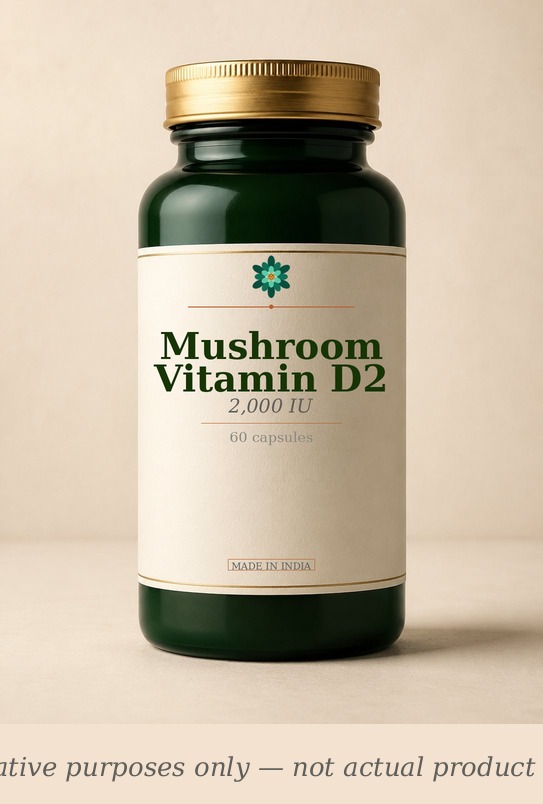
Mushroom Vitamin D2
Vitamin · 2,000 IU · 60 caps
People also ask
What does "Evidence Grade B" mean for Mushroom Vitamin D2?
How long do the benefits of Mushroom Vitamin D2 last?
How do I track whether Mushroom Vitamin D2 is working for me?
Keep reading

Vitamin D (Pregnancy): what the research actually shows
A clinical evidence review of Vitamin D (Pregnancy) — RCT data, effect sizes, evidence grade, and what the numbers mean for your specific situation.

Vitamin C: what the research actually shows
A clinical evidence review of Vitamin C — RCT data, effect sizes, evidence grade, and what the numbers mean for your specific situation.
Liposomal Vitamin C: what the research actually shows
A clinical evidence review of Liposomal Vitamin C — RCT data, effect sizes, evidence grade, and what the numbers mean for your specific situation.