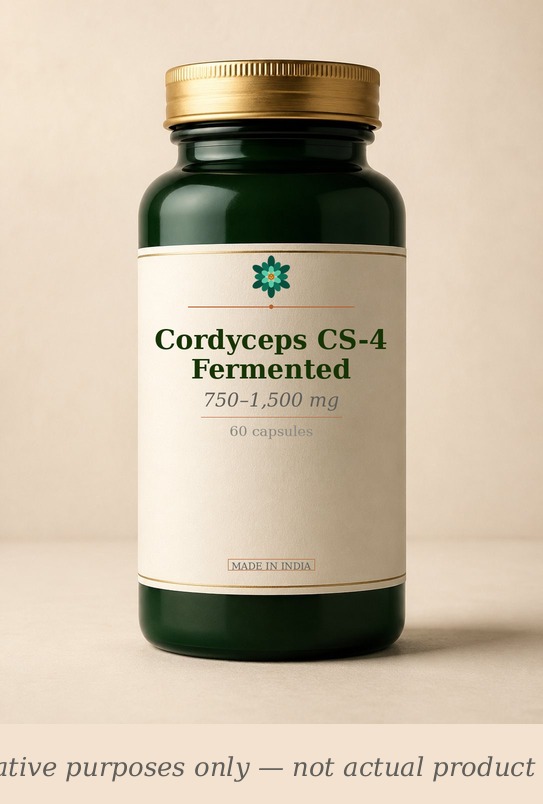
SacredBod's longer take on Cordyceps CS-4 Fermented — context the structured blocks above don't capture.
What Is Cordyceps CS-4?
Cordyceps sinensis is a fungus that grows on caterpillar larvae in the high-altitude meadows of the Himalayas and Tibetan plateau. Wild harvesting is ecologically destructive and astronomically expensive. CS-4 is the solution: a fermented mycelial strain isolated from wild Cordyceps and grown in liquid culture bioreactors. It contains the same bioactive compounds — cordycepin, adenosine, polysaccharides — and is the exact strain used in nearly all published clinical trials.
This distinction matters. Most “Cordyceps” supplements on the market use Cordyceps militaris fruiting bodies grown on grain. While not worthless, they are not the CS-4 strain with the specific VO2max and ATP research. For evidence-based buyers, CS-4 is the gold standard.
In India, Cordyceps is known as Keeda Jadi (Hindi: कीड़ा जड़ी) and is harvested wild in Uttarakhand and Himachal Pradesh. The wild form is traded at exorbitant prices and often adulterated. CS-4 fermentation provides a sustainable, affordable and clinically validated alternative.
How Does It Work?
Cordyceps CS-4 enhances energy through multiple validated pathways:
- ATP upregulation: Increases the activity of key mitochondrial enzymes (cytochrome c oxidase, succinate dehydrogenase) that drive ATP synthesis.
- Oxygen efficiency: Delays ventilatory threshold and raises metabolic threshold, meaning you can work harder before breathing becomes limiting.
- Lactate clearance: Enhances the body’s ability to clear lactate, reducing muscle burn and speeding recovery.
- Hypoxia adaptation: Modulates HIF-1α, the master regulator of low-oxygen gene expression — critical for altitude and endurance.
- Immunomodulation: Polysaccharides in CS-4 enhance NK cell activity and reduce post-exercise immunosuppression.
Who Benefits Most?
- Endurance athletes: The 1998 trial showed 10.5% improvement in metabolic threshold and significant ventilatory threshold gains.
- High-altitude workers / trekkers: Traditional use in Himalayan communities for altitude adaptation; modern research supports hypoxia resistance.
- Chronic fatigue patients: Improves oxygen utilisation and ATP output without stimulant side effects.
- Respiratory weakness: Traditional Chinese Medicine (TCM) uses Cordyceps as a lung tonic; modern studies show bronchodilatory effects.
- Ageing adults: Improves exercise tolerance and recovery in elderly subjects.
Dosage Guide
- Standard dose: 750–1,500 mg daily of CS-4 standardised extract.
- Athletic / therapeutic: 1,500–3,000 mg daily in divided doses.
- Timing: With breakfast and lunch; avoid late evening to prevent sleep disruption.
- Form: Capsules or tablets; powder can be mixed into smoothies.
- Standardisation: Look for minimum 10% polysaccharides or 0.1% adenosine.
Safety & Interactions
Cordyceps CS-4 is one of the safest adaptogens studied. It has GRAS status in the US and has been consumed for centuries in Asia. The main cautions are:
- Autoimmune conditions: The immune-enhancing effects may theoretically aggravate autoimmunity, though this is rare in practice.
- Anticoagulants: Mild antiplatelet activity suggests caution with warfarin or aspirin.
- Surgery: Discontinue 2 weeks before surgery due to mild blood-thinning effect.
India-Specific Context
Sanskrit/Hindi name: Keeda Jadi (कीड़ा जड़ी) — “insect herb.” In Tibetan medicine it is known as Yartsa Gunbu. It is mentioned in traditional Himalayan pharmacopoeias but not in classical Ayurvedic texts like Charaka Samhita, as its use is indigenous to the trans-Himalayan region rather than the Gangetic plain.
Availability:
- MRM Cordyceps CS-4 750 mg (ASIN B00028LS06) — imported via Amazon.in Global Store.
- Now Foods Cordyceps 750 mg (ASIN B0045X9VQC) — widely available import.
- LibidSafe Cordyceps Militaris (ASIN B0FR4NZF5T) — Indian-made, affordable, but different strain.
Wild Keeda Jadi is sold in Himalayan markets at ₹1–3 lakh per kilogram and is frequently fake. CS-4 fermentation is the only reliable way to obtain consistent, affordable and clinically validated Cordyceps.
Ayurvedic parallel: While not classical Ayurveda, Keeda Jadi is used by Himalayan Vaidyas as a “Shukra” and “Ojas” tonic — enhancing reproductive vitality and overall energy. It pairs naturally with Ashwagandha and Shilajit in mountain medicine traditions.
Traditional use: Himalayan and Tibetan traditional medicine has used wild Cordyceps for over 1,000 years for fatigue, respiratory illness, kidney health and as an aphrodisiac. CS-4 fermentation preserves these traditional applications while making them accessible and sustainable.