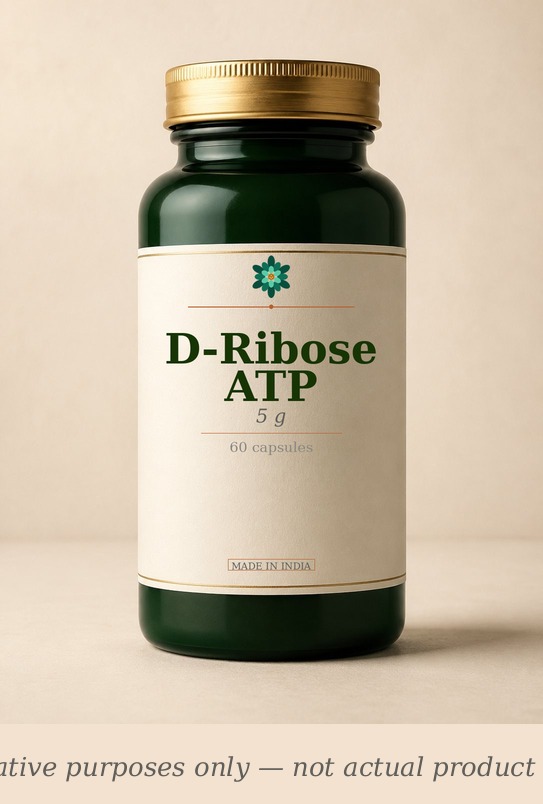
SacredBod's longer take on D-Ribose ATP — context the structured blocks above don't capture.
What Is D-Ribose?
D-Ribose is a simple sugar, but not the kind that sweetens tea. It is a pentose — a five-carbon carbohydrate — that serves as the literal scaffolding of adenosine triphosphate (ATP), the molecule every cell uses as currency for work. When you are healthy, your body makes ribose slowly through the pentose phosphate pathway. But in fibromyalgia, chronic fatigue syndrome, post-viral states and certain heart conditions, ATP is burned faster than it is rebuilt. D-Ribose supplementation fills that gap directly.
In India, D-Ribose is not a household name like Ashwagandha, yet it aligns conceptually with Ayurvedic “Rasayana” therapies that rebuild depleted reserves. It is not an herb, but a structural nutrient — closer to a building block than a stimulant.
How Does It Work?
Mitochondria manufacture ATP from oxygen and glucose, but the process is complex. If any intermediate step is bottlenecked, the whole factory slows. D-Ribose bypasses the bottleneck by providing the ribose-5-phosphate needed to stitch adenine and phosphate groups back into fresh ATP molecules. In heart muscle, which has limited ribose-synthesising capacity, this shortcut is especially valuable. Research shows that oral D-Ribose improves diastolic function, reduces BNP levels in heart-failure patients and restores energy scores in chronic fatigue sufferers.
Who Benefits Most?
- Fibromyalgia & CFS/ME patients: The 2006 pilot study showed a 45% average energy increase and 30% well-being improvement.
- Post-viral fatigue (Long COVID): Emerging clinical use targets the bioenergetic deficit seen in post-viral syndromes.
- Athletes: Speeds recovery between high-intensity sessions by replenishing muscle nucleotide pools.
- Heart-failure patients: Particularly those with HFpEF, where ribose improved Kansas City Cardiomyopathy Questionnaire scores.
Dosage Guide
- Therapeutic dose: 5 g, three times daily (15 g total), mixed in water or juice.
- Maintenance dose: 5 g once daily.
- Timing: With breakfast, lunch and dinner to minimise GI upset.
- Form: Powder dissolves easily; capsules exist but require many pills to reach gram doses.
Safety & Interactions
D-Ribose is extremely safe. The main issue is gastrointestinal tolerance at high doses. It has a glycaemic index near zero, but diabetics should still monitor because individual responses vary. There are no known serious drug interactions, though theoretical caution exists with insulin and allopurinol.
India-Specific Context
Sanskrit/Hindi name: Not applicable — D-Ribose is a biochemical isolate, not a traditional herb.
Availability: Standalone D-Ribose powder is scarce on Amazon.in. Most listings are imported sports-nutrition blends. Indian brands like HealthVit or MuscleBlaze do not currently list pure D-Ribose. Users typically import from iHerb or purchase through specialty pharmacies in metro cities. It is not a Schedule H drug and requires no prescription.
Ayurvedic parallel: The concept of rebuilding “Ojas” (vital energy) in Charaka Samhita aligns with D-Ribose’s role in restoring depleted reserves. Practitioners may pair it with Ashwagandha KSM-66 or Shilajit resin for a modern Rasayana stack.
Traditional use: None in classical Indian medicine — this is a modern mitochondrial nutraceutical.