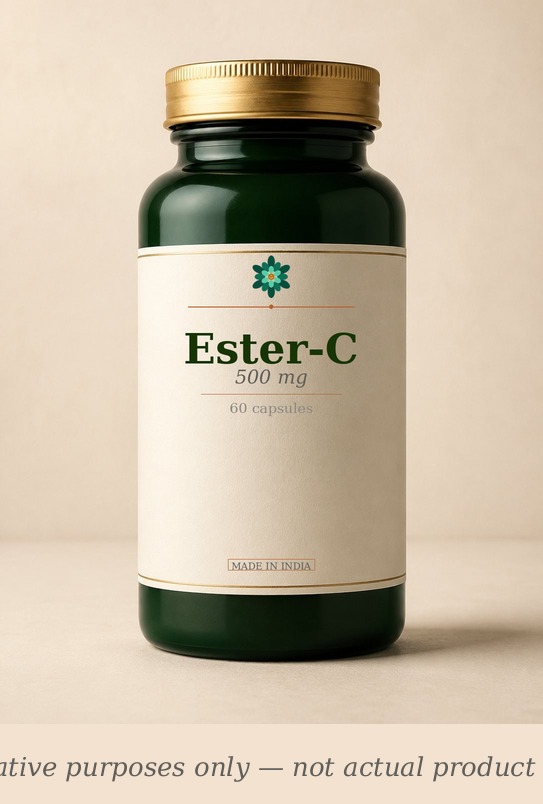
SacredBod's longer take on Ester-C — context the structured blocks above don't capture.
What the Evidence Actually Says
Ester-C is a patented form of vitamin C consisting of calcium ascorbate (a buffered, non-acidic salt of ascorbic acid) combined with small amounts of vitamin C metabolites: dehydroascorbic acid, calcium threonate, and furanone derivatives. It is marketed as being gentler on the stomach than standard ascorbic acid. The human research base is ester-c has a legitimate rct showing higher plasma and leukocyte vitamin c vs placebo, and the buffered ph genuinely improves stomach tolerance.
Mechanism in Plain Terms
Calcium ascorbate is less acidic than ascorbic acid (pH ~7.0 vs ~2.5), making it better tolerated by individuals with sensitive stomachs. The added metabolites (particularly threonate) are claimed to enhance vitamin C uptake and retention in leukocytes. However, the 2016 RCT showed Ester-C had similar plasma and leukocyte concentrations to standard ascorbic acid at equivalent doses, with only a delayed Tmax.
Who Should Consider It
Individuals with sensitive stomachs who experience heartburn, nausea, or diarrhea from standard ascorbic acid. Those seeking a buffered vitamin C option. For most healthy adults, standard ascorbic acid is equally effective and significantly cheaper.
Who Should Avoid or Use Caution
Individuals with a history of calcium oxalate kidney stones should use caution. Those with hemochromatosis should avoid high-dose vitamin C. Pregnant women should not exceed 2,000 mg/day.
Dosing Guidance
Typical dose: 500-1,000 mg 1-2x daily with meals
Best timing: With meals. Divided doses maintain more stable plasma levels than single large doses.
With food: Take with meals to further reduce any stomach sensitivity and improve absorption.
Practical notes: Ester-C is widely available in India from brands like SUNOVA. The 2016 RCT found Ester-C produced higher vitamin C concentrations vs placebo, but comparison to standard ascorbic acid showed only a delayed Tmax—not superior bioavailability. The stomach gentleness claim is legitimate. For most users, standard ascorbic acid is equally effective and 2-3x cheaper. Prices ₹300-800 for 60 tablets.
Stacking & Interactions
Pairs well with: Zinc for complementary immune support. Vitamin D for additional immune modulation. Quercetin for bioflavonoid synergy and enhanced vitamin C retention.
Avoid combining with: Avoid combining with high-dose iron supplements at the same time—vitamin C enhances iron absorption.
Common stacks: zinc, vitamin-d, quercetin
Indian Market Context
In India, this supplement is available through amazon.in and domestic brands. Prices typically range from ₹300–₹1,500 for a 30-60 day supply. Domestic brands like Carbamide Forte, HealthyHey, and SUNOVA offer competitive pricing. The Indian vitamin market is highly competitive with both domestic and imported options. Always verify third-party testing for purity, especially for fat-soluble vitamins where overdose risk exists. Store in cool, dry conditions away from direct sunlight.
Comparison with Standard Care
Ester-C should be viewed as adjunctive nutritional support, not a replacement for established medical therapy or standard vitamin forms. For the conditions mentioned, standard alternatives often outperform: standard ascorbic acid or sodium ascorbate, which are equally effective and cheaper. The specialized vitamin form adds incremental benefit with a favorable safety profile in most cases but should not delay appropriate medical evaluation.
Safety & Side Effects
Generally well-tolerated at recommended doses. The most common adverse effects vary by compound: Mild GI discomfort and potential kidney stone risk at high doses . Severe adverse events are rare at moderate doses in healthy individuals. Discontinue and seek medical care if you experience persistent vomiting, jaundice, signs of bleeding, or severe allergic reactions.
Evidence Grade Summary
Grade: B-
Ester-C has a legitimate RCT showing higher plasma and leukocyte vitamin C vs placebo, and the buffered pH genuinely improves stomach tolerance. However, direct comparison to standard ascorbic acid shows only delayed absorption, not superior overall bioavailability. Best for those with stomach sensitivity; for others, standard ascorbic acid is equally effective and cheaper.
Research Highlights
- 2016 — J Nutr: Determination of plasma and leukocyte vitamin C in a RCT with Ester-C. Ester-C produced higher vitamin C concentrations in plasma and leukocytes vs placebo at 24h. Cmax and AUC0-24h significantly higher than placebo.
- 2025 — PMC / NIH: Optimizing Oral Vitamin C Supplementation. Buffered mineral ascorbates improve GI tolerability but bioavailability is comparable to standard ascorbic acid. Sustained-release formulations show more reliable prolonged plasma exposure.
- 2025 — PMC / Nutrients: Do Liposomal Vitamin C Formulations Have Improved Bioavailability?. 9 of 10 studies showed higher bioavailability of liposomal vs non-liposomal vitamin C: 1.2-5.4x higher Cmax. However, all studies had industry funding.
zinc, vitamin-d, quercetin, liposomal-vitamin-c-1000mg
Bottom Line
Ester-C has legitimate stomach gentleness due to buffered pH and a positive RCT vs placebo, but direct comparison to standard ascorbic acid shows only delayed absorption—not superior bioavailability. The metabolite-enhanced retention claim is weakly supported. For those with stomach sensitivity, Ester-C is a good option at ₹300-800 in India. For everyone else, standard ascorbic acid (₹150-400) taken in divided doses is equally effective and significantly cheaper.