
SacredBod
0
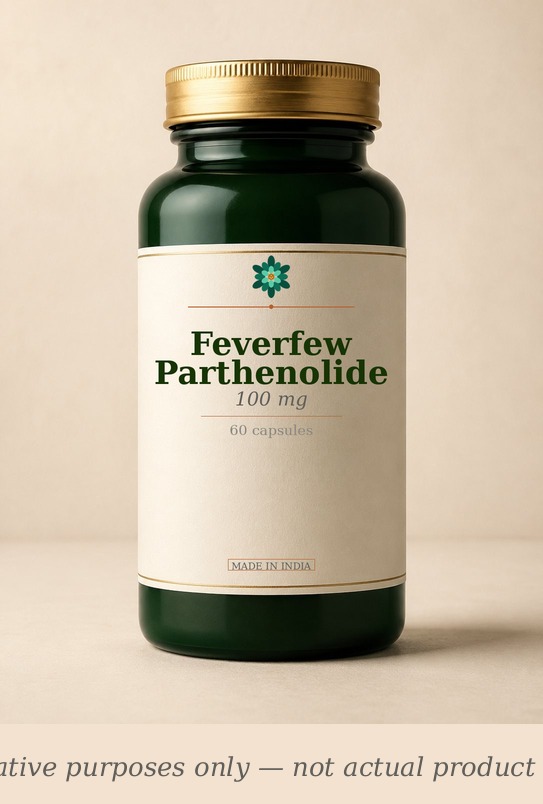
Feverfew Parthenolide — SacredBod supplement bottle (illustrative)
Supplement · Advanced Anti-Inflammatory

Feverfew Parthenolide

100 mg · vegan · gluten-free · 60 caps

Migraine headachesAuraNausea and vomiting with migrainesJoint inflammationPlatelet hyperaggregation BrainBlood vesselsJoints
BUY on Amazon →

Affiliate link · we earn from qualifying purchases. No paid placements.

What it is

Feverfew (Tanacetum parthenium) is a perennial herb whose leaves contain parthenolide — a sesquiterpene lactone that inhibits NF-κB, reduces platelet aggregation and modulates serotonin release. Standardised extracts (0.2–0.7 % parthenolide) have been studied for migraine prophylaxis, arthritis and inflammatory conditions.

How it works

Parthenolide inhibits NF-κB by alkylating the p65 subunit, preventing its DNA binding. It reduces platelet aggregation by inhibiting serotonin release from platelet granules and suppresses prostaglandin synthesis. In vascular smooth muscle, it reduces vasospastic reactivity — a key mechanism in migraine pathophysiology.

Who should take it

Individuals with recurrent migraines (with or without aura), those with inflammatory arthritis seeking platelet-modulating anti-inflammatory support and people interested in botanical migraine prophylaxis.

Avoid / careful

Avoid during pregnancy and breastfeeding (parthenolide may stimulate uterine contractions). Use caution in those on anticoagulants, with ragweed/chrysanthemum allergies or undergoing surgery. Side effects: Generally well tolerated; rare mild GI upset, mouth ulcers (with chewing fresh leaves), heartburn or allergic skin reactions. Abrupt discontinuation after long-term use may trigger rebound headaches.

When to take it

Morning
Noon
Evening
Night

How to take it

With food
Empty stomach
Before food

FAQs

Frequently asked

How long before I see results?
Migraine frequency reduction typically requires 4–8 weeks of daily use. The Murphy 1988 study showed significant reduction in attack frequency and severity after 4 months. Benefits may continue to improve with longer use.
Is it safe to take daily?
Yes at standardised extract doses (100 mg/day with 0.2–0.7 % parthenolide). Do not chew fresh feverfew leaves — this can cause mouth ulcers. If discontinuing after long-term use, taper gradually over 2 weeks to avoid rebound headaches.
Can I take it with my migraine medication?
Yes. Feverfew is complementary to standard migraine prophylaxis (propranolol, topiramate) and does not interact with triptans used for acute attacks. However, use caution with anticoagulants due to feverfew's antiplatelet activity.

In plain English

A plain-English read of the literature behind this supplement. Not a clinical recommendation.

Key citations: PMID 2899663 (Murphy 1988 — Lancet RCT: feverfew reduces migraine frequency and severity in 72 patients), PMID PMC7133498 (Cochrane review 2003: mixed evidence; Diener 2005 RCT showed 0.6 fewer migraines per month), PMID 16242032 (Miller 2005 — cat's claw and feverfew combination for osteoarthritis pain)

Editorial notes

SacredBod's longer take on Feverfew Parthenolide — context the structured blocks above don't capture.

What It Is

Feverfew Parthenolide delivers the sesquiterpene lactone that makes Tanacetum parthenium one of the most studied botanicals for migraine prophylaxis. Parthenolide constitutes up to 85 % of the total sesquiterpene content in feverfew leaves and is the compound responsible for NF-κB inhibition, platelet serotonin suppression and vascular smooth muscle modulation. Standardised extracts (0.2–0.7 % parthenolide) ensure consistent dosing — critical because parthenolide content varies dramatically between plants and degrades rapidly in improperly stored products. In India, feverfew is not native and supplements must be imported.

How It Works

  1. NF-κB alkylation — Parthenolide covalently binds the p65 subunit of NF-κB, preventing its DNA binding and transcriptional activity. This shuts down inflammatory gene expression in vascular endothelium and neurons.
  2. Platelet serotonin inhibition — Feverfew reduces serotonin release from platelet granules. Since platelet serotonin is implicated in migraine pathogenesis (vascular constriction followed by rebound dilation), this mechanism directly addresses a migraine trigger.
  3. Prostaglandin suppression — Parthenolide inhibits prostaglandin synthetase, reducing PGE2 and other eicosanoids that sensitise pain pathways.
  4. Vascular smooth muscle modulation — Feverfew extracts reduce contractile and relaxant reactivity in blood vessels, potentially stabilising the vascular dysregulation seen in migraine.

Who Benefits Most

  • Migraine sufferers (with or without aura) seeking prophylactic reduction in attack frequency.
  • Individuals with inflammatory arthritis — the platelet-modulating and NF-κB inhibitory effects provide dual benefit.
  • Those who cannot tolerate or prefer to avoid pharmaceutical migraine prophylaxis (propranolol, topiramate, amitriptyline).

Dosage Guide

GoalDoseDuration
Migraine prophylaxis100 mg extract/day (0.2–0.7 % parthenolide)Minimum 3 months
Arthritis support100–200 mg/dayOngoing

Take with food to reduce GI sensitivity. The parthenolide content must be standardised and stable — look for CO2-extracted or freeze-dried products that prevent degradation. Avoid products that do not specify parthenolide percentage.

Safety and Interactions

Feverfew is safe at standardised doses. The most notable risk is “post-feverfew syndrome” — rebound headaches, anxiety, insomnia and joint stiffness that can occur if the herb is abruptly discontinued after months of use. Taper gradually. Fresh leaf chewing causes mouth ulcers. Antiplatelet activity warrants caution with warfarin and aspirin.

India-Specific Context

  • Hindi/Sanskrit name: No classical equivalent; Tanacetum parthenium is not native to India. However, the pharmacological action aligns with Ayurvedic Shirovirechaniya (headache-relieving) herbs.
  • Local availability: Not available on Amazon.in as of 2026-05-16. NOW Foods Feverfew is available on Amazon.sg. Indian buyers must import via iHerb, Vitacost or international Amazon sellers at ₹800–2,000 for 60–100 capsules.
  • Regulatory status: Not a Schedule H drug; sold as a dietary supplement. Import duty and GST apply.
  • Ayurvedic parallel: The migraine-preventive action conceptually aligns with classical Ayurvedic herbs like Brahmi (Bacopa monnieri), Jatamansi (Nardostachys jatamansi) and Shankhapushpi (Convolvulus pluricaulis) — all used for Shirashoola (headache) and Vata disorders of the nervous system. Modern integrative practitioners may combine feverfew with these classical nervines.
  • Cultivation note: Feverfew can be grown in Indian hill stations (Shimla, Ooty, Munnar) but is not commercially cultivated for supplement production.

Traditional Use in Indian Medicine

Feverfew does not appear in classical Ayurvedic texts. However, the concept of using bitter, cooling herbs for Pitta-type headaches and vascular disorders is well-established. Brahmi, Jatamansi and Shankhapushpi are the classical equivalents for migraine and vascular headache management. Modern Indian integrative neurologists sometimes prescribe feverfew alongside these Ayurvedic herbs for comprehensive migraine prophylaxis, though this combination has not been formally studied. The AYUSH Ministry’s growing interest in evidence-based cross-traditional medicine may eventually facilitate feverfew cultivation and formulation in India.

Added to your stack.