
What it is
Hibiscus sabdariffa, commonly called Roselle or Jamaican sorrel, is a flowering plant whose deep red calyces are rich in anthocyanins, organic acids and polyphenols. In India it is known as Gudhal or Patthar chatta.
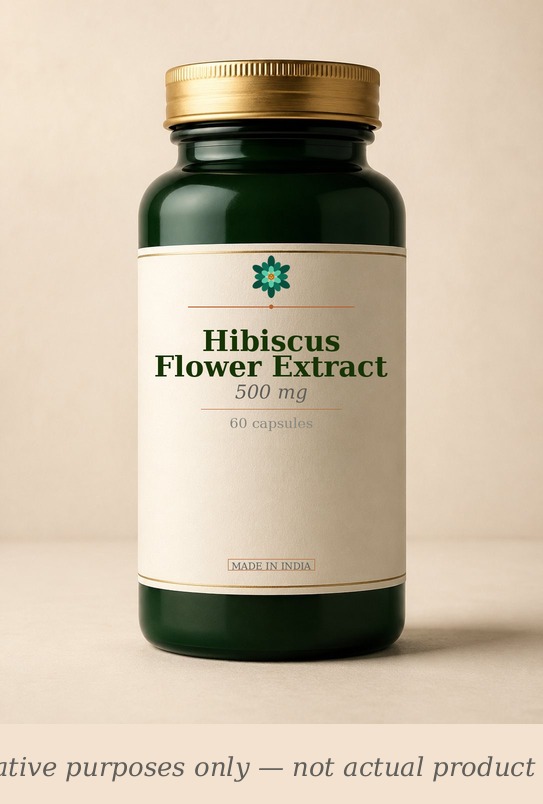
500 mg · vegan · gluten-free · 60 caps
Affiliate link · we earn from qualifying purchases. No paid placements.
Hibiscus sabdariffa, commonly called Roselle or Jamaican sorrel, is a flowering plant whose deep red calyces are rich in anthocyanins, organic acids and polyphenols. In India it is known as Gudhal or Patthar chatta.
Hibiscus inhibits angiotensin-converting enzyme (ACE) and reduces plasma aldosterone, producing a diuretic and blood-pressure-lowering effect. It also reduces LDL cholesterol and demonstrates antioxidant protection for renal tissues.
Adults with stage 1 hypertension, metabolic syndrome, or those seeking kidney-protective antioxidant support. Particularly beneficial for pre-diabetic and diabetic individuals with elevated blood pressure.
Pregnant or breastfeeding women; people with hypotension or on antihypertensive medication without medical supervision; those with known allergy to Malvaceae plants. Side effects: Generally well tolerated; may cause mild stomach upset or dizziness in sensitive individuals.
A plain-English read of the literature behind this supplement. Not a clinical recommendation.
Key citations: PMID 17315307 (RCT vs lisinopril, ACE inhibition), PMID 26600645 (RAAS comparative study), PMID 34694241 (meta-analysis SBP/DBP), PMID 34927694 (meta-analysis cardiometabolic markers)
SacredBod's longer take on Hibiscus Flower Extract — context the structured blocks above don't capture.
Hibiscus sabdariffa — known as Roselle, Jamaican sorrel, or in India as Gudhal (Hindi) and Jaswand (Marathi) — is a tropical shrub valued for its fleshy, crimson calyces. While the flowers are iconic in Indian gardens and religious offerings, the calyces are the medicinally active part, brewed into sour tea (karkade) across Africa and the Middle East. In India, dried hibiscus petals are sold by brands like CARMEL ORGANICS and CALM EARTH as supplements and herbal teas.
Hibiscus is rich in anthocyanins (delphinidin-3-sambubioside, cyanidin-3-sambubioside) and hydroxycitric acid. A landmark 2007 double-blind RCT showed that a standardised hibiscus extract (250 mg anthocyanins/day) reduced systolic BP by 17.1 mmHg and diastolic BP by 12.0 mmHg over 4 weeks, while inhibiting plasma ACE activity. A 2015 Nigerian RCT confirmed hibiscus reduced plasma aldosterone by 32% — comparable to lisinopril. Meta-analyses (2021–2022) pooling 13–17 RCTs confirm significant SBP reduction (−6.67 to −7.10 mmHg) versus placebo, with greatest benefit in those with elevated baseline BP. The diuretic effect is natriuretic without potassium loss, making it kidney-friendly.
Adults with stage 1 or mild stage 2 hypertension, metabolic syndrome, or diabetic nephropathy seeking adjunctive renoprotection. A 2022 Iranian RCT in diabetic nephropathy patients found hibiscus (500 mg + valsartan) improved creatinine and BUN more than valsartan + HCTZ. Not suitable as monotherapy for severe hypertension.
Well tolerated in trials up to 4 months. May cause mild GI upset. Because of documented ACE inhibition and aldosterone suppression, combine cautiously with lisinopril, enalapril, or ARBs. The tea is acidic; rinse mouth to protect dental enamel.
Hibiscus is not a classical Ayurvedic rasayana but is widely used in Indian folk medicine for hair care and as a cooling sharbat in summer. Supplement capsules are newer to the Indian market; CALM EARTH and Biovencer offer 500 mg capsules priced ₹400–₹700. It is not a scheduled drug. For tea drinkers, CARMEL ORGANICS sells certified organic dried petals (Sembaruthi Podi) at ₹200–₹350 per 100 g. Those with kapha dominance and fluid retention may find it particularly balancing due to its diuretic and warming metabolic action.
Peptides are physician-only. Tell us a bit and we'll route you to the right specialist.