SacredBod
0
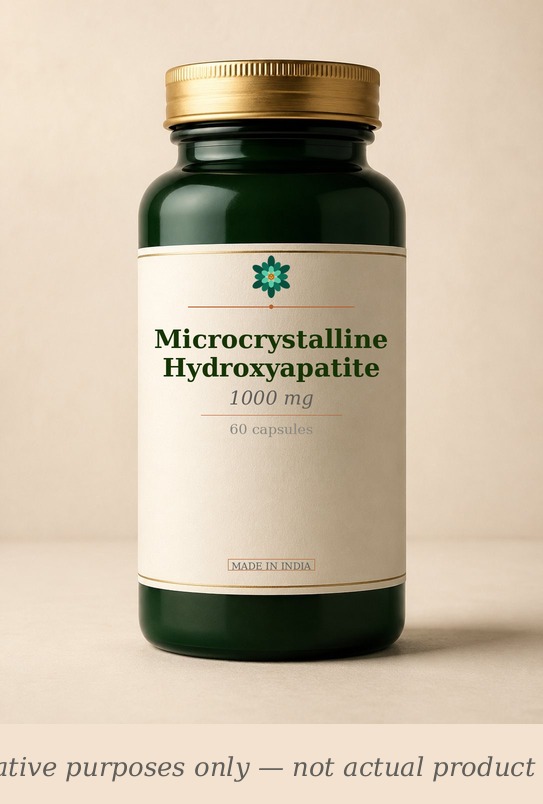
Microcrystalline Hydroxyapatite — SacredBod supplement bottle (illustrative)
Supplement · Bone Mineral Matrix

Microcrystalline Hydroxyapatite

1000 mg · gluten-free · 60 caps

OsteoporosisOsteopeniaBone fracturesLow bone densityPostmenopausal bone loss BonesTeeth
BUY on Amazon →

Affiliate link · we earn from qualifying purchases. No paid placements.

What it is

Microcrystalline hydroxyapatite (MCHA) is the natural form of calcium phosphate that makes up 70% of bone matrix. Unlike isolated calcium salts (carbonate, citrate), MCHA provides calcium in its complete biological matrix alongside phosphorus, magnesium, zinc, copper, manganese, collagen, and bone growth factors. It is typically derived from bovine bone (young, pasture-raised cattle) and is the closest nutritional approximation to actual human bone tissue.

How it works

MCHA delivers calcium and phosphorus in the exact 2:1 ratio found in human bone, along with the organic collagen matrix that serves as the scaffold for mineral deposition. Clinical trials show it is absorbed and utilized more effectively than calcium carbonate for bone mineralization. The trace minerals (zinc, copper, manganese) serve as cofactors for bone-forming enzymes like alkaline phosphatase. The collagen component may also stimulate osteoblast activity directly.

Who should take it

Postmenopausal women with osteoporosis or osteopenia, individuals who have not responded to calcium carbonate, those seeking a whole-food approach to bone support, and people with bone fractures healing. Highly relevant for Indian women with high osteoporosis rates and low dairy consumption.

Avoid / careful

Vegans and vegetarians, people with mad cow disease concerns (choose New Zealand or Australian sourced), those with hypercalcemia or kidney stones, individuals on calcium-restricted diets. Side effects: Very safe. May cause mild constipation (less than calcium carbonate). Rarely: stomach upset at high doses. The bovine source means it is not suitable for vegetarians.

When to take it

Morning
Noon
Evening
Night

How to take it

With food
Empty stomach
Before food

FAQs

Frequently asked

How long before I see results?
Bone turnover markers shift within 3 months. Measurable BMD improvements require DEXA scans at 6–12 month intervals. MCHA builds bone gradually — it is not a quick fix but a long-term structural investment.
Is it better than calcium carbonate?
Yes — head-to-head trials show MCHA produces greater BMD increases than calcium carbonate at equivalent calcium doses. The 1985 study (PMID 1599521) found MCHA maintained BMD while carbonate allowed bone loss in postmenopausal women.
Can I take it with my osteoporosis medication?
Yes, but separate bisphosphonate doses by at least 2 hours (calcium reduces drug absorption). MCHA complements vitamin D, K2, and magnesium beautifully. Always inform your doctor of all supplements.

In plain English

A plain-English read of the literature behind this supplement. Not a clinical recommendation.

Key citations: PMID 1599521 (MCHA vs calcium carbonate in postmenopausal women — head-to-head, 1985), PMID 2289283 (MCHA increases BMD in ovariectomized rats, 1990), PMID 18469236 (MCHA with vitamin D3 in postmenopausal women, 2008)

Editorial notes

SacredBod's longer take on Microcrystalline Hydroxyapatite — context the structured blocks above don't capture.

Microcrystalline hydroxyapatite (MCHA) is bone food — literally. It is the exact mineral complex that constitutes 70% of your skeleton, harvested from young, pasture-raised cattle bones and provided in its complete biological matrix. Unlike isolated calcium pills that deliver just one mineral, MCHA gives you calcium, phosphorus, collagen, magnesium, zinc, copper, manganese, and bone growth factors in the proportions nature designed.

What the Research Shows

A landmark 1985 study (PMID 1599521) compared MCHA to calcium carbonate in 40 postmenopausal women over 2 years. The MCHA group maintained bone mineral density, while the calcium carbonate group lost bone mass — demonstrating that the bone matrix itself matters, not just the calcium content.

A 1990 animal study (PMID 2289283) found that MCHA increased bone mineral density in ovariectomized rats more effectively than calcium carbonate, with histological evidence of improved bone microarchitecture and trabecular connectivity.

A 2008 clinical study (PMID 18469236) gave postmenopausal women MCHA combined with vitamin D3 and found significant improvements in BMD, serum 25-OH vitamin D, and reduced PTH levels — confirming the importance of the complete bone matrix plus vitamin D cofactor.

India Context

  • Availability: Ayuzera offers MCHA 1000mg capsules on Amazon India. NOW Foods, Source Naturals, and other international brands are available as imports.
  • Price: ₹500–₹1,200 for 60–120 capsules
  • Relevance for India: Indian women have among the world’s lowest calcium intakes (~400 mg/day vs 1200 mg recommended). With 50 million+ women facing osteoporosis, MCHA offers a superior alternative to cheap calcium carbonate tablets that dominate the Indian market.
  • Ayurvedic parallel: MCHA’s whole-bone approach mirrors Ayurvedic calcium preparations like Praval pishti (coral calcium), Mukta pishti (pearl calcium), and Shankha bhasma (conch shell calcium) — all providing mineral complexes rather than isolated salts.
  • Religious consideration: MCHA is bovine-derived. Most Hindu vegetarians will prefer coral calcium (Praval pishti) or plant-based alternatives. Those who consume dairy may accept bovine bone-derived supplements.

Dosage & Safety

  • Standard dose: 1000 mg twice daily with meals (provides ~500 mg elemental calcium)
  • Best time: Morning and evening with food
  • Caution: Not vegan. Choose New Zealand/Australian sourced products for BSE safety. Separate from thyroid medication by 4 hours and iron supplements by 2 hours.

Added to your stack.