
SacredBod
0
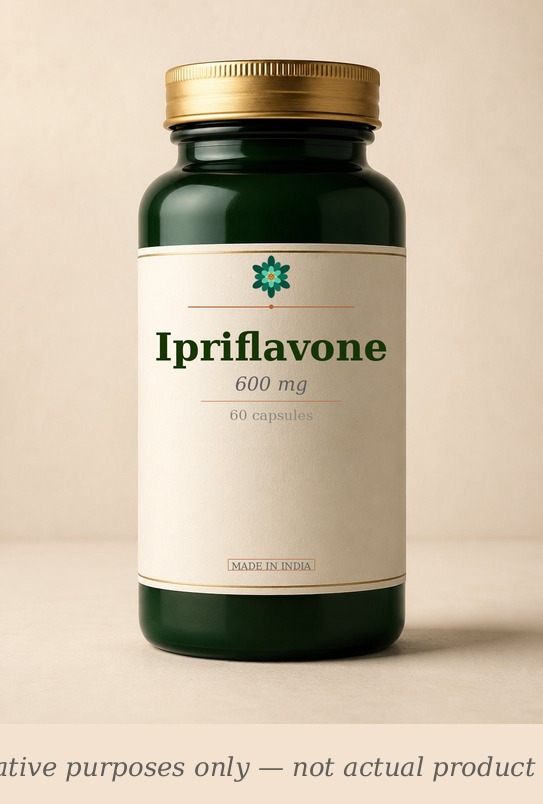
Ipriflavone — SacredBod supplement bottle (illustrative)
Supplement · Bone Density

Ipriflavone

600 mg · vegan · gluten-free · 60 caps

Postmenopausal bone lossOsteopeniaOsteoporosisHigh bone turnoverFracture risk BonesImmune system
BUY on Amazon →

Affiliate link · we earn from qualifying purchases. No paid placements.

What it is

Ipriflavone is a synthetic isoflavone derivative structurally related to genistein and daidzein from soy. It was developed in Italy and has been available as an over-the-counter bone health drug in Europe and Japan since 1989. Unlike hormone replacement therapy, it is non-steroidal and does not exhibit estrogenic activity in breast or uterine tissue, making it safer for long-term bone protection.

How it works

Ipriflavone inhibits osteoclast-mediated bone resorption and may mildly stimulate osteoblast activity. It reduces urinary hydroxyproline and serum osteocalcin — markers of bone turnover — indicating a slowing of the bone remodeling cycle that favors preservation of bone mineral density. It does not bind estrogen receptors in reproductive tissues, avoiding the cancer risks associated with HRT.

Who should take it

Postmenopausal women with osteopenia or osteoporosis, individuals who cannot or will not take hormone replacement therapy, and those seeking a non-hormonal bone preservation strategy. Relevant for Indian women who face rising osteoporosis rates but low HRT adherence due to cultural concerns.

Avoid / careful

Pregnant or breastfeeding women, individuals with existing lymphocytopenia or immune disorders, those with severe kidney disease, children. Side effects: Generally well-tolerated. May cause mild gastrointestinal discomfort (nausea, bloating, diarrhea) in ~10% of users. Rarely: lymphocytopenia (decreased lymphocyte count) reported in a minority of long-term users — reversible upon discontinuation.

When to take it

Morning
Noon
Evening
Night

How to take it

With food
Empty stomach
Before food

FAQs

Frequently asked

How long before I see results?
Bone turnover markers (hydroxyproline, osteocalcin) begin shifting within 3 months. Measurable BMD changes require 6–12 months of consistent use. The 2020 meta-analysis confirmed significant BMD improvement in lumbar spine after 1–2 years.
Is it safe to take daily?
Yes at 600 mg/day. Ipriflavone has been used in Europe and Japan since 1989 with a good safety profile. However, the 2001 JAMA study noted subclinical lymphocytopenia in ~13% of long-term users — reversible upon stopping. Monitor lymphocyte counts annually if using long-term.
Can I take it with my osteoporosis medication?
Ipriflavone can complement bisphosphonates, calcium, and vitamin D. Do not combine with HRT without medical supervision. Always inform your doctor of all supplements being taken alongside prescription osteoporosis drugs.

In plain English

A plain-English read of the literature behind this supplement. Not a clinical recommendation.

Key citations: PMID 32407952 (Meta-analysis: IP increases BMD & inhibits bone resorption, 2020), PMID 11255425 (JAMA RCT: no BMD benefit but lymphocytopenia risk, 2001), PMID 11683426 (Prevents bone loss in ovariectomized women, 2001), PMID 9689189 (Prevents rapid bone loss after early menopause, 1997), PMID 8695969 (Combined with low-dose estrogens: +5.6% BMD, 1995)

Editorial notes

SacredBod's longer take on Ipriflavone — context the structured blocks above don't capture.

Ipriflavone is one of the most clinically validated non-hormonal bone protectors — a synthetic isoflavone that has been prescribed across Europe and Japan for over 30 years as an over-the-counter osteoporosis prevention drug. Despite its strong evidence base, it remains virtually unknown in India.

What the Research Shows

A 2020 meta-analysis (PMID 32407952) pooled 11 randomized controlled trials (n=1605) and found that ipriflavone significantly increased lumbar spine bone mineral density compared to placebo (SMD = 0.36; 95% CI 0.09–0.62). It also significantly inhibited bone resorption markers. The most frequent adverse events were gastrointestinal symptoms, but withdrawal rates were similar to placebo.

However, the landmark 2001 JAMA study (PMID 11255425) — a 4-year RCT in 474 postmenopausal women — found no significant BMD difference between ipriflavone and placebo, but identified a concerning safety signal: 13.2% of ipriflavone users developed subclinical lymphocytopenia (low lymphocyte count), of whom 81% recovered spontaneously within 2 years of stopping. This finding tempered enthusiasm for ipriflavone in the US, though European and Asian regulators maintained its approved status.

Earlier positive RCTs include: a 1997 study (PMID 9689189) showing ipriflavone prevented rapid bone loss in early postmenopause; a 2001 Japanese study (PMID 11683426) demonstrating 6.7% vs 10.7% BMD loss in ovariectomized women; and a 1995 study (PMID 8695969) showing ipriflavone combined with low-dose estrogens produced a +5.6% BMD increase.

India Context

  • Availability: Ipriflavone is NOT available on Amazon India. It was never marketed in India despite being available in 22+ countries since 1989. Import from iHerb or European pharmacies is the only option.
  • Regulatory: Not a Schedule H drug in India, but not approved by CDSCO either. Would require import under personal use allowance or compounding pharmacy preparation.
  • Relevance for India: Indian women face a growing osteoporosis crisis — 50 million+ are estimated to have low bone mass. With low HRT adherence due to cultural concerns about hormones, a non-hormonal option like ipriflavone could fill a critical gap if made available.
  • Ayurvedic parallel: While not native to Ayurveda, ipriflavone’s bone-protective role aligns with Praval pishti (coral calcium), Asthi shrinkhala (Cissus quadrangularis), and Laksha (Laccifer lacca) used traditionally for bone fractures and osteoporosis.

Dosage & Safety

  • Standard dose: 600 mg/day (200 mg three times daily with meals)
  • Best time: With breakfast, lunch, and dinner
  • Caution: Monitor lymphocyte count annually with long-term use. Discontinue if lymphocytopenia develops. Mild GI upset is common initially — take with food to minimize.
Added to your stack.