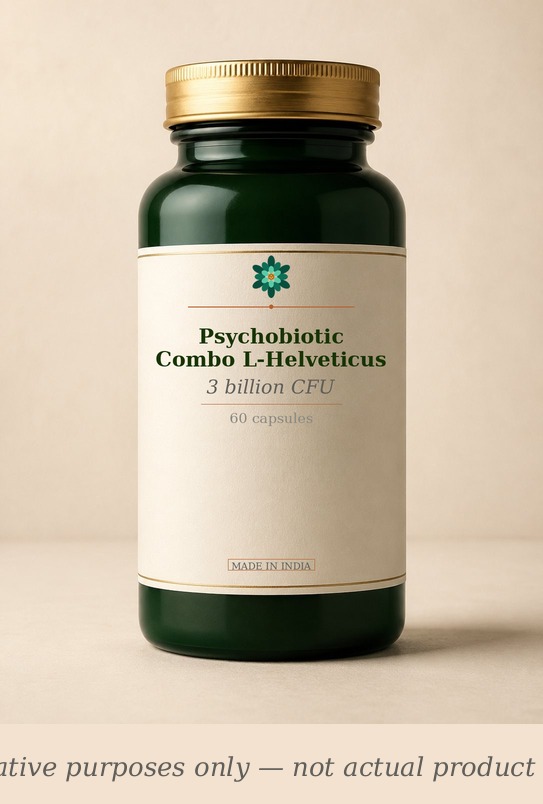
SacredBod's longer take on Psychobiotic Combo L-Helveticus — context the structured blocks above don't capture.
What Is the Psychobiotic Combo?
The term “psychobiotic” was coined by researchers at University College Cork to describe probiotics with measurable mental health benefits. This combination — Lactobacillus helveticus Rosell-52 (R0052) and Bifidobacterium longum Rosell-175 (R0175) — is the most clinically validated psychobiotic pair for anxiety and stress.
These are not generic probiotic strains. They are specific, patented, freeze-dried bacterial cultures manufactured by Lallemand Health Solutions (Canada) under the Rosell brand. Each strain has a unique mechanism: L. helveticus R0052 modulates GABAergic signalling and gut barrier integrity, while B. longum R0175 reduces systemic inflammation and normalises HPA axis activity.
In India, this specific combination is not widely available as a pre-formulated product. Users typically source the strains separately or import from international suppliers.
How Does It Work?
The gut-brain axis is a bidirectional communication network linking the gastrointestinal tract with the central nervous system. This psychobiotic combo operates on three levels:
- HPA axis modulation: In animal models of chronic stress, the R0052+R0175 combination significantly reduced corticosterone levels and restored adrenal gland weight. In humans, it reduced urinary free cortisol in stressed volunteers.
- Gut barrier repair: Stress increases intestinal permeability (“leaky gut”), allowing bacterial endotoxins (LPS) to enter circulation and trigger neuroinflammation. These strains upregulate tight junction proteins (occludin, ZO-1, claudin-1), sealing the gut barrier.
- Neurotransmitter influence: The strains modulate GABA receptor expression in the brain and increase brain-derived neurotrophic factor (BDNF) in the hippocampus — the same mechanisms targeted by anxiolytic medications.
Who Benefits Most?
- People with anxiety and stress: The human RCT showed reduced anxiety scores (Hamilton Anxiety Rating Scale) and lower plasma cortisol.
- Those with stress-related GI symptoms: IBS, functional dyspepsia and stress-induced diarrhoea respond to gut-brain axis modulation.
- Mild depression: The combination showed antidepressant-like effects in animal models and mood improvements in human trials.
- Students and professionals: Chronic stress from academic or work pressure.
- People on antidepressants: May reduce GI side effects and enhance mood stabilisation.
Dosage Guide
- Standard dose: 3 billion CFU daily of the combined strains (typically 1–2 capsules).
- Higher therapeutic dose: 10 billion CFU daily.
- Timing: With breakfast; consistent timing supports colonisation.
- Form: Capsules with freeze-dried powder. Refrigeration required.
- Duration: Minimum 4–8 weeks for mood benefits; ongoing for maintenance.
Safety & Interactions
Psychobiotics are extremely safe. The main considerations:
- Antibiotics: Separate by at least 2 hours.
- Immunocompromised: Avoid if severely immunosuppressed.
- SIBO: Those with small intestinal bacterial overgrowth may experience temporary bloating.
India-Specific Context
Sanskrit/Hindi name: Not applicable — these are modern probiotic strains.
Availability: No pre-formulated R0052 + R0175 combo exists on Amazon.in:
- Meibotan L. helveticus 30B CFU (ASIN B0DPHQ8HKJ) — ₹1,299
- Meibotan B. longum 30B CFU (ASIN B0DPG1HPM2) — ₹1,299
- Users must purchase both and take together.
It is not a Schedule H drug.
Ayurvedic parallel: The concept of “Manasika Dosha” (mental constitution) in Charaka Samhita aligns with psychobiotic goals. Brahmi (Bacopa monnieri) and Jatamansi are classical anxiolytics. A modern integrative approach might combine the psychobiotic combo with Ashwagandha KSM-66 for comprehensive HPA axis support — the probiotic addresses the gut-brain pathway while Ashwagandha addresses the adrenal pathway.
Traditional use: None in Indian classical medicine. Probiotics are a 20th-century discovery; psychobiotics are a 21st-century concept.