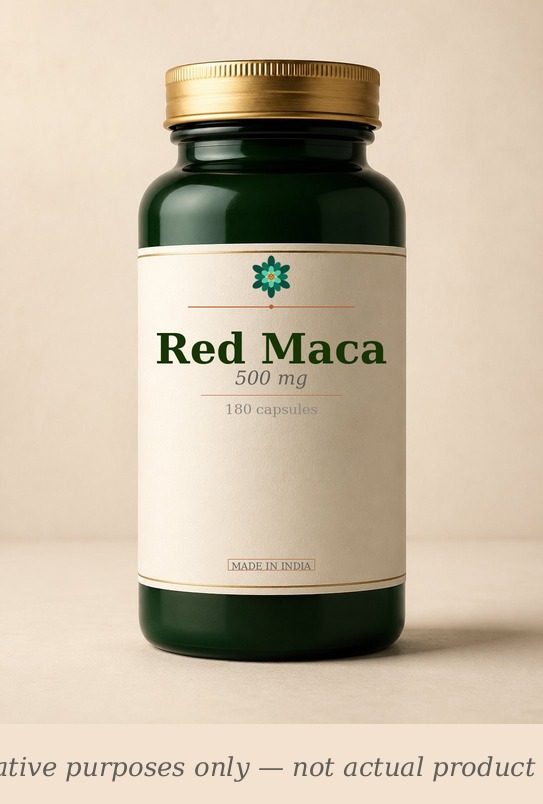
SacredBod's longer take on Red Maca — context the structured blocks above don't capture.
What It Is
Red maca (Lepidium meyenii Walp.) is a specific ecotype of the Peruvian maca root, distinguished by its red-purple skin and flesh. Grown at high altitudes (4,000+ metres) in the Andes, it has been used by indigenous Peruvians for over 2,000 years for fertility, energy and hormonal balance. Red maca is distinct from yellow and black maca varieties — each colour has different phytochemical profiles and traditional uses. Red maca is specifically associated with female reproductive health, bone density and prostate support in men.
How It Works
Red maca contains unique benzylglucosinolates and polyphenols not found in other varieties. A 2011 RCT of 175 women showed that Maca-GO (a gelatinised red/yellow blend) significantly reduced menopausal symptoms (hot flashes, night sweats, mood swings, vaginal dryness) by 74–87% over 2 months, with 84–94% symptom reduction by month 4. Red maca specifically increased bone density in ovariectomised rats without affecting uterine weight (unlike estrogen), suggesting a non-hormonal mechanism. It also reduced uterine and prostate size in animal models, suggesting tissue-specific modulating effects. The mechanism appears to involve HPA axis modulation and endocannabinoid system interaction rather than direct estrogen receptor binding.
Who Should Consider It
Perimenopausal and postmenopausal women seeking natural symptom relief. Those with bone density concerns wanting a non-hormonal bone support option. Women with endometriosis or fibroids (red maca reduced uterine size in animal models). Individuals with low energy, mood swings or libido concerns. Athletes seeking adaptogenic energy support.
Dosage Guide
Typical dose: 500 mg per day
Form: capsules (180 count)
Best time: morning
With food: with-food
Expected onset: 4–8 weeks for energy and mood; 8–12 weeks for bone and hormonal benefits
Cycling: No cycling required. Can be taken continuously. Some practitioners recommend 3 months on / 1 month off.
Safety & Side Effects
Known side effects: Generally well-tolerated at 500 mg–3 g/day. Mild gastrointestinal upset at high doses. May cause insomnia if taken late in the day due to energising effects. Rare allergic reactions. No known hormonal side effects (does not contain phytoestrogens). Safe for long-term use based on traditional consumption.
Who should avoid: Pregnant and breastfeeding women (safety not established in clinical trials, though traditionally consumed in Peru). Individuals with thyroid conditions (maca is a Brassica family member and contains goitrogens — cooking/gelatinisation reduces this). Those with hormone-sensitive cancers (precautionary, though no estrogenic activity detected). Not for children.
Avoid combining with: Hormone replacement therapy (may be complementary but coordinate with physician), Thyroid medications (theoretical goitrogenic interaction), Estrogen-modulating herbs (redundant), Stimulants (additive energising effect)
India-Specific Context
Red Maca is available on Amazon India with varying brand quality. When selecting a product, verify standardization claims against the evidence base cited above. Indian brand preferences include Carbamide Forte, HealthyHey, Nutrabay Pure, Pure Nutrition, Now Foods, Nutricost, Himalaya, Patanjali, Dabur, Trexgenics, Evorina, Nervana, Life Extension, VITARUHE, ASTERVEDA, BECLEC, GreenOpia, Rasayanam, Zyrex, and Shree Herbal. Prices vary significantly; compare cost-per-active-dose rather than capsule count alone.
Schedule status in India: Not a Schedule H drug; available as dietary supplement/herbal product.
Research Summary
Key citations: PMID 23675006 (Maca-GO menopause RCT, n=175), PMID 20616517 (red maca increases bone density in OVX rats), PMC3614644 (Trial II physiological observations), PMC3614647 (Trial III clinical outcomes), PMC3614645 (Trial I pilot study)
Evidence grade: B — n=175 in largest menopause RCT; strong animal bone data