SacredBod
0
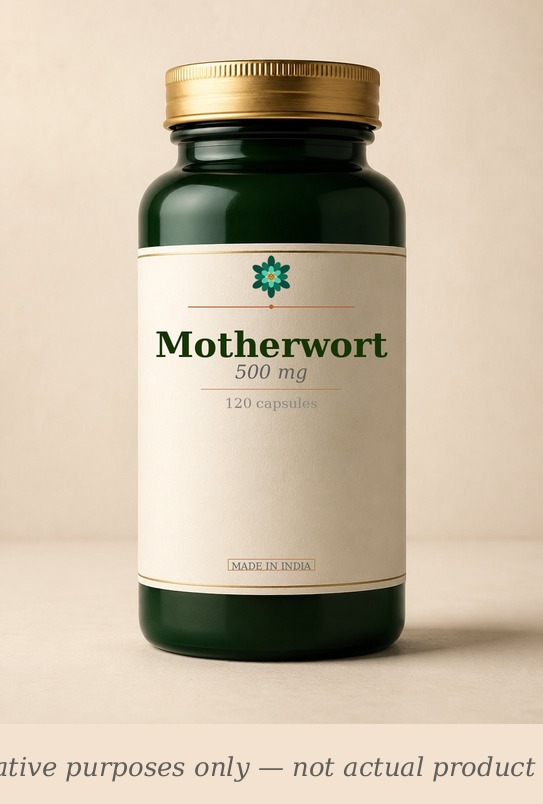
Motherwort — SacredBod supplement bottle (illustrative)
Supplement · Botanical

Motherwort

500 mg · vegan · gluten-free · 120 caps

Menstrual crampsDelayed menstruationPerimenopausal anxietyHeart palpitationsUterine weaknessPostpartum recovery UterusHeartNervous systemBlood vessels
BUY on Amazon →

Affiliate link · we earn from qualifying purchases. No paid placements.

What it is

Motherwort (Leonurus cardiaca L.) is a perennial herb in the mint family (Lamiaceae) native to Europe and Asia, with pink-purple flowers and a long history of use in traditional European, Chinese and North American herbal medicine. Its aerial parts contain leonurine, stachydrine, iridoids, flavonoids and phenolic acids. Traditionally called 'mother's herb,' it has been used for uterine toning, menstrual regulation, postpartum recovery, heart palpitations and anxiety.

How it works

Motherwort's alkaloid leonurine relaxes smooth muscle, including uterine muscle, reducing menstrual cramps and improving uterine tone. A 2011 RCT in 50 patients with hypertension and anxiety showed that 1,200 mg/day of Leonurus oil extract significantly improved anxiety and depression symptoms (32% significant improvement, 48% moderate improvement on CGI scale) and reduced blood pressure. In vitro studies demonstrate GABA-A receptor binding, supporting its anxiolytic and sedative properties. Stachydrine ameliorates endothelial dysfunction via Nrf2-dependent upregulation of GTPCH1 and nitric oxide. In herbal prescribing practice, motherwort was the most commonly prescribed herb (77%) for menopausal symptoms, primarily for hot flushes and as a gynaecological tonic.

Who should take it

Women with menstrual cramps, delayed menstruation or scanty periods seeking a uterine tonic. Those experiencing perimenopausal anxiety, heart palpitations or sleep disturbances. Individuals with mild hypertension accompanied by anxiety and stress. Postpartum women recovering from childbirth (traditional use for lochia regulation). Not for use during pregnancy.

Avoid / careful

Pregnant women (uterine stimulant — may cause miscarriage). Women with heavy menstrual bleeding (may increase flow). Those with hypotension or on antihypertensive medications (additive BP-lowering effect). Individuals with thyroid disorders taking bugleweed (already combined in some traditional formulas). Not for children. Side effects: Generally well-tolerated at 500–1,200 mg/day. Very bitter taste may cause nausea in sensitive individuals. May increase uterine contractions — avoid during pregnancy. Rare photosensitivity. May cause drowsiness or low blood pressure at high doses.

When to take it

Morning
Noon
Evening
Night

How to take it

With food
Empty stomach
Before food

FAQs

Frequently asked

How long before I see results?
Anxiety and heart palpitation relief may be noticeable within 1–2 weeks. The hypertension RCT showed effects by 1 week in stage 1 patients. Menstrual benefits require 4–6 weeks of consistent use.
Can I take it during pregnancy?
No — motherwort is a uterine stimulant and emmenagogue. It promotes uterine contractions and may cause miscarriage. It is traditionally used BEFORE pregnancy to tone the uterus and AFTER childbirth for recovery, but never during pregnancy.
Is it safe with blood pressure medication?
Caution advised. Motherwort has demonstrated hypotensive effects in clinical trials. If you are on antihypertensives, consult your physician and monitor blood pressure closely to avoid excessive lowering.

In plain English

A plain-English read of the literature behind this supplement. Not a clinical recommendation.

Key citations: PMID 20839214 (hypertension + anxiety RCT, n=50), PMID 26218338 (GABA-A receptor binding assays), PMID 33503956 (psychotropic research of modified dry extracts), PMC6500680 (bioactive compounds and cardiovascular action), PMC7911030 (anxiolytic activity with amino acid complexes)

Editorial notes

SacredBod's longer take on Motherwort — context the structured blocks above don't capture.

What It Is

Motherwort (Leonurus cardiaca L.) is a perennial herb in the mint family (Lamiaceae) native to Europe and Asia, with pink-purple flowers and a long history of use in traditional European, Chinese and North American herbal medicine. Its aerial parts contain leonurine, stachydrine, iridoids, flavonoids and phenolic acids. Traditionally called ‘mother’s herb,’ it has been used for uterine toning, menstrual regulation, postpartum recovery, heart palpitations and anxiety.

How It Works

Motherwort’s alkaloid leonurine relaxes smooth muscle, including uterine muscle, reducing menstrual cramps and improving uterine tone. A 2011 RCT in 50 patients with hypertension and anxiety showed that 1,200 mg/day of Leonurus oil extract significantly improved anxiety and depression symptoms (32% significant improvement, 48% moderate improvement on CGI scale) and reduced blood pressure. In vitro studies demonstrate GABA-A receptor binding, supporting its anxiolytic and sedative properties. Stachydrine ameliorates endothelial dysfunction via Nrf2-dependent upregulation of GTPCH1 and nitric oxide. In herbal prescribing practice, motherwort was the most commonly prescribed herb (77%) for menopausal symptoms, primarily for hot flushes and as a gynaecological tonic.

Who Should Consider It

Women with menstrual cramps, delayed menstruation or scanty periods seeking a uterine tonic. Those experiencing perimenopausal anxiety, heart palpitations or sleep disturbances. Individuals with mild hypertension accompanied by anxiety and stress. Postpartum women recovering from childbirth (traditional use for lochia regulation). Not for use during pregnancy.

Dosage Guide

Typical dose: 500 mg per day

Form: tablets (120 count)

Best time: morning

With food: with-food

Expected onset: 2–4 weeks for anxiety and heart palpitations; 4–6 weeks for menstrual support

Cycling: No cycling required. Can be taken continuously.

Safety & Side Effects

Known side effects: Generally well-tolerated at 500–1,200 mg/day. Very bitter taste may cause nausea in sensitive individuals. May increase uterine contractions — avoid during pregnancy. Rare photosensitivity. May cause drowsiness or low blood pressure at high doses.

Who should avoid: Pregnant women (uterine stimulant — may cause miscarriage). Women with heavy menstrual bleeding (may increase flow). Those with hypotension or on antihypertensive medications (additive BP-lowering effect). Individuals with thyroid disorders taking bugleweed (already combined in some traditional formulas). Not for children.

Avoid combining with: Antihypertensive medications, Sedatives and CNS depressants, Anticoagulants (theoretical), Thyroid medications (if combined with bugleweed), Pregnancy

India-Specific Context

Motherwort is available on Amazon India with varying brand quality. When selecting a product, verify standardization claims against the evidence base cited above. Indian brand preferences include Carbamide Forte, HealthyHey, Nutrabay Pure, Pure Nutrition, Now Foods, Nutricost, Himalaya, Patanjali, Dabur, Trexgenics, Evorina, Nervana, Life Extension, VITARUHE, ASTERVEDA, BECLEC, GreenOpia, Rasayanam, Zyrex, and Shree Herbal. Prices vary significantly; compare cost-per-active-dose rather than capsule count alone.

Schedule status in India: Not a Schedule H drug; available as dietary supplement/herbal product.

Research Summary

Key citations: PMID 20839214 (hypertension + anxiety RCT, n=50), PMID 26218338 (GABA-A receptor binding assays), PMID 33503956 (psychotropic research of modified dry extracts), PMC6500680 (bioactive compounds and cardiovascular action), PMC7911030 (anxiolytic activity with amino acid complexes)

Evidence grade: C+ — One human RCT for anxiety/hypertension; strong in-vitro and animal pharmacology data

Added to your stack.