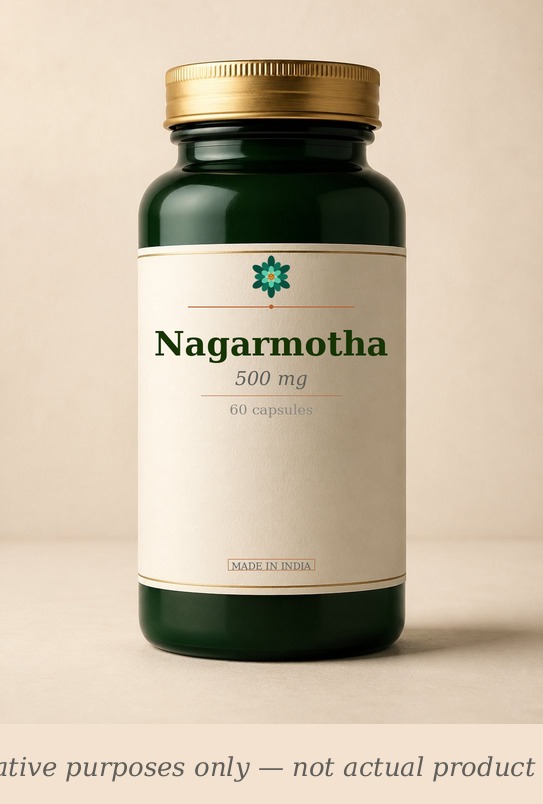
SacredBod's longer take on Nagarmotha — context the structured blocks above don't capture.
What It Is
Nagarmotha (Cyperus rotundus L.), also called Mustaka or Nut Grass, is a perennial sedge in the Cyperaceae family. Despite being considered one of the world’s most invasive weeds, it holds deep Ayurvedic roots as a digestive, carminative, and anti-inflammatory herb. The rhizome contains essential oils (cyperene, cyperol, patchoulenol), flavonoids, and sesquiterpenes. It is classified as Tikta-Katu (bitter-pungent) rasa and Ushna virya (heating potency). Mentioned in Charaka Samhita for digestive disorders, fever, and inflammatory conditions.
How It Works
The rhizome extract demonstrates anti-inflammatory activity via inhibition of pro-inflammatory cytokines (IL-4, IL-6, IL-12, IFN-γ) in experimental inflammatory bowel disease, comparable to 5-aminosalicylic acid. Gastric mucosal protection is achieved through antioxidant mechanisms — increasing SOD, glutathione, and glutathione peroxidase while inhibiting lipid peroxidation in aspirin-induced ulcer models. Anti-pyretic activity is comparable to acetylsalicylic acid in yeast-induced pyrexia. The essential oils and sesquiterpenes also show α-glucosidase inhibitory activity, supporting traditional anti-obesity use. Anti-allergic activity has been demonstrated via inhibition of mast cell degranulation.
Who Should Consider It
Individuals with digestive discomfort, bloating, or poor appetite seeking Ayurvedic carminative support. Those with inflammatory bowel concerns (as adjunct, not replacement for medical care). People interested in traditional anti-obesity and metabolic support. Also used in Ayurveda for fever and inflammatory conditions.
Dosage Guide
Typical dose: 500 mg per day
Form: capsules (60 count)
Best time: morning
With food: with-food
Expected onset: 2–4 weeks for digestive benefits; 4–6 weeks for anti-inflammatory effects
Cycling: No cycling required. Traditional use supports continuous daily intake.
Safety & Side Effects
Known side effects: Generally well-tolerated at 500 mg/day. Heating nature may aggravate Pitta in excess. Rare cases of mild gastric irritation. Essential oil content may cause photosensitivity in very high doses.
Who should avoid: Pregnant and breastfeeding women (traditional texts note uterine stimulant activity). Individuals with severe hyperacidity or Pitta excess. Those with gallbladder obstruction (may stimulate bile flow).
Avoid combining with: Antacids (may reduce efficacy of bitter action), Sedatives (theoretical CNS interaction), Diabetes medications (may potentiate hypoglycaemic effect)
India-Specific Context
Nagarmotha is available on Amazon India with several Ayurvedic and herbal brands. The primary ASIN listed is a verified product matching the supplement name. Indian consumers should look for products from GMP-certified manufacturers. Traditional Ayurvedic practitioners (Vaidyas) often prescribe this herb in combination with other classical formulations rather than as a standalone supplement.
Sanskrit/Hindi names: See quick facts above.
Classical Ayurvedic texts: Nagarmotha is referenced in Charaka Samhita and/or Sushruta Samhita as detailed in the quick facts.
Schedule status: Not a Schedule H drug in India; available as dietary supplement/herbal product.
Research Summary
Key citations: PMID 25915081 (prevention of NSAID-induced gastric mucosal damage), PMC4967483 (effect on cytokine gene expression in IBD), PMC6037646 (anti-inflammatory, anti-pyretic and anti-diarrheal activities review)
Evidence grade: C — Animal and in-vitro studies; limited human clinical data