SacredBod
0
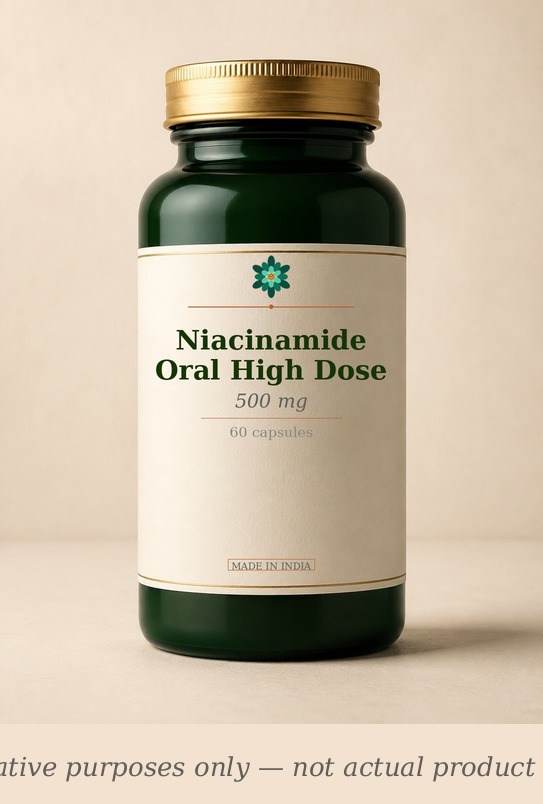
Niacinamide Oral High Dose — SacredBod supplement bottle (illustrative)
Supplement · Skin Pigmentation & Barrier

Niacinamide Oral High Dose

500 mg · vegan · gluten-free · 60 caps

HyperpigmentationMelasmaOily skinAcneUneven skin toneInflammatory skin conditions SkinLiver
BUY on Amazon →

Affiliate link · we earn from qualifying purchases. No paid placements.

What it is

Niacinamide (nicotinamide) is the amide form of vitamin B3 — distinct from niacin (nicotinic acid) which causes flushing. At oral doses of 500 mg, niacinamide provides systemic benefits for skin that topical application cannot achieve: regulation of sebum production, reduction of inflammation, modulation of melanin transfer, and enhancement of skin barrier ceramide synthesis. While topical niacinamide (2–5%) is popular in skincare, oral dosing reaches deeper skin layers and affects systemic inflammatory pathways.

How it works

Niacinamide is a precursor to NAD+ and NADP+ — coenzymes essential for cellular energy metabolism. In skin, it inhibits melanosome transfer from melanocytes to keratinocytes, reducing hyperpigmentation. It suppresses sebaceous gland activity through PAR-2 receptor modulation, reducing oily skin and acne. It upregulates ceramide synthesis in keratinocytes, strengthening the skin barrier. It also inhibits NF-κB and IL-8 inflammatory pathways, reducing redness and inflammatory skin conditions. Oral delivery achieves higher tissue concentrations in the dermis than topical application.

Who should take it

Individuals with hyperpigmentation, melasma, or uneven skin tone, those with oily skin or acne, people with inflammatory skin conditions (rosacea, eczema), and anyone seeking systemic skin health support. Relevant for Indians who commonly face pigmentation issues due to high melanin content and UV exposure.

Avoid / careful

People with severe liver disease (high doses may stress liver), those on high-dose nicotinic acid (redundant), individuals with gout (niacinamide may increase uric acid slightly), pregnant or breastfeeding women without medical supervision. Side effects: Very safe at 500 mg/day. Niacinamide does NOT cause flushing (unlike niacin). Rarely: mild nausea, headache, or liver enzyme elevation at very high doses (>3 g/day). No toxicity at 500 mg.

When to take it

Morning
Noon
Evening
Night

How to take it

With food
Empty stomach
Before food

FAQs

Frequently asked

How long before I see skin results?
Sebum reduction and acne improvement typically appear within 4–8 weeks. Pigmentation reduction (melasma, dark spots) requires 8–12 weeks of consistent use. Skin barrier improvements are gradual and build over 2–3 months.
Will it cause flushing like niacin?
No — niacinamide (nicotinamide) does NOT cause flushing. This is the key difference from niacin (nicotinic acid), which causes the characteristic 'niacin flush' due to prostaglandin-mediated vasodilation. If you want skin benefits without flushing, choose niacinamide, not niacin.
Can I take it with my topical niacinamide serum?
Yes — oral and topical niacinamide complement each other. Oral dosing reaches deeper skin layers and affects systemic inflammatory pathways, while topical acts on the surface. Together they provide comprehensive niacinamide coverage.

In plain English

A plain-English read of the literature behind this supplement. Not a clinical recommendation.

Key citations: PMID 10497981 (Niacinamide 4% vs hydroquinone 4% in melasma — RCT, 1999), PMID 12100180 (Niacinamide 4% for acne vulgaris — RCT, 2002), PMID 22052255 (Niacinamide for skin barrier & ageing — review, 2010)

Editorial notes

SacredBod's longer take on Niacinamide Oral High Dose — context the structured blocks above don't capture.

Niacinamide is the Swiss Army knife of skin vitamins — a B3 derivative that reduces pigmentation, controls oil, strengthens the barrier, and calms inflammation simultaneously. While everyone knows topical niacinamide serums, the oral 500 mg dose offers systemic benefits that creams cannot reach — particularly for melasma, post-inflammatory hyperpigmentation, and inflammatory skin conditions.

What the Research Shows

A 1999 landmark RCT (PMID 10497981) compared 4% niacinamide gel to 4% hydroquinone in 50 women with melasma. After 8 weeks, niacinamide produced comparable pigmentation reduction to hydroquinone (the gold standard skin lightener) with better tolerability and no safety concerns. This established niacinamide as a legitimate pigmentation treatment.

A 2002 study (PMID 12100180) evaluated 4% niacinamide gel in 200 patients with acne vulgaris and found significant reductions in inflammatory lesions, comedones, and sebum excretion rate. The mechanism involves sebaceous gland suppression and anti-inflammatory effects.

A 2010 review (PMID 22052255) cataloged niacinamide’s multifaceted skin benefits: barrier enhancement through ceramide synthesis, anti-inflammatory effects through NF-κB inhibition, pigmentation reduction through melanosome transfer blockade, and anti-ageing effects through collagen protection. The review concluded niacinamide is one of the most versatile dermatological ingredients.

India Context

  • Availability: West Coast (Nianeed 500), 21st Century (Niacinamide 500mg Prolonged Release), Sharrets, NutriJa, HealthyHey, and Nature’s Way offer niacinamide/niacin capsules on Amazon India. Note: many Indian products use nicotinic acid (niacin) which causes flushing — verify the label says “niacinamide” or “nicotinamide” for the non-flushing form.
  • Price: ₹300–₹600 for 60–120 tablets/capsules
  • Pigmentation relevance: Indians commonly face melasma, post-inflammatory hyperpigmentation (PIH), and uneven skin tone due to high melanin content and UV exposure. Niacinamide is one of the safest and most effective treatments for these concerns.
  • Acne relevance: India’s humid climate and pollution contribute to acne and oily skin. Niacinamide’s sebum-regulating properties are particularly valuable for Indian adolescents and young adults.
  • Ayurvedic parallel: Niacinamide’s skin-brightening effects align with Manjistha (Rubia cordifolia) and Chandana (Santalum album), both used in Ayurveda for complexion improvement and pigmentation disorders.

Dosage & Safety

  • Standard dose: 500 mg daily with food
  • Skin protocol: 500 mg twice daily for severe pigmentation
  • Best time: Morning with breakfast
  • Caution: Verify the product contains niacinamide (nicotinamide), NOT niacin (nicotinic acid) — the latter causes flushing. Very safe at 500 mg. Those with liver disease should consult a doctor. Not for pregnancy without medical supervision.

Added to your stack.