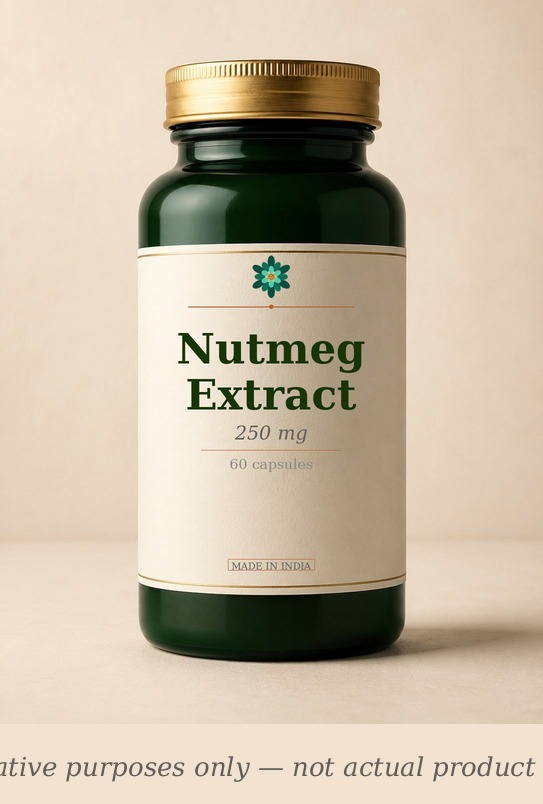
SacredBod's longer take on Nutmeg Extract — context the structured blocks above don't capture.
Nutmeg — Jaiphal — is one of the most misunderstood spices in the supplement world. While high recreational doses have earned it a reputation for toxicity, the tiny amounts used in Ayurvedic medicine (250–500 mg) provide genuine sedative, digestive, and anti-inflammatory benefits without risk.
What the Research Shows
A 2025 comprehensive review in Food Science & Nutrition cataloged nutmeg’s pharmacological profile: antioxidant, anti-inflammatory, antidiabetic, antimicrobial, and neurocognitive support. Myristicin and macelignan are the key bioactives. Macelignan inhibits inflammatory cytokines (IL-6, IL-1β, TNF-α) and enhances insulin sensitivity through AMPK activation.
A 1999 study in Phytotherapy Research found nutmeg chloroform extract significantly inhibited carrageenan-induced paw edema (anti-inflammatory), reduced acetic acid writhing (analgesic), and protected against ADP-induced thrombosis in rodents.
The sedative mechanism involves myristicin’s interaction with GABA-A receptors and MAO inhibition — explaining both its sleep-promoting and mild mood-elevating effects.
Ayurvedic Context
Jaiphal is described in Charaka Samhita as deepana-pachana (digestive stimulant), shoolahara (pain reliever), and nidrajanana (sleep promoter). It is a key ingredient in classical formulations like Jaiphaladi churna and Kumaryasava. In Indian households, a pinch of nutmeg in warm milk before bed is the traditional remedy for children’s insomnia and colic.
India-Specific Notes
- Cultural use: Jaiphal is essential in Indian desserts (kheer, halwa), biryani, and warm milk tonics.
- Supplement availability: Standalone nutmeg tablets are available from BHARAT Herbal and NatXtra on Amazon India. Most products are in sleep-support combinations.
- Price: ₹200–₹500 for 60 tablets/capsules
- Safety culture: Indian traditional medicine has used nutmeg safely for millennia at culinary and medicinal doses. The key is respecting the dose ceiling.
Dosage & Safety
- Standard dose: 250 mg before bed
- Maximum dose: 500 mg/day (never exceed)
- Best time: 30–60 minutes before bedtime
- Critical caution: Doses above 1 g can cause nausea, dizziness, and tachycardia. Above 5 g is potentially toxic. Keep away from children. Do not use with MAO inhibitors.