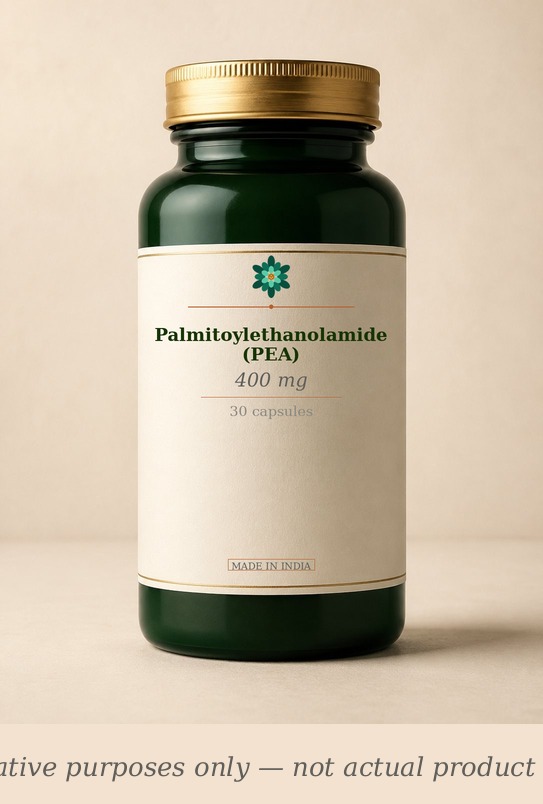
SacredBod's longer take on Palmitoylethanolamide (PEA) — context the structured blocks above don't capture.
What It Is
Palmitoylethanolamide (PEA) is an endogenous fatty acid amide belonging to the N-acylethanolamine family, structurally related to the endocannabinoid anandamide. It is produced on demand by the body in response to tissue injury, inflammation and pain. PEA acts as a glial cell modulator and mast cell stabiliser, reducing neuroinflammation and peripheral sensitisation. Micronised PEA (m-PEA) has superior absorption and is the form used in most clinical trials. It is not a classic analgesic but rather a disease-modifying anti-inflammatory agent for neuropathic and inflammatory pain conditions.
How It Works
PEA activates peroxisome proliferator-activated receptor-alpha (PPAR-α), which downregulates pro-inflammatory gene expression and reduces microglial activation in the CNS. It also inhibits mast cell degranulation and reduces substance P release, lowering neurogenic inflammation. A 2025 meta-analysis of 14 RCTs (n=1,422) found PEA significantly reduced pain intensity in diabetic neuropathy, fibromyalgia, osteoarthritis and sciatica. It does not act on classical cannabinoid receptors (CB1/CB2) at therapeutic doses, avoiding psychoactive effects. The ‘entourage effect’ with anandamide may enhance endocannabinoid tone indirectly.
Who Should Consider It
Individuals with neuropathic pain (diabetic neuropathy, sciatica, post-herpetic neuralgia), fibromyalgia, osteoarthritis, or interstitial cystitis. Those seeking a non-opioid, non-NSAID alternative for chronic pain with an excellent safety profile. People with mast cell activation syndrome (MCAS) or neuroinflammatory conditions.
Dosage Guide
Typical dose: 400 mg per day
Form: capsules (30 count)
Best time: morning
With food: with-food
Expected onset: 2–4 weeks for pain relief; 4–8 weeks for nerve regeneration support
Cycling: No cycling required. Safe for long-term daily use. Benefits may accumulate over time.
Safety & Side Effects
Known side effects: Extremely well-tolerated with negligible side effects. Rare mild gastrointestinal upset or headache. No known organ toxicity, addiction potential or withdrawal syndrome. Safe in elderly populations and compatible with most medications. Over 40 years of clinical use in Europe with an excellent safety record.
Who should avoid: Pregnant and breastfeeding women (safety not established, though endogenous PEA is present in breast milk naturally). Individuals with severe liver disease (theoretical concern, though no hepatotoxicity reported). Not for acute traumatic pain or surgical pain as a standalone agent.
Avoid combining with: No major contraindications — PEA has an excellent drug interaction profile, May theoretically enhance effects of other pain medications (additive), Not a substitute for emergency analgesia
India-Specific Context
Palmitoylethanolamide (PEA) is available on Amazon India with varying brand quality. When selecting a product, verify standardization claims against the evidence base cited above. Indian brand preferences include Carbamide Forte, HealthyHey, Nutrabay Pure, Pure Nutrition, Now Foods, Nutricost, Himalaya, Patanjali, Dabur, Trexgenics, Evorina, Nervana, and Life Extension. Prices vary significantly; compare cost-per-active-dose rather than capsule count alone.
Schedule status in India: Not a Schedule H drug; available as dietary supplement/herbal product.
Research Summary
Key citations: PMID 39798151 (2025 meta-analysis of 14 RCTs, n=1,422), PMID 36986081 (2023 systematic review and meta-analysis), PMID 36015298 (2022 systematic review of PEA in pain), PMID 41664677 (2026 diabetic neuropathy RCT)
Evidence grade: A — n=1,422 in 2025 meta-analysis; multiple RCTs for diabetic neuropathy, fibromyalgia and osteoarthritis