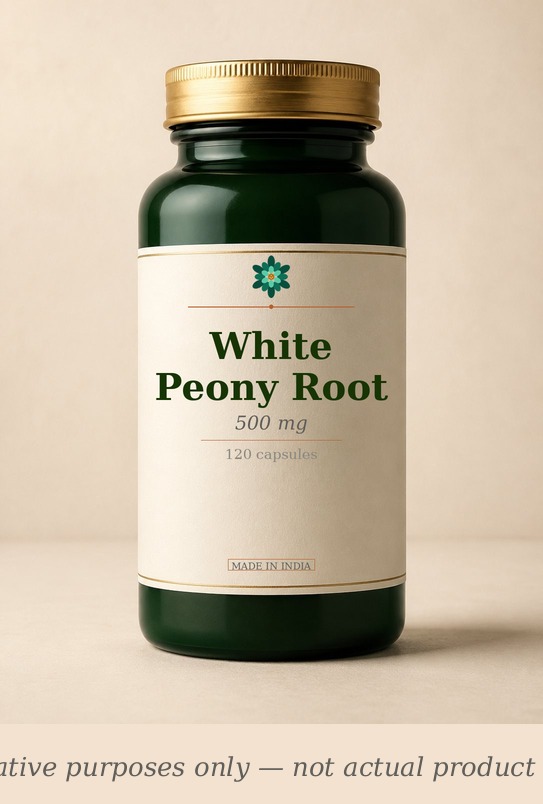
SacredBod's longer take on White Peony Root — context the structured blocks above don't capture.
What It Is
White peony root (Paeonia lactiflora Pall., also called Bai Shao or Udsaleev in Ayurvedic contexts) is a perennial herb whose root is one of the most important gynecological herbs in Traditional Chinese Medicine (TCM). The root contains monoterpene glycosides, primarily paeoniflorin (up to 5.3%), along with albiflorin, oxypaeoniflorin and gallic acid. It is classified as a blood-nourishing, liver-calming herb in TCM, used for menstrual disorders, abdominal pain, muscle spasms and liver stagnation.
How It Works
Paeoniflorin, the primary bioactive, reduces testosterone production in ovarian theca cells by inhibiting 17α-hydroxylase/17,20-lyase (CYP17A1) activity — the key enzyme for androgen synthesis. In a 2018 study, paeoniflorin significantly reduced testosterone, androstenedione and 17α-hydroxyprogesterone in rat theca cells. Paeoniflorin also improves ovarian function and oocyte quality by reducing oxidative stress and apoptosis in ovarian tissue. In androgenetic alopecia models, paeoniflorin promotes hair follicle regeneration via the Wnt/β-catenin pathway. Total glucosides of peony (TGP) are used in China for autoimmune conditions including Sjögren’s syndrome and rheumatoid arthritis.
Who Should Consider It
Women with PCOS and elevated androgens seeking complementary herbal support. Those with irregular menstrual cycles, delayed menstruation or scanty periods. Individuals with androgen-related concerns (acne, hirsutism) seeking natural anti-androgenic herbs. People interested in TCM-based gynecological herbs. Note: Not a replacement for metformin or hormonal PCOS treatment.
Dosage Guide
Typical dose: 500 mg per day
Form: tablets (120 count)
Best time: morning
With food: with-food
Expected onset: 4–8 weeks for cycle regulation; 8–12 weeks for androgen-related benefits
Cycling: No cycling required. Can be taken continuously.
Safety & Side Effects
Known side effects: Generally well-tolerated at 500 mg–1.5 g/day. Mild gastrointestinal upset or diarrhoea. Rare allergic reactions. May cause drowsiness in some individuals. Paeoniflorin has anticoagulant properties at high doses — caution with bleeding disorders.
Who should avoid: Pregnant women (traditional emmenagogue — may stimulate uterine contractions). Individuals with bleeding disorders or on anticoagulants. Those with severe diarrhoea or loose stools (may worsen). Not for children.
Avoid combining with: Anticoagulants and antiplatelets, Metformin (theoretical additive effect — monitor), Hormonal contraceptives (theoretical interaction), Sedatives (may enhance drowsiness)
India-Specific Context
White Peony Root is available on Amazon India with varying brand quality. When selecting a product, verify standardization claims against the evidence base cited above. Indian brand preferences include Carbamide Forte, HealthyHey, Nutrabay Pure, Pure Nutrition, Now Foods, Nutricost, Himalaya, Patanjali, Dabur, Trexgenics, Evorina, Nervana, Life Extension, VITARUHE, ASTERVEDA, BECLEC, GreenOpia, Rasayanam, Zyrex, and Shree Herbal. Prices vary significantly; compare cost-per-active-dose rather than capsule count alone.
Schedule status in India: Not a Schedule H drug; available as dietary supplement/herbal product.
Research Summary
Key citations: PMID 30195059 (paeoniflorin inhibits testosterone production in theca cells), PMC7375873 (paeoniflorin improves ovarian function and oocyte quality), PMC9340349 (natural products for PCOS management), PMC10589870 (natural products for PCOS — comprehensive review), PMC8621879 (paeoniflorin promotes hair follicle regeneration via Wnt/β-catenin)
Evidence grade: C+ — Strong in-vitro and animal data; limited human PCOS clinical trials specifically for peony alone