SacredBod
0
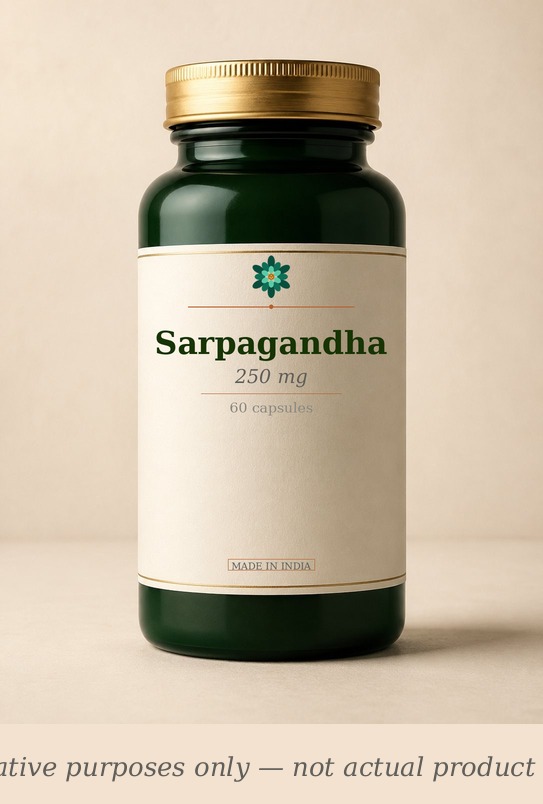
Sarpagandha — SacredBod supplement bottle (illustrative)
Supplement · Blood Pressure & Sleep

Sarpagandha

250 mg · vegan · gluten-free · 60 caps

High blood pressureInsomniaAnxietyStress-related hypertension HeartBrainBlood Vessels
BUY on Amazon →

Affiliate link · we earn from qualifying purchases. No paid placements.

What it is

Sarpagandha (Rauwolfia serpentina), also called Indian Snakeroot, is a perennial shrub native to the Himalayan foothills and Deccan plateau. Its roots contain reserpine, an indole alkaloid that was the first plant-derived antihypertensive drug approved by the FDA in 1955. It remains a cornerstone of Ayurvedic treatment for hypertension and insomnia.

How it works

Reserpine and related alkaloids (ajmaline, serpentine) deplete catecholamines (norepinephrine, dopamine, serotonin) from sympathetic nerve endings and the brain. This reduces vascular tone (lowering BP) and CNS arousal (promoting sleep). The effect is gradual and sustained.

Who should take it

Individuals with stage 1–2 hypertension, stress-related high BP, or insomnia. Particularly relevant for Indians given high rates of salt-sensitive hypertension and stress-related cardiovascular disease.

Avoid / careful

People with depression or psychiatric disorders, those on MAO inhibitors, pregnant women, people with existing bradycardia or heart block. Side effects: May cause nasal congestion, dry mouth, drowsiness, depression at high doses, and bradycardia. These are well-known reserpine side effects.

When to take it

Morning
Noon
Evening
Night

How to take it

With food
Empty stomach
Before food

FAQs

Frequently asked

How fast does it lower blood pressure?
Blood pressure reduction typically begins within 1–2 weeks and reaches maximum effect by 4–6 weeks. Monitor BP daily when starting.
Is it safe to take daily?
Yes at 250 mg/day under medical supervision. Sarpagandha is a Schedule H drug in India — meaning it requires a prescription for medicinal use. However, it is available as a dietary supplement in lower doses.
Can I take it with my BP medication?
ONLY under doctor supervision. Sarpagandha contains reserpine and may cause dangerous hypotension if combined with prescription antihypertensives. Dose adjustment is essential.

In plain English

A plain-English read of the literature behind this supplement. Not a clinical recommendation.

Key citations: PMID 32782448 (Antihypertensive & antihyperlipidemic in rats, 2020), PMID 32491699 (Reserpine pharmacology, StatPearls 2023), PMID 18140347 (Historical clinical trial, 1949)

Editorial notes

SacredBod's longer take on Sarpagandha — context the structured blocks above don't capture.

Sarpagandha — the ‘Snake-Root’ — is arguably the most important medicinal plant in modern pharmacological history. Its alkaloid reserpine was the first plant-derived drug to treat hypertension, launching the entire field of antihypertensive therapy in 1955 and earning a Nobel Prize for its discoverers.

What the Research Shows

A 2020 study in Dose-Response gave aqueous methanolic Rauwolfia extract (100–200 mg/kg) to salt-induced hypertensive rats for 4 weeks. Both doses significantly reduced blood pressure compared to the high-salt control group, with effects comparable to atenolol (50 mg/kg). The extract also improved lipid profiles and showed hepatoprotective and renoprotective effects on histological examination.

Reserpine’s mechanism — depletion of catecholamines from sympathetic nerve endings — was so well-characterized that it became the foundation for understanding neurotransmitter biology. Modern antihypertensives have replaced reserpine due to side effects, but Sarpagandha in whole-herb form at lower doses retains therapeutic benefits with reduced risk.

Ayurvedic Context

Sarpagandha is described in Charaka Samhita as a medhya rasayana (brain tonic) and hridya (heart tonic). It is indicated for unmada (psychiatric disorders), apasmara (epilepsy), and raktagata vata (hypertension). The Ayurvedic Pharmacopoeia of India recognizes the root for hypertension, insomnia, and anxiety. In rural India, Sarpagandha root decoction remains a first-line home remedy for high blood pressure.

India-Specific Notes

  • Regulatory status: Sarpagandha is a Schedule H drug under the Drugs and Cosmetics Act, 1940. This means it requires a prescription for medicinal use. However, it is sold as a dietary supplement in capsule form on Amazon India.
  • Cultural use: The root is sold in Ayurvedic pharmacies (Baidyanath, Dabur, Himalaya) as churna, tablets, and liquid extracts.
  • Supplement availability: Multiple brands offer Sarpagandha capsules on Amazon India at 250–500 mg doses.
  • Price: ₹200–₹500 for 60 capsules
  • Caution: This is the most pharmacologically potent herb in this batch. Respect the dose and monitor BP.

Dosage & Safety

  • Standard dose: 250 mg once daily in the evening
  • Maximum dose: 500 mg/day under medical supervision only
  • Best time: Evening (sedative effect aids sleep)
  • Critical caution: Schedule H drug. May cause depression, nasal congestion, and bradycardia. Never combine with prescription BP medication without doctor supervision. Discontinue if mood changes occur.

Added to your stack.