
SacredBod
0
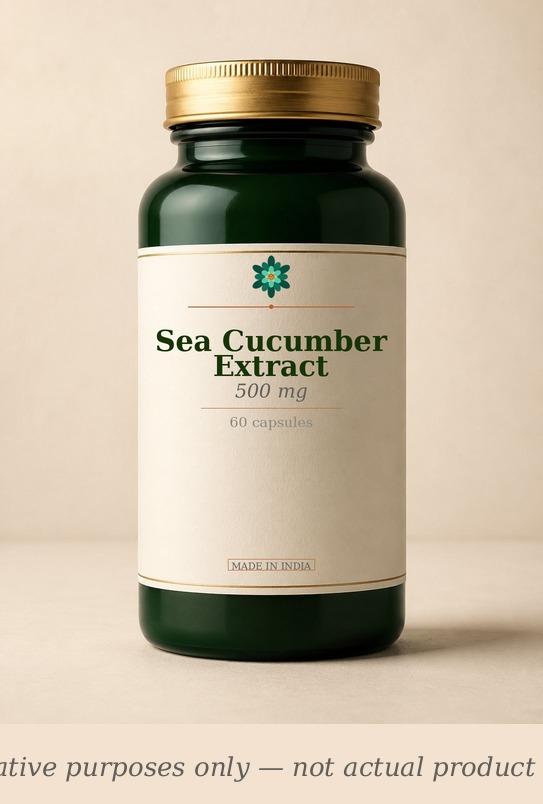
Sea Cucumber Extract — SacredBod supplement bottle (illustrative)
Supplement · Joint & Immune Support

Sea Cucumber Extract

500 mg · gluten-free · 60 caps

Joint painInflammationSlow wound healingWeak immunityPoor circulation JointsImmune systemBlood vesselsSkin
BUY on Amazon →

Affiliate link · we earn from qualifying purchases. No paid placements.

What it is

Sea cucumber (Holothuroidea) is a marine echinoderm consumed as a delicacy in East Asian cuisine and traditional medicine. Its body wall contains unique fucosylated glycosaminoglycans (FuCS) — sulfated polysaccharides found nowhere else in nature — with potent anticoagulant, anti-inflammatory, and immune-modulating properties. It is also rich in collagen, saponins (holothurins), and trace minerals.

How it works

Fucosylated glycosaminoglycans (FuCS) from sea cucumber inhibit the intrinsic tenase complex (FIXa-FVIIIa) and thrombin, providing anticoagulant effects comparable to heparin but with lower bleeding risk. They also stimulate immune cell activity, reduce inflammatory cytokines, and promote wound healing through growth factor stimulation. The high collagen content supports joint and connective tissue integrity.

Who should take it

Individuals with joint discomfort or osteoarthritis, those seeking immune support, people with wound healing concerns, and individuals interested in marine-derived nutraceuticals. Relevant for India's aging population with rising osteoarthritis rates.

Avoid / careful

People with bleeding disorders, those on anticoagulants, individuals with seafood allergies, pregnant women (limited safety data). Side effects: Generally safe at standard doses. The anticoagulant effect of FuCS may enhance bleeding at high doses. May cause mild stomach upset or allergic reactions in seafood-sensitive individuals.

When to take it

Morning
Noon
Evening
Night

How to take it

With food
Empty stomach
Before food

FAQs

Frequently asked

How long before I see joint results?
Sea cucumber has no human clinical trials for joint health. Animal and in vitro data suggest anti-inflammatory and tissue-supportive effects. Benefits, if they occur, would likely require 4–8 weeks of consistent use.
Is it safe to take daily?
At 500 mg/day, sea cucumber extract is likely safe for most adults. However, the anticoagulant polysaccharides mean caution is needed for those on blood thinners. Start with a low dose if new to the supplement.
Can I take it with my joint medication?
Caution with NSAIDs and blood thinners. The FuCS in sea cucumber has genuine anticoagulant activity. Consult your doctor if on warfarin, aspirin, or other anticoagulants.

In plain English

A plain-English read of the literature behind this supplement. Not a clinical recommendation.

Key citations: PMID 32289860 (FuCS anticoagulant & antithrombotic in rats, 2020), PMID 39335817 (Structural analysis & anticoagulant activity of Phyllophorus proteus, 2024), PMID 5983632 (Pharmacological potential of sea cucumbers review)

Editorial notes

SacredBod's longer take on Sea Cucumber Extract — context the structured blocks above don't capture.

Sea cucumber — known as bêche-de-mer or namako — is one of the most pharmacologically unique marine animals. Its body wall contains fucosylated glycosaminoglycans (FuCS) — sulfated polysaccharides found in no other animal group — with anticoagulant potency rivaling heparin.

What the Research Shows

A 2020 study (PMID 32289860) isolated native fucosylated glycosaminoglycan from Holothuria fuscopunctata and found it potently inhibited the intrinsic tenase complex (FIXa-FVIIIa) — a key blood clotting pathway. In rat deep venous thrombosis models, depolymerized derivatives showed potent antithrombotic effects without the bleeding risk of native high-molecular-weight FuCS. The thrombus inhibition was dose-dependent and comparable to low molecular weight heparin.

A 2024 structural analysis (PMID 39335817) of FuCS from Phyllophorus proteus revealed a complex polysaccharide with GlcA-GalNAc backbone and sulfated fucose branches. It significantly prolonged APTT, PT, TT, and FIB clotting times — surpassing the effect of low molecular weight heparin in vitro.

The 2017 pharmacological review (PMID 5983632) cataloged sea cucumber’s diverse bioactive compounds: anticoagulant glycosaminoglycans, antitumor saponins (holothurins), anti-inflammatory peptides, and wound-healing growth factors. Over 40 species have been studied for medicinal properties.

India Context

  • Availability: Sea cucumber supplements are NOT available on Amazon India. The dried animal is sold in some East Asian specialty food markets in Mumbai and Delhi, but not as a standardized supplement.
  • Import option: iHerb and Vitacost carry sea cucumber capsules from brands like Natural Factors and NOW Foods, but international shipping to India is expensive and subject to customs scrutiny.
  • Regulatory: Sea cucumber is a protected species under India’s Wildlife Protection Act in some regions (Gulf of Mannar). Wild harvest is restricted. Ensure any product uses aquaculture-sourced material.
  • Traditional parallel: While not traditionally Indian, sea cucumber’s joint and wound-healing properties align with Ayurvedic uses of Laksha (Laccifer lacca) and Guggulu.

Dosage & Safety

  • Standard dose: 500 mg daily with food
  • Maximum dose: 1 g/day
  • Best time: Morning with breakfast
  • Critical caution: Contains potent anticoagulant polysaccharides. Avoid if on blood thinners, before surgery, or with bleeding disorders. Not for pregnancy. Seafood allergy risk.
Added to your stack.