SacredBod
0
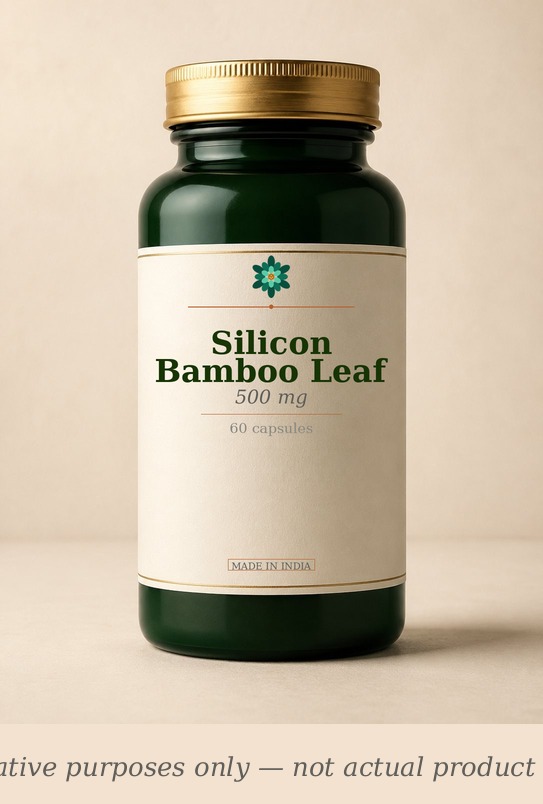
Silicon Bamboo Leaf — SacredBod supplement bottle (illustrative)
Supplement · Connective Tissue & Tendon

Silicon Bamboo Leaf

500 mg · vegan · gluten-free · 60 caps

Tendon weaknessLigament laxityJoint hypermobilityBrittle nailsThinning hair TendonsLigamentsJointsSkinHairBones
BUY on Amazon →

Affiliate link · we earn from qualifying purchases. No paid placements.

What it is

Silicon bamboo leaf extract is derived from the leaves of Bambusa arundinacea (Indian thorny bamboo) — the source of Tabasheer (Vanshlochan), a siliceous substance revered in Ayurveda for over 3,000 years. Bamboo leaves contain 5–10% silica by dry weight in a highly bioavailable orthosilicic acid form. Unlike stem-derived bamboo silica, leaf extract provides additional flavonoids, chlorophyll, and polyphenols with antioxidant and anti-inflammatory benefits.

How it works

Silicon from bamboo leaves is converted to orthosilicic acid in the digestive tract — the bioavailable form that crosslinks collagen and elastin fibers. In tendons and ligaments, silicon strengthens the collagen triple-helix structure, improving tensile strength and flexibility. In bone, silicon stimulates osteoblasts and enhances calcium apatite crystallization. The leaf flavonoids (orientin, vitexin) provide additional antioxidant protection for connective tissue against oxidative damage.

Who should take it

Individuals with tendon or ligament issues, those recovering from soft tissue injuries, people with joint hypermobility or connective tissue weakness, athletes with repetitive strain injuries, and anyone seeking Ayurvedic Vanshlochan benefits in modern extract form. Relevant for India's yoga practitioners and athletes with joint stress.

Avoid / careful

People with a history of kidney stones, those with severe kidney disease, pregnant or breastfeeding women (limited safety data on leaf extract specifically). Side effects: Very safe at standard doses. Rarely: mild stomach upset or greenish stool from chlorophyll content. High doses may increase urinary silicon excretion. Those with kidney stones should use cautiously.

When to take it

Morning
Noon
Evening
Night

How to take it

With food
Empty stomach
Before food

FAQs

Frequently asked

How long before I see results?
Hair and nail improvements typically appear within 4–8 weeks. Tendon and ligament strengthening requires 8–12 weeks of consistent use, combined with appropriate physical therapy and progressive loading exercises.
What's the difference between bamboo leaf and bamboo stem silica?
Bamboo stem (Bambusa vulgaris) contains ~70% silica and is the most concentrated source. Bamboo leaf (Bambusa arundinacea) contains 5–10% silica but provides additional flavonoids (orientin, vitexin) with antioxidant and anti-inflammatory benefits. Leaf extract is traditionally used in Ayurvedic medicine (Vanshlochan/Tabasheer), while stem extract is the modern industrial source.
Can I take it with my tendon medication?
Yes. Silicon bamboo leaf can complement NSAIDs, physical therapy, and collagen supplements for tendon recovery. It provides the crosslinking mineral that makes collagen strong, while physical therapy provides the mechanical stimulus for tissue remodeling.

In plain English

A plain-English read of the literature behind this supplement. Not a clinical recommendation.

Key citations: PMID 11292372 (Cartilage proteoglycans — aggrecan structure & function, 2001), PMID 7538297 (Large & small proteoglycans in osteoarthritic cartilage, 1995), PMID 26914753 (Role of aggrecan in normal & osteoarthritic cartilage, 2014)

Editorial notes

SacredBod's longer take on Silicon Bamboo Leaf — context the structured blocks above don't capture.

Silicon bamboo leaf extract — known as Vanshlochan or Tabasheer in Ayurveda — is one of the oldest mineral tonics in Indian medicine. This siliceous substance, found in the hollow stems and leaves of Bambusa arundinacea (Indian thorny bamboo), has been used for over 3,000 years to strengthen bones, heal fractures, cool inflammatory conditions, and rejuvenate connective tissue.

What the Research Shows

While direct clinical trials on bamboo leaf silica are limited, the fundamental role of silicon in connective tissue is well-established. Silicon is required for prolyl hydroxylase and lysyl hydroxylase — enzymes that crosslink collagen fibers, giving tendons and ligaments their extraordinary tensile strength. Without adequate silicon, collagen is weak and prone to tearing.

Research on cartilage proteoglycans (PMID 11292372, 37446002) demonstrates that silicon supports glycosaminoglycan synthesis — the building blocks of the proteoglycan matrix that gives cartilage, tendons, and intervertebral discs their shock-absorbing properties. In osteoarthritis and tendon degeneration, proteoglycan loss is a primary pathological event.

Bamboo leaf flavonoids — particularly orientin and vitexin — have demonstrated potent antioxidant activity in vitro, protecting connective tissue cells from oxidative stress that accelerates collagen degradation and tendon aging.

India Context

  • Availability: Ayuzera, Trexgenics, and CALM EARTH offer bamboo extract capsules on Amazon India. Most products combine stem and leaf extracts. Pure leaf extract is harder to find.
  • Price: ₹400–₹800 for 60 capsules (500–600 mg)
  • Ayurvedic heritage: Vanshlochan (Tabasheer) is mentioned in Charaka Samhita and Sushruta Samhita as a cooling, strengthening tonic for respiratory disorders (cough, asthma), urinary conditions, and bone fractures. It is classified as a medhya rasayana (brain tonic) and balya (strength promoter).
  • Traditional preparation: In classical Ayurveda, Vanshlochan is purified through a process called Shodhana (detoxification) and then used in formulations like Vanshlochanavaleha, Sitopaladi churna, and Talisadi churna for respiratory and connective tissue health.
  • Yoga relevance: India’s millions of yoga practitioners place significant stress on tendons and ligaments through asana practice. Silicon bamboo leaf provides the mineral support needed for connective tissue adaptation to progressive stretching and loading.
  • Dietary gap: Modern Indian diets are low in silicon due to refined grain consumption. Traditional whole grains (ragi, jowar, bajra) provided more silicon, but urban diets have shifted away from these sources.

Dosage & Safety

  • Standard dose: 500 mg daily with food
  • Best time: Morning with breakfast and vitamin C source
  • Caution: Drink adequate water. Those with kidney stone history should consult a doctor. Very safe overall — bamboo silica has been consumed in Ayurvedic medicine for millennia.

Added to your stack.