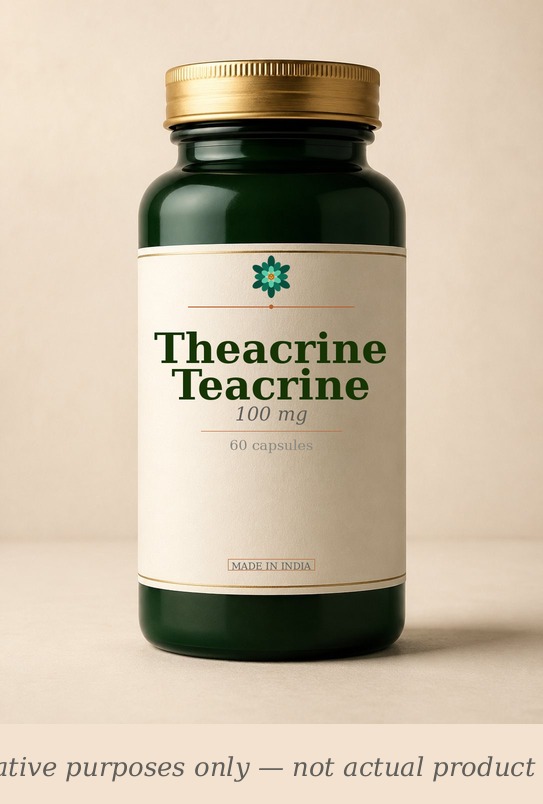
SacredBod's longer take on Theacrine Teacrine — context the structured blocks above don't capture.
What It Is
Theacrine (1,3,7,9-tetramethyluric acid) is a purine alkaloid discovered in the leaves of the kucha tea plant (Camellia assamica var. kucha), native to Yunnan province in China. It is structurally similar to caffeine (1,3,7-trimethylxanthine) but with an additional methyl group at the 9-position, which dramatically alters its pharmacology. While caffeine builds tolerance rapidly through adenosine receptor upregulation, theacrine does not — making it the first commercially available “non-habituating” stimulant. It is sold under the branded ingredient name TeaCrine® (Compound Solutions) and as generic theacrine capsules.
How It Works
Theacrine exerts its effects through two primary pathways: (1) adenosine receptor antagonism — like caffeine, it blocks adenosine receptors to reduce fatigue perception and increase alertness, but without triggering compensatory receptor upregulation, and (2) dopamine and serotonin modulation — it enhances dopaminergic signalling, improving mood, motivation and “wanting” to exercise. A 2015 pilot study in 15 subjects found that a single 200 mg dose significantly increased energy, reduced fatigue and trended toward improved concentration. An 8-week safety study in 60 adults confirmed no habituation — baseline scores for energy, focus, motivation and mood remained stable across the entire study at 200–300 mg/day.
Who Benefits Most
Caffeine-sensitive individuals who experience jitters, anxiety or sleep disruption; professionals and students needing sustained focus without caffeine crashes; and athletes who want pre-workout energy without developing stimulant tolerance. Notably, a 2019 study in resistance-trained men found that 300 mg theacrine did not significantly improve strength, power or endurance versus placebo — so its primary value is cognitive/motivational, not direct physical performance enhancement.
Dosage Guide
- Standard dose: 100–200 mg daily
- Pre-workout: 100–200 mg 30–60 minutes before training
- Cognitive support: 100 mg with breakfast
- Cycle: No cycling needed — non-habituating
Safety and Interactions
Excellent safety profile. All clinical markers remained within normal limits in 8-week trials. No cardiovascular concerns at standard doses. Caffeine increases theacrine plasma levels — not dangerous, but may amplify effects. Avoid combining with MAO inhibitors or other potent stimulants.
India-Specific Context
Theacrine is a new but accessible category on Amazon.in, with multiple generic brands offering 100 mg capsules (₹800–₹1,500 for 60 count). TeaCrine® branded products are scarce and must be imported. It is not a scheduled drug. There is no direct Ayurvedic equivalent, though Brahmi (Bacopa monnieri) and Ashwagandha are traditional Indian cognitive enhancers with complementary adaptogenic properties. For Indian consumers seeking a caffeine alternative that won’t disrupt sleep or build tolerance, theacrine is a scientifically validated option — though it should be viewed as a focus/energy supplement, not a direct performance enhancer.