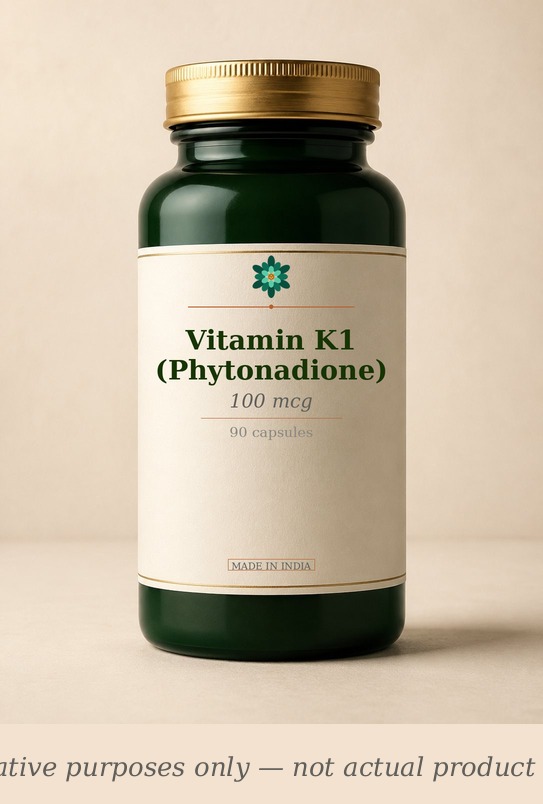
SacredBod's longer take on Vitamin K1 (Phytonadione) — context the structured blocks above don't capture.
What It Is
Vitamin K1 (phylloquinone or phytonadione) is the primary dietary form of vitamin K, found in leafy green vegetables, plant oils and herbs. It is a fat-soluble vitamin essential as a cofactor for the enzyme gamma-glutamyl carboxylase, which activates vitamin K-dependent proteins (VKDPs) including clotting factors II, VII, IX and X, as well as matrix Gla protein (MGP) and osteocalcin. Unlike vitamin K2, K1 is primarily known for its coagulation role, though emerging evidence supports cardiovascular benefits.
How It Works
As a cofactor for gamma-glutamyl carboxylase, K1 carboxylates glutamate residues on VKDPs, converting them to active forms. In coagulation, this produces functional clotting factors. In vascular tissue, K1 activates MGP, which inhibits calcium deposition in arteries and valves. A 3-year RCT found that 500 mcg/day K1 slowed coronary artery calcification progression by 6% in older adults with preexisting calcification. Higher dietary K1 intake (~120 mcg/day) is associated with lower carotid intima-media thickness and reduced cardiovascular events in older women.
Who Should Consider It
Individuals seeking foundational vitamin K support for coagulation and bone health, those with low vegetable intake wanting K1 insurance, people interested in vascular calcification prevention, and those on vitamin D/calcium supplementation wanting to ensure proper calcium direction. Not a replacement for anticoagulant therapy management.
Dosage Guide
Typical dose: 100 mcg per day
Form: capsules (90 count)
Best time: morning
With food: with-food
Expected onset: Immediate for coagulation; 4–8 weeks for vascular calcification markers
Cycling: No cycling required. Essential vitamin for continuous daily intake.
Safety & Side Effects
Known side effects: Generally well-tolerated at 100–500 mcg/day. Very high doses may interfere with warfarin anticoagulation. Rare allergic reactions to injectable forms. No toxicity from oral doses within recommended ranges.
Who should avoid: Individuals taking warfarin or vitamin K antagonists without medical supervision (K1 directly antagonises warfarin). Those with thrombophilia or hypercoagulable disorders. Not for people on therapeutic anticoagulation unless directed by their physician.
Avoid combining with: Warfarin and vitamin K antagonists, Anticoagulant medications, High-dose vitamin E (theoretical antagonism of vitamin K), Antibiotics (may reduce gut K2 synthesis, increasing K1 demand)
India-Specific Context
Vitamin K1 (Phytonadione) is available on Amazon India with varying brand quality. When selecting a product, verify standardization claims against the evidence base cited above. Indian brand preferences include Carbamide Forte, HealthyHey, Nutrabay Pure, Pure Nutrition, Now Foods, Nutricost, Himalaya, Patanjali, Dabur, Trexgenics, Evorina, Nervana, Life Extension, VITARUHE, ASTERVEDA, BECLEC, and GreenOpia. Prices vary significantly; compare cost-per-active-dose rather than capsule count alone.
Schedule status in India: Not a Schedule H drug; available as dietary supplement/herbal product.
Research Summary
Key citations: PMID 2682995 (3-year RCT: K1 slowed CAC progression by 6%), PMID 12049302 (higher K1 intake associated with lower ASVD events and mortality), PMID 12715181 (PASSPORT trial design — 10 mg K1 for aortic stenosis), PMID 16505257 (meta-analysis of warfarin reversal with vitamin K)
Evidence grade: B — Multiple RCTs for CAC progression; large observational studies for cardiovascular outcomes