SacredBod
0
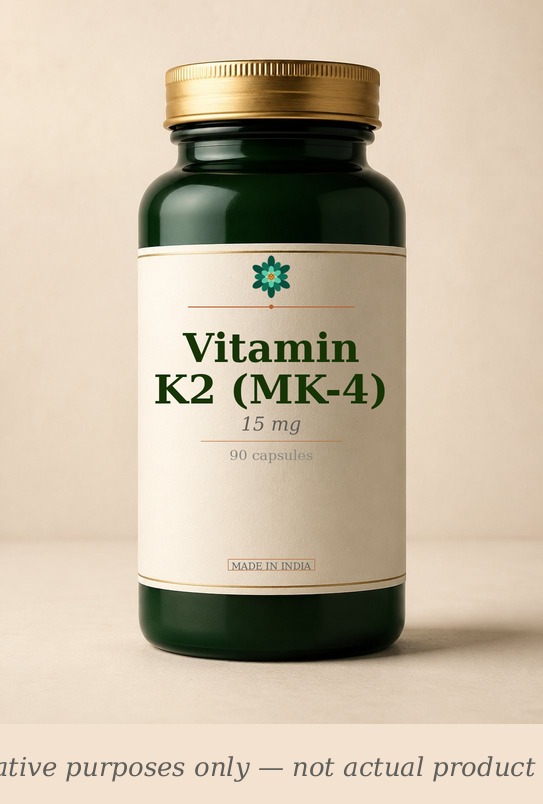
Vitamin K2 (MK-4) — SacredBod supplement bottle (illustrative)
Supplement · Vitamin

Vitamin K2 (MK-4)

15 mg · gluten-free · 90 caps

Bone lossOsteoporosisPoor calcium utilisationVascular calcificationPostmenopausal bone thinningLow vitamin K status BoneBlood vesselsTeethCartilage
BUY on Amazon →

Affiliate link · we earn from qualifying purchases. No paid placements.

What it is

Vitamin K2 as menaquinone-4 (MK-4, also called menatetrenone) is a short-chain vitamin K2 form with a 4-isoprenyl side chain. Unlike MK-7, MK-4 is not produced by bacterial fermentation but is synthesised in vivo from K1 or obtained directly from animal products (egg yolks, butter, liver). In Japan, MK-4 at pharmacological doses (45 mg/day) is approved as a prescription drug (Glakay) for the treatment of osteoporosis. It has a shorter half-life (~1–3 hours) than MK-7 (~72 hours), requiring divided dosing.

How it works

MK-4 carboxylates osteocalcin, enabling it to bind calcium to bone matrix. It also carboxylates matrix Gla protein (MGP), inhibiting vascular calcification. At pharmacological doses (15–45 mg/day), MK-4 may directly suppress osteoclast activity and stimulate osteoblast differentiation via steroid and xenobiotic receptor (SXR) activation. Japanese clinical trials at 45 mg/day showed reduced vertebral fracture risk in postmenopausal women. Lower supplement doses (100–500 mcg) support general bone health but lack fracture-prevention evidence.

Who should take it

Postmenopausal women with osteopenia or osteoporosis seeking the specific form used in Japanese pharmacological protocols. Individuals on long-term calcium/vitamin D wanting better bone-directed calcium utilisation. Those seeking an alternative to MK-7 with different tissue distribution. Not a replacement for bisphosphonates or denosumab in high fracture-risk patients.

Avoid / careful

Individuals taking warfarin or vitamin K antagonists without medical supervision. Those with thrombophilia. Pregnant and breastfeeding women at pharmacological doses. Not for children. Side effects: Generally well-tolerated. Mild GI upset at high pharmacological doses. No known toxicity from oral intake. May interfere with warfarin anticoagulation. Headache or skin rash reported rarely at 45 mg/day.

When to take it

Morning
Noon
Evening
Night

How to take it

With food
Empty stomach
Before food

FAQs

Frequently asked

How long before I see results?
Bone turnover markers improve within 4–8 weeks. Measurable BMD changes require 6–12 months. Fracture risk reduction was demonstrated at 2+ years in Japanese trials at 45 mg/day.
Should I take MK-4 or MK-7?
MK-4 has shorter half-life and is used at pharmacological doses (15–45 mg) for bone in Japan. MK-7 has longer half-life (72 hours) and is typically dosed at 100–200 mcg. For bone health, both work via osteocalcin activation. MK-4 is better studied at high doses; MK-7 is more convenient due to once-daily dosing. Some practitioners use both.
Can it replace my osteoporosis medication?
No — at supplement doses (15 mg or less), MK-4 supports bone health but does not replace prescription anti-resorptive therapy. In Japan, 45 mg/day is used as an adjunct, not a replacement, for severe osteoporosis. Consult your endocrinologist before changing any osteoporosis regimen.

In plain English

A plain-English read of the literature behind this supplement. Not a clinical recommendation.

Key citations: PMID 23702931 (low-dose MK-4 improves bone metabolism in postmenopausal women), PMID 12201222 (time-dependent effects of 45 mg/day MK-4 on bone), PMID 17982193 (review of Japanese osteoporosis treatment with vitamin K2)

Editorial notes

SacredBod's longer take on Vitamin K2 (MK-4) — context the structured blocks above don't capture.

What It Is

Vitamin K2 as menaquinone-4 (MK-4, also called menatetrenone) is a short-chain vitamin K2 form with a 4-isoprenyl side chain. Unlike MK-7, MK-4 is not produced by bacterial fermentation but is synthesised in vivo from K1 or obtained directly from animal products (egg yolks, butter, liver). In Japan, MK-4 at pharmacological doses (45 mg/day) is approved as a prescription drug (Glakay) for the treatment of osteoporosis. It has a shorter half-life (~1–3 hours) than MK-7 (~72 hours), requiring divided dosing.

How It Works

MK-4 carboxylates osteocalcin, enabling it to bind calcium to bone matrix. It also carboxylates matrix Gla protein (MGP), inhibiting vascular calcification. At pharmacological doses (15–45 mg/day), MK-4 may directly suppress osteoclast activity and stimulate osteoblast differentiation via steroid and xenobiotic receptor (SXR) activation. Japanese clinical trials at 45 mg/day showed reduced vertebral fracture risk in postmenopausal women. Lower supplement doses (100–500 mcg) support general bone health but lack fracture-prevention evidence.

Who Should Consider It

Postmenopausal women with osteopenia or osteoporosis seeking the specific form used in Japanese pharmacological protocols. Individuals on long-term calcium/vitamin D wanting better bone-directed calcium utilisation. Those seeking an alternative to MK-7 with different tissue distribution. Not a replacement for bisphosphonates or denosumab in high fracture-risk patients.

Dosage Guide

Typical dose: 15 mg per day

Form: capsules (90 count)

Best time: morning

With food: with-food

Expected onset: 4–8 weeks for bone turnover markers; 6–12 months for BMD changes

Cycling: No cycling required. Can be taken continuously.

Safety & Side Effects

Known side effects: Generally well-tolerated. Mild GI upset at high pharmacological doses. No known toxicity from oral intake. May interfere with warfarin anticoagulation. Headache or skin rash reported rarely at 45 mg/day.

Who should avoid: Individuals taking warfarin or vitamin K antagonists without medical supervision. Those with thrombophilia. Pregnant and breastfeeding women at pharmacological doses. Not for children.

Avoid combining with: Warfarin and vitamin K antagonists, Anticoagulant medications, High-dose vitamin E (theoretical antagonism), Bisphosphonates (may be complementary but coordinate with physician)

India-Specific Context

Vitamin K2 (MK-4) is available on Amazon India with varying brand quality. When selecting a product, verify standardization claims against the evidence base cited above. Indian brand preferences include Carbamide Forte, HealthyHey, Nutrabay Pure, Pure Nutrition, Now Foods, Nutricost, Himalaya, Patanjali, Dabur, Trexgenics, Evorina, Nervana, Life Extension, VITARUHE, ASTERVEDA, BECLEC, and GreenOpia. Prices vary significantly; compare cost-per-active-dose rather than capsule count alone.

Schedule status in India: Not a Schedule H drug; available as dietary supplement/herbal product.

Research Summary

Key citations: PMID 23702931 (low-dose MK-4 improves bone metabolism in postmenopausal women), PMID 12201222 (time-dependent effects of 45 mg/day MK-4 on bone), PMID 17982193 (review of Japanese osteoporosis treatment with vitamin K2)

Evidence grade: B — Multiple Japanese RCTs at pharmacological doses; limited Western RCT data at supplement doses

Added to your stack.