SacredBod
0
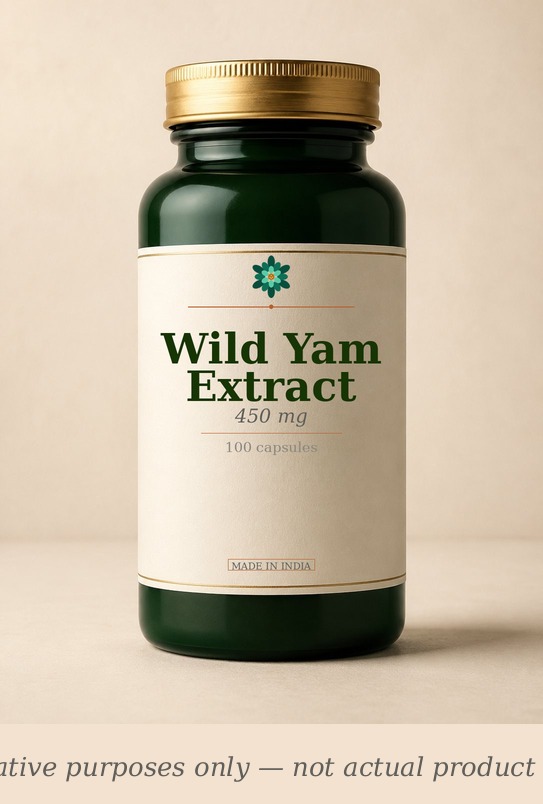
Wild Yam Extract — SacredBod supplement bottle (illustrative)
Supplement · Botanical

Wild Yam Extract

450 mg · vegan · gluten-free · 100 caps

PMSMenstrual crampsCycle irregularityMenopausal discomfortPCOSHormonal imbalance Reproductive systemUterusOvariesDigestive system
BUY on Amazon →

Affiliate link · we earn from qualifying purchases. No paid placements.

What it is

Wild yam (Dioscorea villosa L.) is a twining tuberous vine native to North America whose root has been used since the 18th century for menstrual cramps, childbirth support and digestive complaints. The root contains steroidal saponins, primarily diosgenin, which was historically used as a starting material for synthesising progesterone and cortisone in the 1940s–1960s. Despite popular claims, diosgenin from wild yam is NOT converted to progesterone in the human body — the required enzymatic machinery exists only in laboratory settings.

How it works

Wild yam's primary bioactive, diosgenin, acts as a phytoprogestin with weak progesterone-like activity through direct receptor interactions and modulation of IGF-1/IGFBP-1 pathways. A 2022 pilot clinical study showed that diosgenin combined with vitamin D and α-lactalbumin normalised menstrual cycles in women with PCOS phenotype D, possibly by enhancing progesterone-responsive IGFBP-1 expression. Diosgenin also demonstrates anti-inflammatory, antispasmodic and analgesic properties. However, a 2001 RCT of topical wild yam cream in 23 menopausal women found no significant effect on symptoms, lipids or sex hormones vs placebo.

Who should take it

Women seeking traditional herbal support for PMS, menstrual cramps and cycle irregularities. Those interested in phytoprogestin compounds for hormonal balance. Individuals with PCOS phenotype D seeking complementary cycle support (under medical supervision). Note: Evidence for menopausal symptom relief is weak — better options exist for hot flashes.

Avoid / careful

Pregnant and breastfeeding women (traditional uterine stimulant). Individuals with hormone-sensitive cancers without medical guidance. Those with severe kidney disease — one animal study suggested chronic kidney injury via pro-fibrotic pathways at very high doses. Not for children. Side effects: Generally well-tolerated at 450–1,000 mg/day. Mild gastrointestinal upset, nausea or headache. Topical forms may cause skin irritation. No estrogenic activity detected in safety studies at standardised diosgenin levels ≤3.5%. Rare allergic reactions.

When to take it

Morning
Noon
Evening
Night

How to take it

With food
Empty stomach
Before food

FAQs

Frequently asked

How long before I see results?
PMS and cycle-related benefits may require 4–8 weeks. The PCOS pilot study used 3 months for menstrual cycle normalisation. Menopausal symptom relief evidence is weak — do not expect rapid hot flash reduction.
Does it increase progesterone in the body?
No — diosgenin is not enzymatically converted to progesterone in humans. However, it may have weak progesterone-like receptor activity and modulate progesterone-responsive pathways (e.g., IGFBP-1). This is a common misconception in herbal marketing.
Is it better than progesterone cream?
No. Bioidentical progesterone cream contains actual progesterone and has stronger clinical evidence for menopausal and luteal phase support. Wild yam is a gentler, traditional alternative with weaker hormonal activity.

In plain English

A plain-English read of the literature behind this supplement. Not a clinical recommendation.

Key citations: PMID 11428178 (topical cream RCT — no significant effect on menopausal symptoms), PMID 15513824 (safety assessment of Dioscorea villosa extract), PMC12694058 (diosgenin + vitamin D + α-lactalbumin normalised menstrual cycles in PCOS D), PMC9168095 (diosgenin pharmacological review)

Editorial notes

SacredBod's longer take on Wild Yam Extract — context the structured blocks above don't capture.

What It Is

Wild yam (Dioscorea villosa L.) is a twining tuberous vine native to North America whose root has been used since the 18th century for menstrual cramps, childbirth support and digestive complaints. The root contains steroidal saponins, primarily diosgenin, which was historically used as a starting material for synthesising progesterone and cortisone in the 1940s–1960s. Despite popular claims, diosgenin from wild yam is NOT converted to progesterone in the human body — the required enzymatic machinery exists only in laboratory settings.

How It Works

Wild yam’s primary bioactive, diosgenin, acts as a phytoprogestin with weak progesterone-like activity through direct receptor interactions and modulation of IGF-1/IGFBP-1 pathways. A 2022 pilot clinical study showed that diosgenin combined with vitamin D and α-lactalbumin normalised menstrual cycles in women with PCOS phenotype D, possibly by enhancing progesterone-responsive IGFBP-1 expression. Diosgenin also demonstrates anti-inflammatory, antispasmodic and analgesic properties. However, a 2001 RCT of topical wild yam cream in 23 menopausal women found no significant effect on symptoms, lipids or sex hormones vs placebo.

Who Should Consider It

Women seeking traditional herbal support for PMS, menstrual cramps and cycle irregularities. Those interested in phytoprogestin compounds for hormonal balance. Individuals with PCOS phenotype D seeking complementary cycle support (under medical supervision). Note: Evidence for menopausal symptom relief is weak — better options exist for hot flashes.

Dosage Guide

Typical dose: 450 mg per day

Form: capsules (100 count)

Best time: morning

With food: with-food

Expected onset: 4–8 weeks for PMS support; 8–12 weeks for menopausal benefits

Cycling: No cycling required. Can be taken continuously.

Safety & Side Effects

Known side effects: Generally well-tolerated at 450–1,000 mg/day. Mild gastrointestinal upset, nausea or headache. Topical forms may cause skin irritation. No estrogenic activity detected in safety studies at standardised diosgenin levels ≤3.5%. Rare allergic reactions.

Who should avoid: Pregnant and breastfeeding women (traditional uterine stimulant). Individuals with hormone-sensitive cancers without medical guidance. Those with severe kidney disease — one animal study suggested chronic kidney injury via pro-fibrotic pathways at very high doses. Not for children.

Avoid combining with: Hormone replacement therapy, Progesterone supplements, Oral contraceptives (theoretical interaction), Estrogen-modulating medications

India-Specific Context

Wild Yam Extract is available on Amazon India with varying brand quality. When selecting a product, verify standardization claims against the evidence base cited above. Indian brand preferences include Carbamide Forte, HealthyHey, Nutrabay Pure, Pure Nutrition, Now Foods, Nutricost, Himalaya, Patanjali, Dabur, Trexgenics, Evorina, Nervana, Life Extension, VITARUHE, ASTERVEDA, BECLEC, GreenOpia, Rasayanam, Zyrex, and Shree Herbal. Prices vary significantly; compare cost-per-active-dose rather than capsule count alone.

Schedule status in India: Not a Schedule H drug; available as dietary supplement/herbal product.

Research Summary

Key citations: PMID 11428178 (topical cream RCT — no significant effect on menopausal symptoms), PMID 15513824 (safety assessment of Dioscorea villosa extract), PMC12694058 (diosgenin + vitamin D + α-lactalbumin normalised menstrual cycles in PCOS D), PMC9168095 (diosgenin pharmacological review)

Evidence grade: C — Limited human RCTs; one negative topical RCT; one positive PCOS pilot study

Added to your stack.