
India has one of the highest rates of micronutrient deficiency in the world — and the supplement market is growing fast to meet it. But with hundreds of products on Amazon.in and little regulation, knowing what to actually buy is harder than it should be. This guide covers Lutein + Zeaxanthin from first principles: what it is, what the evidence says, and how to use it safely in an Indian context.
What is Lutein + Zeaxanthin?
Lutein and zeaxanthin are carotenoid pigments that accumulate in the macula of the retina, where they filter blue
Lutein + Zeaxanthin is relevant for anyone dealing with blurred vision. It primarily acts on the eyes.
How does Lutein + Zeaxanthin work?
Lutein and zeaxanthin form the macular pigment, which absorbs high-energy blue light before it damages photoreceptors.
Who should take Lutein + Zeaxanthin?
Adults over 50 at risk for AMD, individuals with family history of macular degeneration, those with low dietary intake
The typical dose is 10–25 mg lutein + 2–5 mg zeaxanthin daily. Morning
Safety and who should avoid it
People with carotenoid absorption disorders (rare), those taking beta-carotene supplements (may compete for absorption),
Always consult your doctor before starting any new supplement, particularly if you are on prescription medication or have an existing health condition.
How to combine Lutein + Zeaxanthin
Lutein + Zeaxanthin works well alongside omega 3. The Ayurvedic tradition has long used amalaki for similar purposes — these can complement rather than replace each other.
Buying guide for India
When shopping on Amazon.in, prioritise products that clearly state:
- The standardised active compound percentage
- Third-party testing (NSF, USP, or Informed Sport)
- The form of Lutein + Zeaxanthin (extract vs whole herb vs isolate)
- Vegetarian capsule certification if that matters to you
Generic “natural” or “herbal” labels without standardisation information are a red flag. The price difference between a well-made and a poorly-made Lutein + Zeaxanthin supplement is often small — the difference in efficacy is not.
Bottom line
Lutein + Zeaxanthin has Key citations: See richResearch section for study filters and participant data. Clinical evidence su for blurred vision. Used consistently at the right dose, it is a reasonable addition to a wellness protocol for those dealing with these concerns.
Supplements mentioned
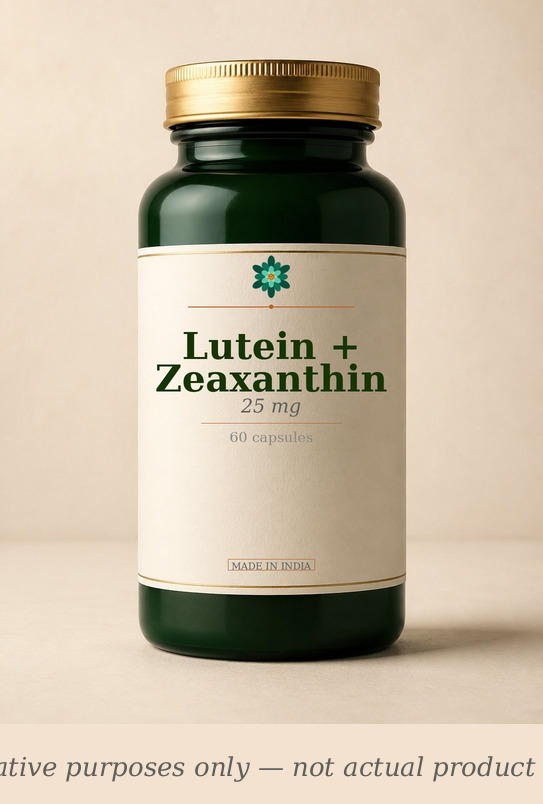
Lutein + Zeaxanthin
Eye Health · 25 mg · 60 caps
People also ask
What is the best time to take Lutein + Zeaxanthin in India?
Is Lutein + Zeaxanthin available in India and what brands should I look for?
Can vegetarians and vegans take Lutein + Zeaxanthin?
Keep reading
Lutein + Zeaxanthin for blurred vision: protocol, dose, and what to track
How to use Lutein + Zeaxanthin specifically for blurred vision — the right dose, timing, blood markers to track, and how to know if it is working.

ZMA: complete India guide
Everything you need to know about ZMA — mechanism, dose, safety, buying guide for India, and what the research actually says.

Zinc: complete India guide
Everything you need to know about Zinc — mechanism, dose, safety, buying guide for India, and what the research actually says.