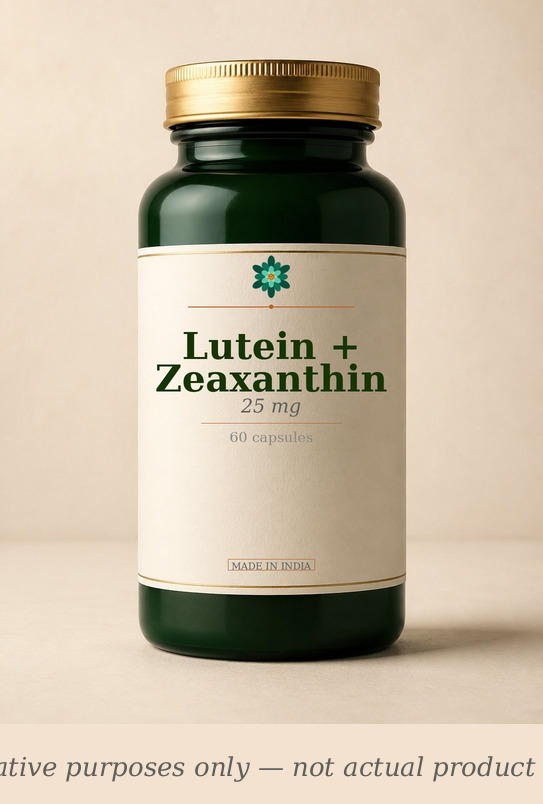
SacredBod's longer take on Lutein + Zeaxanthin — context the structured blocks above don't capture.
Lutein and zeaxanthin are the gold standard for evidence-based eye supplementation. Unlike most supplements that rely on small trials or mechanistic extrapolation, these carotenoids have been tested in the largest eye health trial ever conducted—the Age-Related Eye Disease Study 2 (AREDS2)—and demonstrated genuine efficacy in reducing progression of age-related macular degeneration (AMD), the leading cause of blindness in older adults. This is not theoretical benefit; it is hard clinical outcome data from a randomized controlled trial funded by the National Institutes of Health.
The AREDS2 trial was definitive. Chew and colleagues (2013, JAMA, PMID 23644932) randomized 4,203 participants with intermediate AMD to lutein 10 mg + zeaxanthin 2 mg, omega-3 fatty acids, both, or placebo for 5 years. The lutein/zeaxanthin group reduced the risk of progression to advanced AMD by 18% compared to the original AREDS formula containing beta-carotene. This substitution was critical: beta-carotene had increased lung cancer risk in smokers, while lutein/zeaxanthin showed no such risk. The FDA now allows a qualified health claim for lutein/zeaxanthin and AMD risk reduction.
The observational evidence converges with trial data. Seddon and colleagues (1994, JAMA, PMID 8002842) established the original dietary association, finding that high intake of lutein/zeaxanthin was associated with 43% reduced risk of advanced AMD in the initial AREDS cohort. Ma and colleagues (2012, British Journal of Nutrition, PMID 22348989) conducted a meta-analysis of multiple cohort studies and confirmed that high dietary intake was associated with 26% reduced risk of late AMD. The consistency across dietary studies, biomarker studies, and randomized trials creates a robust evidentiary chain.
The mechanism is biologically plausible and well-characterized. Lutein and zeaxanthin accumulate in the macula, where they form a yellow pigment that filters high-energy blue light before it reaches photoreceptors. They also quench reactive oxygen species generated by retinal metabolism. The macular pigment optical density (MPOD) can be measured non-invasively, and supplementation consistently increases MPOD in a dose-dependent manner. The honest framing: lutein and zeaxanthin are the most evidence-based eye supplements available, with NIH trial validation, FDA health claim status, and a well-characterized mechanism. They are appropriate for anyone over 50 with AMD risk factors or family history.