
Poor Nutrient Absorption is one of the most common health concerns in India — affecting energy, productivity, mood, and long-term outcomes depending on severity. Piperine is among the evidence-supported options for addressing it. This post explains the protocol: dose, timing, what to track, and how to know if it is working for you.
Why Piperine for poor nutrient absorption?
People taking curcumin, resveratrol, or other poorly absorbed supplements who want to enhance efficacy. Also used in
The connection between Piperine and poor nutrient absorption runs through key health markers. When these markers are suboptimal, the downstream effects include poor nutrient absorption — and Piperine addresses the upstream cause rather than masking the symptom.
The protocol: dose and timing
Standard dose: 5–20 mg of piperine extract (as Bioperine or equivalent) daily
When to take it: Taken concurrently with the supplement it is intended to enhance.
With food? With-Food is generally recommended. This improves absorption for fat-soluble compounds and reduces GI discomfort for those sensitive to it.
Duration: Minimum 8 weeks before evaluating. Most clinical trials showing benefit for poor nutrient absorption run for 12 weeks.
What to track
Before starting Piperine:
- Note your current poor nutrient absorption severity (1–10 scale, or via a validated questionnaire)
- Get relevant blood markers tested: key health markers
- Take a photo of your current test results — upload to SacredBod Analyzer
At 8–12 weeks:
- Re-rate poor nutrient absorption severity
- Retest the same blood markers
- Compare using the SacredBod Analyzer trend view
Combining Piperine with other supplements
For poor nutrient absorption, the most synergistic combinations include triphala. These work on complementary pathways and are generally safe to combine.
Avoid combining with: Avoid if taking medications with narrow therapeutic windows metabolized by CYP3A4 or P-glycoprotein (phenytoin, propranolol,
Start with Piperine alone for the first 4 weeks before adding anything else. This gives you a clear baseline and makes it easier to attribute changes to specific supplements.
India-specific context
Poor Nutrient Absorption patterns in India are often driven by dietary patterns specific to the subcontinent — vegetarian diets, limited sun exposure in office workers, high carbohydrate intake, and chronic stress from long working hours. Piperine addresses one piece of this picture. A full protocol should also consider diet, sleep, and stress alongside supplementation.
When to see a doctor
Piperine is appropriate for suboptimal poor nutrient absorption. If your symptoms are severe, sudden-onset, or accompanied by other signs of illness, consult a doctor before starting any supplement. Piperine is not a treatment for diagnosed medical conditions.
Supplements mentioned
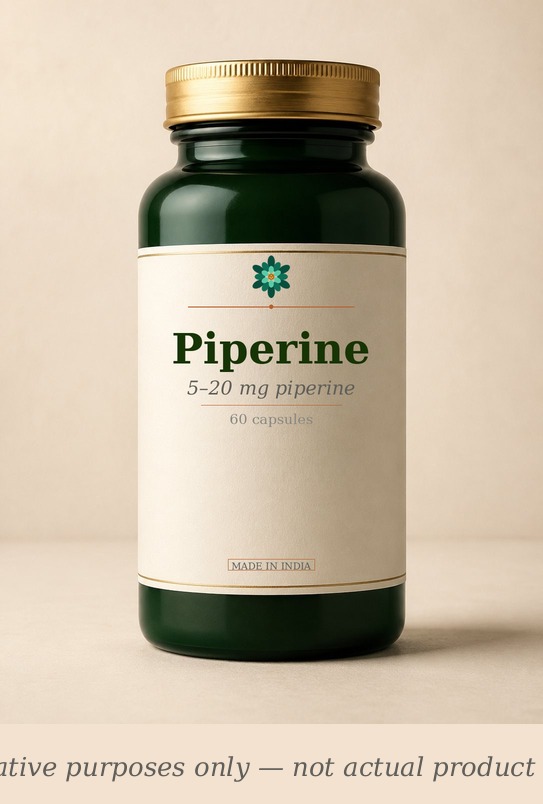
Piperine
Bioavailability Enhancer · 5–20 mg piperine · 60 caps
People also ask
How quickly will Piperine help with poor nutrient absorption?
Is Piperine the only supplement I need for poor nutrient absorption?
What blood tests should I run to track progress with poor nutrient absorption?
Keep reading

ZMA for Sleep: protocol, dose, and what to track
How to use ZMA specifically for Sleep — the right dose, timing, blood markers to track, and how to know if it is working.

Zinc for Fatigue: protocol, dose, and what to track
How to use Zinc specifically for Fatigue — the right dose, timing, blood markers to track, and how to know if it is working.
Yohimbine HCl for Erectile dysfunction: protocol, dose, and what to track
How to use Yohimbine HCl specifically for Erectile dysfunction — the right dose, timing, blood markers to track, and how to know if it is working.