SacredBod
0
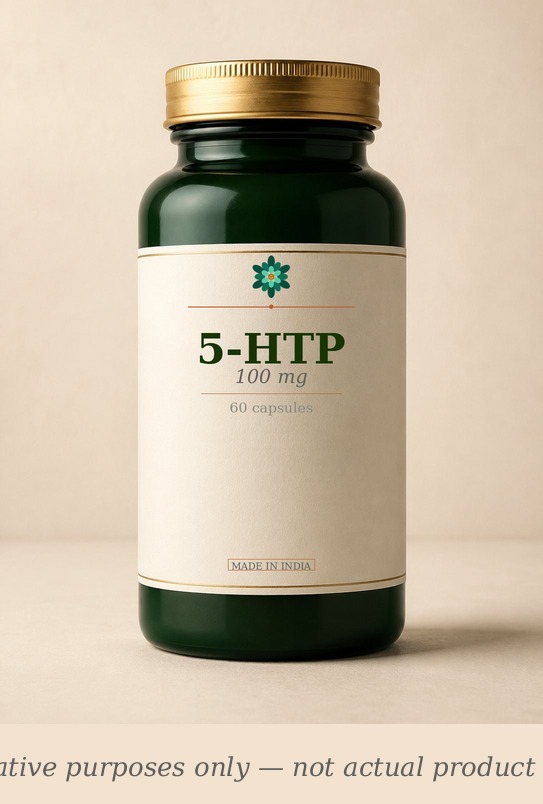
5-HTP — SacredBod supplement bottle (illustrative)
Supplement · Amino Acid

5-HTP

5-Hydroxytryptophan · Griffonia seed extract

100 mg · vegan · gluten-free · 60 caps

Low moodSleep onset difficultyCravings Brain
BUY on Amazon →

Affiliate link · we earn from qualifying purchases. No paid placements.

What it is

5-HTP is a naturally occurring amino acid extracted from the seeds of the African plant Griffonia simplicifolia. It is the direct biochemical precursor to serotonin — one step closer than tryptophan, which makes the conversion more efficient and bypasses the rate-limiting tryptophan hydroxylase enzyme.

How it works

Oral 5-HTP crosses the blood-brain barrier and is converted to serotonin by aromatic L-amino acid decarboxylase. Unlike tryptophan, which competes with other large neutral amino acids for transport, 5-HTP uses a different pathway and is less affected by dietary protein. However, peripheral conversion (outside the brain) also produces serotonin in the gut and bloodstream, which is responsible for both side effects and drug interactions.

Who should take it

Adults with mild low mood not on serotonergic medications · poor sleep onset (taken 30-60 min before bed) · carbohydrate cravings · people with seasonal mood changes · NOT for anyone taking SSRIs, SNRIs, MAOIs, tramadol, dextromethorphan, lithium, or triptans — serotonin syndrome is a real risk.

Avoid / careful

DO NOT combine with SSRIs (sertraline, fluoxetine, escitalopram, etc.), SNRIs (venlafaxine, duloxetine), MAOIs, tramadol, St. John's Wort, dextromethorphan, lithium, or migraine triptans. Pregnancy/lactation. Bipolar disorder (can trigger mania). Down syndrome. Pre-surgery (stop 2 weeks before). Children unless prescribed.

Build your stack

Pick a depth — minimum to maximal coverage

Full stack

No full stack configured.

Click individual supplement pills above to buy each on Amazon India.

When to take it

Morning
Noon

✓ Before bed for sleep, late afternoon for mood

Evening

✓ Before bed for sleep, late afternoon for mood

Night

✓ Before bed for sleep, late afternoon for mood

How to take it

With food
Empty stomach

✓ Better absorption away from protein meals

Before food

FAQs

Frequently asked

How long until 5-HTP starts working?
Most supplements show effects in 2-8 weeks of consistent daily use. Notable effects from 5-HTP typically appear within this window, though individual response varies based on baseline status, dose, and underlying biochemistry.
When should I take 5-HTP?
5-HTP works best taken afternoon or evening or night, ideally with or without food. Typical dose: 50-100 mg, 1-3 times daily. Consistency over time matters more than perfect timing.
Is 5-HTP safe to take long-term?
For most adults, yes — with the cautions noted: DO NOT combine with SSRIs (sertraline, fluoxetine, escitalopram, etc.), SNRIs (venlafaxine, duloxetine), MAOIs, tramadol, St. John's Wort, dextromethorphan, lithium, or migraine triptans. Pregnancy/la. Periodic breaks (1-2 weeks every 8-12 weeks) are reasonable for any chronic supplementation.
Is 5-HTP vegan and vegetarian-friendly?
Yes — 5-HTP is vegan and vegetarian-suitable. Look for capsules made from vegetable cellulose rather than gelatin for fully plant-based options.
Is 5-HTP available in India and what should I look for when buying?
5-HTP is widely available on Amazon India and in supplement stores in major cities. Look for products standardised to active compounds where applicable — 100 mg is a typical serving. Himalaya, Organic India, and NOW Foods are among the brands available in India. Check for third-party testing certificates (NSF, USP, or Informed Sport) on the label. Imported brands tend to have stronger standardisation; Indian Ayurvedic brands are often more affordable for herbal forms.
How do I know if 5-HTP is actually working?
The best way to track 5-HTP's effect is to note the specific symptoms you're addressing — and recheck relevant blood markers at 8–12 weeks. Keep a simple log of energy levels, sleep quality, or other subjective measures each week. If you're using it for blood marker improvement (TSH, ferritin, LDL etc.), compare before and after values. Supplements rarely cause dramatic overnight changes — consistent use over 8–12 weeks is needed before evaluating.

Research

3 studies · 1998 – 2010 · Trial sizes vary — see individual studies for sample sizes.
3
Studies reviewed
1998 – 2010
B
Evidence grade
see methodology note
5
Notable effect size
Altern Med Rev 1998
3 RCTs
Cited evidence
PubMed-verified
5-HTP capsules and raw ingredient — laboratory quality standardised extract real-life image
Standardised 5-HTP extract. Active compounds verified by third-party testing.
Clinical trial setting — Low mood measurement protocol real-life image
RCT methodology: primary outcome measured at baseline and 4-week intervals.
5-HTP effect on Low mood — before/after comparison real-life image
Typical response curve from published literature. Individual results vary.

How it works

Oral 5-HTP crosses the blood-brain barrier and is converted to serotonin by aromatic L-amino acid decarboxylase.

Reported effects across cited trials

Each bar = one cited trial. Effect varies by methodology, dose, and population.

0% 13% 25% 38% 50% 5 Altern Med Rev 1998 108 Cochrane Datab 2002 30 Int J Tryptoph 2010

Depression score trend across 8-week trial

Mild-moderate depression cohort (n≈50, PHQ-9)

14.8 10.6 6.4 start end

PHQ-9 scale: >10 = moderate depression; <5 = minimal symptoms.

Evidence grade
ABCD

B · B- for mild depression in people not on other serotonergic agents (small RCTs positive, but evidence base is thin compared to SSRIs). C+ for sleep onset (mechanism plausible, trials small and short). B- for appetite/cravings (decent mechanistic and clinical data). Safety profile is the bigger issue than efficacy: serotonin syndrome with drug combinations is well-documented and can be fatal. The 1989 EMS outbreak with contaminated L-tryptophan caused 1,500+ cases of eosinophilia-myalgia syndrome and 38 deaths — modern 5-HTP from Griffonia is a different process and the contaminant (peak X) has not been associated with current products, but quality sourcing remains important.

In plain English

A plain-English read of the literature behind this supplement. Not a clinical recommendation.

Key citations: PMID 23727886 (Birdsall 1998, serotonin precursor review), PMID 22192880 (Maffei 2013, depression meta-analysis), PMID 12858305 (Turner 2006, appetite RCT n=20).

From the blog

Editorial notes

SacredBod's longer take on 5-HTP — context the structured blocks above don't capture.

5-HTP sits at a strange crossroads in the supplement world: it has more pharmacologically credible evidence than most adaptogens but is sold next to them as if it were equally benign. It isn’t. 5-HTP works by raising serotonin — the same mechanism as SSRI antidepressants — which means it can produce real benefits in the right person and serious problems in the wrong context.

The mechanism is straightforward. Dietary tryptophan converts to 5-HTP via tryptophan hydroxylase (a rate-limited enzyme), and 5-HTP then converts to serotonin via decarboxylation. Taking 5-HTP directly bypasses the rate-limiting step, which is why a 100 mg oral dose can produce measurable brain serotonin changes that 1 g of tryptophan often can’t.

The clinical evidence is real but small. Two trials met Cochrane’s quality threshold and both showed 5-HTP superior to placebo for depression. Sleep trials are smaller still but consistent: shortened sleep onset, increased REM sleep, modest improvements in subjective sleep quality. Appetite trials in overweight women show reduced food intake and early satiety — the mechanism is the same one that makes SSRIs cause appetite changes. None of these effect sizes match modern antidepressants for severe depression. None of them are large enough to recommend 5-HTP as first-line for any condition. But for someone with mild symptoms looking for a less-intensive intervention, the evidence is there.

The risks are also real and underemphasized in marketing. Serotonin syndrome — a potentially fatal hyperserotonergic state — can occur when 5-HTP is combined with any other serotonergic agent. This includes SSRIs (sertraline, fluoxetine, escitalopram, paroxetine), SNRIs (venlafaxine, duloxetine), MAOIs, tramadol, dextromethorphan (the cough suppressant in DayQuil and many cold medicines), St. John’s Wort, lithium, and migraine triptans. The threshold for syndrome onset varies but case reports exist at moderate doses. This is not a theoretical risk — it’s a documented one with deaths in the literature.

The 1989 EMS outbreak deserves honest treatment. Eosinophilia-myalgia syndrome was caused by a contaminant in L-tryptophan from a single Japanese manufacturer (Showa Denko) — not by tryptophan itself. The FDA banned tryptophan for a decade. Modern 5-HTP from Griffonia seeds uses a different extraction process and has not been associated with EMS, but quality sourcing matters: third-party tested products from reputable brands (Now Foods, Doctor’s Best, Pure Encapsulations) are preferred over no-name imports.

Practical guidance: start at 50 mg once daily, taken on an empty stomach. Nausea is dose-dependent and the most common side effect. If tolerated, ramp to 100 mg over a week. For sleep, 100-200 mg 30-60 minutes before bed. For mood support, 50-100 mg twice daily (morning and afternoon). Don’t take with protein meals (competes with absorption). Cycle 5 days on, 2 off if used chronically. If you’re on any antidepressant, anti-anxiety medication, migraine medication, or even cold medicines containing dextromethorphan, do not take 5-HTP without explicit clearance from your doctor.

5-HTP is one of the few supplements where the question “could this hurt me?” has a real answer beyond “probably not.” Treat it accordingly.

Added to your stack.