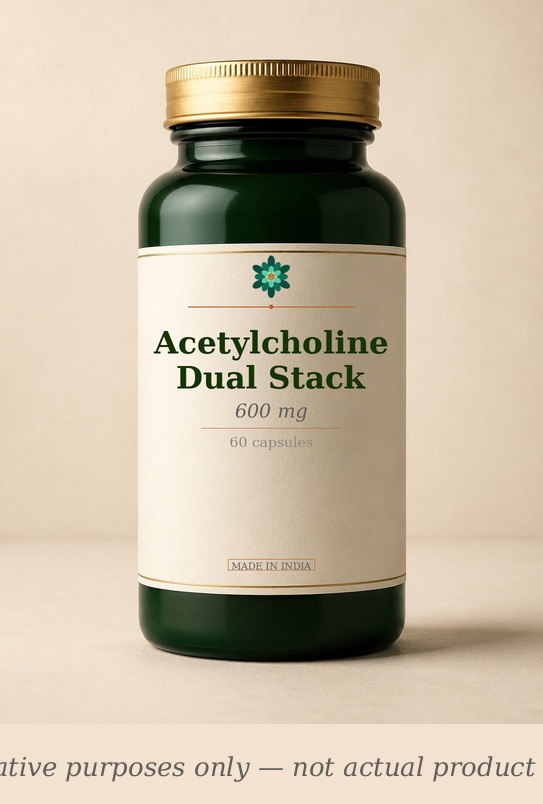
SacredBod's longer take on Acetylcholine Dual Stack — context the structured blocks above don't capture.
What the Acetylcholine Dual Stack Is
Acetylcholine is the primary neurotransmitter of memory, attention, and muscle control. It is synthesised from choline and acetyl-CoA in cholinergic neurons. As we age, cholinergic neuron density declines — this is the core pathology targeted by Alzheimer’s medications like donepezil.
Rather than blocking the breakdown of acetylcholine (like prescription drugs), this dual-stack increases its production through two complementary pathways:
- Alpha-GPC delivers choline directly across the blood-brain barrier with ~40% bioavailability.
- Citicoline delivers choline plus cytidine, which converts to uridine for neuronal membrane phospholipid synthesis.
Together, they provide both the neurotransmitter (acetylcholine) and the membrane substrate (phosphatidylcholine) for optimal cholinergic function.
How It Works
Alpha-GPC Pathway
Alpha-GPC is a natural constituent of cell membranes and is found in small amounts in soy and eggs. As a supplement, it crosses the BBB efficiently and donates choline to the enzyme choline acetyltransferase (ChAT), which synthesises acetylcholine. It has also been shown to increase growth hormone secretion and improve power output in athletes.
Citicoline Pathway
Citicoline (cytidine diphosphate choline) is an intermediate in the synthesis of phosphatidylcholine. It provides:
- Choline for acetylcholine synthesis
- Cytidine → Uridine for neuronal membrane repair and synaptic density
- Phospholipid precursor function that Alpha-GPC does not provide
Synergy
Alpha-GPC is superior for acute cognitive enhancement and physical performance. Citicoline is superior for long-term neuroprotection and membrane repair. The dual stack covers both temporal domains.
Who Benefits Most
- Age-associated memory impairment (AAMI) — The Nakazaki trial showed significant episodic memory improvements in healthy older adults after 12 weeks of 500mg citicoline.
- Students and professionals — The acute Alpha-GPC trial demonstrated improved Stroop-task performance in healthy young men.
- Stroke recovery — Alpha-GPC at 1,200mg/day IV showed functional recovery benefits in stroke patients.
- Vegans and low-choline dieters — The Indian vegetarian diet is often choline-deficient; supplementation is essential.
Dosage Guide
| Component | Dose | Timing |
|---|
| Alpha-GPC | 300–600 mg | Morning, with breakfast |
| Citicoline | 250–500 mg | Morning, with breakfast |
| Combined stack | 300mg Alpha-GPC + 250mg citicoline | Morning |
Do not exceed 1,200mg total choline precursors daily without medical supervision. Start at half-dose for 1 week to assess tolerance.
Safety & Interactions
- Headache: Usually indicates excess choline; reduce dose.
- Depression: Rare in choline-sensitive individuals; discontinue if mood worsens.
- Donepezil / galantamine: Additive cholinergic effects may cause bradycardia, sweating, or GI distress — consult physician.
- Levodopa: High-dose choline may reduce levodopa efficacy in Parkinson’s patients.
India-Specific Context
- Availability: No dual-stack product exists on Amazon.in. Individual Alpha-GPC and citicoline capsules are available from imported brands (Jarrow, NOW Foods) and local sellers. Prices range from ₹800–₹2,000 per bottle.
- Dietary choline gap: The average Indian vegetarian diet provides ~200–300mg choline/day (well below the 550mg RDA for men). Eggs, liver, and fish are the richest sources — all commonly avoided in vegetarian Indian households. This makes choline supplementation particularly relevant.
- Regulatory status: Alpha-GPC and citicoline are sold as dietary supplements in India. They are not Schedule H drugs.
- Ayurvedic parallel: The concept of enhancing Medhya (intellect) through dietary fats aligns with the modern understanding of phospholipid-dependent neurotransmission. Classical Brahmi Ghrita (ghee-based Brahmi preparation) may have worked partly by providing phospholipid substrates alongside the herb.