
SacredBod
0
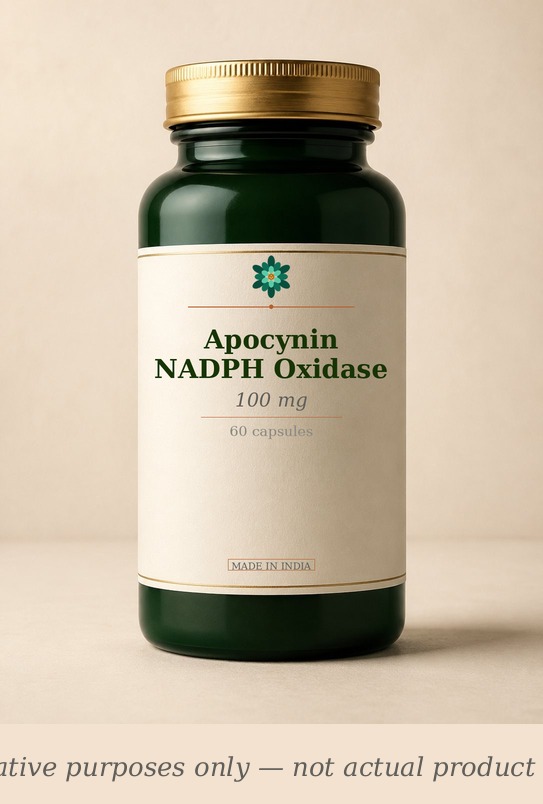
Apocynin NADPH Oxidase — SacredBod supplement bottle (illustrative)
Supplement · Advanced Anti-Inflammatory

Apocynin NADPH Oxidase

100 mg · vegan · gluten-free · 60 caps

Joint inflammation and painNeuroinflammationChronic oxidative stressLung inflammationCardiovascular inflammation JointsBrainLungsHeartImmune system
BUY on Amazon →

Affiliate link · we earn from qualifying purchases. No paid placements.

What it is

Apocynin is a methoxy-catechol compound originally isolated from the roots of Picrorhiza kurroa (Kutki). It is a selective inhibitor of NADPH oxidase — the enzyme complex responsible for generating reactive oxygen species (ROS) in inflammatory cells. By blocking ROS at the source, apocynin prevents the oxidative amplification of inflammation in arthritis, neurodegeneration, acute lung injury and cardiovascular disease.

How it works

Apocynin inhibits the assembly and activation of the NADPH oxidase complex (NOX2/gp91phox) in neutrophils, macrophages and microglia. This prevents the respiratory burst that generates superoxide and hydrogen peroxide — ROS molecules that activate NF-κB, NLRP3 inflammasomes and MAPK pathways. Apocynin also has mild anti-platelet and anti-thrombotic effects via thromboxane A2 inhibition.

Who should take it

Individuals with inflammatory arthritis, neuroinflammatory conditions, chronic lung disease and those seeking an upstream antioxidant that blocks ROS generation rather than merely scavenging existing radicals.

Avoid / careful

Avoid during pregnancy and breastfeeding. Use caution in bleeding disorders, on anticoagulants or with known Kutki allergy. Side effects: Generally well tolerated; rare mild GI upset, headache or skin rash. High doses may cause paradoxical pro-oxidant effects in some cell types.

When to take it

Morning
Noon
Evening
Night

How to take it

With food
Empty stomach
Before food

FAQs

Frequently asked

How long before I see results?
Anti-inflammatory benefits in arthritis models appear within 4–8 weeks of consistent use. Neuroprotective and cardiovascular benefits require longer-term supplementation (3–6 months). Apocynin is an upstream modulator, so effects are gradual.
Is it safe to take daily?
Yes at 100 mg/day. Apocynin has been used in animal studies and limited human trials without significant toxicity. However, very high doses (>500 mg) may paradoxically generate ROS in certain cell types. Stay within the 100–200 mg range.
Can I take it with blood thinners?
Use caution. Apocynin inhibits thromboxane A2 formation and has mild anti-platelet activity. If you are on warfarin, aspirin or clopidogrel, consult your physician and monitor for bruising or bleeding.

In plain English

A plain-English read of the literature behind this supplement. Not a clinical recommendation.

Key citations: PMID 1299626 (Engels 1992 — apocynin inhibits thromboxane A2 and platelet aggregation; anti-inflammatory mechanism in P. kurroa root extract), PMID 27163229 (Kumar 2016 — P. kurroa rhizome extract inhibits NF-κB, COX-2, iNOS and inflammatory cytokines in experimental models), PMC10105242 (comprehensive review of P. kurroa phytoactives including apocynin), PMC9738980 (pharmacological review of P. kurroa and apocynin as NADPH oxidase inhibitor), PMID 26556014 (Kumar 2015 — P. kurroa inhibits experimental arthritis via pro-inflammatory cytokine and MMP suppression)

Editorial notes

SacredBod's longer take on Apocynin NADPH Oxidase — context the structured blocks above don't capture.

What It Is

Apocynin NADPH Oxidase delivers the methoxy-catechol compound originally discovered in the roots of Picrorhiza kurroa — known in India as Kutki (कुटकी). While Kutki has been used in Ayurveda for millennia as a hepatoprotective and digestive bitter, modern pharmacology isolated apocynin as the compound responsible for its potent anti-inflammatory and antioxidant effects. Unlike conventional antioxidants (vitamin C, NAC) that scavenge ROS after they form, apocynin blocks ROS generation at the source by inhibiting NADPH oxidase — the enzyme that produces superoxide in inflammatory cells.

How It Works

  1. NADPH oxidase blockade — Apocynin prevents the assembly of the NOX2/gp91phox complex in neutrophils, macrophages and microglia. This stops the “respiratory burst” that generates superoxide (O2•−) and hydrogen peroxide (H2O2) — the ROS that amplify NF-κB, NLRP3 and MAPK signalling.
  2. Thromboxane A2 inhibition — Apocynin concentration-dependently inhibits thromboxane A2 synthesis in platelets, reducing platelet aggregation and microvascular thrombosis in inflamed tissues.
  3. NF-κB suppression — By reducing ROS-mediated IκBα phosphorylation, apocynin indirectly suppresses NF-κB activation and downstream cytokine production.

Who Benefits Most

  • Inflammatory arthritis patients — apocynin reduces joint inflammation and cartilage degradation in animal models.
  • Neuroinflammatory condition sufferers — microglial NADPH oxidase is a major driver of neurodegeneration; apocynin dampens microglial activation.
  • Chronic lung disease patients — NADPH oxidase-generated ROS drive COPD and asthma inflammation.
  • Those seeking upstream antioxidant support — blocking ROS generation is more efficient than scavenging existing radicals.

Dosage Guide

GoalDoseTiming
General anti-inflammatory100 mg/dayMorning with food
Arthritis / intensive support200 mg/dayDivided doses
Neuroinflammation100–200 mg/dayMorning

Apocynin is poorly bioavailable orally; absorption improves with meals containing fat. Some formulations combine apocynin with piperine or liposomal delivery systems to enhance bioavailability.

Safety and Interactions

Apocynin is safe at 100–200 mg/day. The main concern is its anti-platelet activity — caution with anticoagulants. Paradoxically, very high doses (>500 mg) may act as a pro-oxidant in some cell types by auto-oxidising and generating ROS. This “hormetic” effect is not seen at standard supplemental doses.

India-Specific Context

  • Sanskrit/Hindi name: Kutki (कुटकी), Katumbhara, Rohini, Krushnabheda
  • Ayurvedic classical texts: Kutki is extensively documented in Charaka Samhita, Sushruta Samhita and Bhavaprakash Nighantu as a Deepana (digestive stimulant), Pachana (metabolic enhancer), Yakritottejaka (liver stimulant) and Shothahara (anti-inflammatory). It is indicated for Kamala (jaundice), Jvara (fever), Pandu (anaemia) and Shotha (oedema/inflammation).
  • Local availability: Standalone apocynin supplements are not available on Amazon.in. Buyers must use Kutki (Picrorhiza kurroa) root extracts which contain apocynin along with picrosides I, II and other iridoid glycosides. INLIFE sells Kutki Extract 500mg capsules. Himalaya Liv.52 DS contains Kutki as part of a polyherbal formula.
  • Regulatory status: Kutki is a Schedule E(1) drug in India — requiring caution in use due to its potent bitter and purgative properties. It is not a Schedule H prescription drug but is regulated as a powerful Ayurvedic medicine.
  • Conservation note: Picrorhiza kurroa is endangered in the wild due to overharvesting. Choose cultivated or sustainably sourced products. The IUCN lists it under the rare/endangered category.
  • Ayurvedic dose: Classical texts recommend 300–500 mg Kutki rhizome powder 2–3 times daily — far higher than the apocynin isolate dose, but the whole root contains multiple active compounds.

Traditional Use in Indian Medicine

Kutki is one of the most revered herbs in Ayurvedic hepatology and inflammation management. Charaka Samhita describes it as Tikta (bitter) and Katu (pungent), with a cooling potency. It is a primary ingredient in Arogyavardhini Vati, Rohitakarishtha and dozens of classical liver-support formulations. The traditional use for inflammatory conditions (Shotha) aligns with modern apocynin research — both the classical whole-root preparation and the isolated compound share NADPH oxidase-inhibitory and anti-inflammatory activity. Modern Indian pharmacologists have extensively studied Kutki’s iridoid glycosides (picrosides) and phenolic compounds (apocynin) for hepatoprotection, anti-inflammation and immunomodulation.

Added to your stack.