SacredBod
0
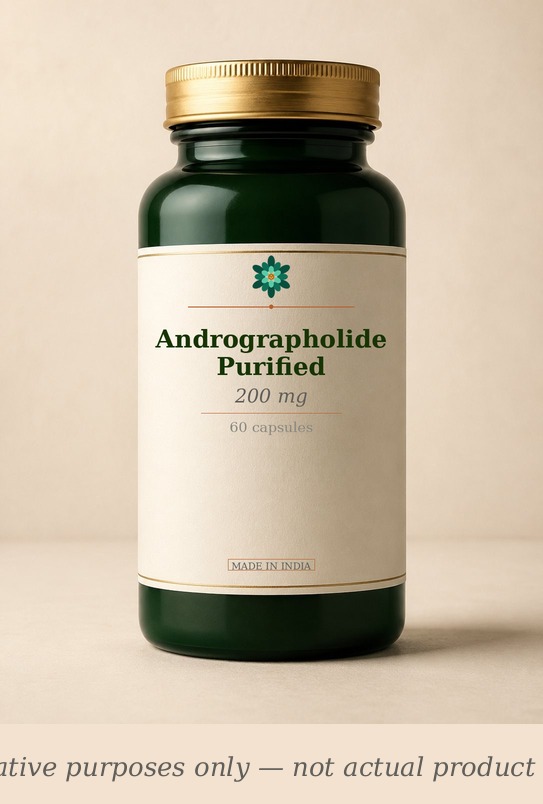
Andrographolide Purified — SacredBod supplement bottle (illustrative)
Supplement · Advanced Anti-Inflammatory

Andrographolide Purified

200 mg · vegan · gluten-free · 60 caps

Recurrent respiratory infectionsChronic gut inflammationJoint inflammationFeverSore throat Immune systemRespiratory tractGutLiver
BUY on Amazon →

Affiliate link · we earn from qualifying purchases. No paid placements.

What it is

Andrographolide is the primary diterpene lactone extracted from Andrographis paniculata (Kalmegh). Unlike whole-herb Andrographis powder, purified andrographolide delivers a standardised, concentrated dose of the compound responsible for NF-κB inhibition, IL-6 suppression and macrophage modulation.

How it works

Andrographolide blocks NF-κB nuclear translocation by inhibiting IκB kinase phosphorylation, suppresses pro-inflammatory cytokine production (TNF-α, IL-6, IL-1β) and modulates macrophage polarisation from M1 (pro-inflammatory) toward M2 (anti-inflammatory) phenotypes.

Who should take it

Individuals with recurrent upper respiratory tract infections, chronic inflammatory bowel conditions, and those seeking a potent, standardised alternative to whole-herb Andrographis for immune-inflammatory modulation.

Avoid / careful

Avoid during pregnancy and breastfeeding. Use caution in autoimmune conditions, gallbladder disease and in those with known Andrographis allergy. Side effects: Generally well tolerated; rare mild gastrointestinal upset, bitter taste, headache or allergic skin rash. High doses may cause transient elevated liver enzymes.

When to take it

Morning
Noon
Evening
Night

How to take it

With food
Empty stomach
Before food

FAQs

Frequently asked

How long before I see results?
For acute upper respiratory symptoms, benefits typically appear within 3–7 days. For chronic inflammatory conditions, 2–4 weeks of consistent use is needed.
Is it safe to take daily?
Yes at 200 mg/day for short courses (2–4 weeks). For extended use, cycle 2 weeks on, 1 week off to prevent potential hepatic enzyme elevation and maintain efficacy.
Can I take it with antibiotics?
Andrographolide is often used alongside antibiotics for respiratory infections in integrative medicine, but there is limited formal interaction data. Space dosing by 2 hours.

In plain English

A plain-English read of the literature behind this supplement. Not a clinical recommendation.

Key citations: PMID 25684773 (Saxena 2010 — andrographolide reduces URTI symptoms in 185 patients), PMID 26549858 (meta-analysis of Andrographis for URTI), PMID 22940148 (mechanism: andrographolide inhibits NF-κB and MAPK pathways), PMID 24359414 (andrographolide ameliorates inflammatory bowel disease in animal models), PMID 30567748 (comprehensive review of andrographolide anti-inflammatory mechanisms)

Editorial notes

SacredBod's longer take on Andrographolide Purified — context the structured blocks above don't capture.

What It Is

Andrographolide Purified delivers the isolated diterpene lactone that constitutes the primary pharmacological activity of Andrographis paniculata — known in India as Kalmegh (कालमेघ) or King of Bitters. While whole-herb Andrographis powders and extracts contain many compounds, purified andrographolide (typically 10–30 % of extract weight) is the agent responsible for the majority of the plant’s anti-inflammatory, immunomodulatory and antiviral effects. Standardisation to andrographolide content ensures consistent dosing — a significant advantage over variable whole-herb preparations.

How It Works

  1. NF-κB blockade — Andrographolide inhibits IκB kinase (IKK) phosphorylation, preventing the nuclear translocation of NF-κB p65. Since NF-κB drives the transcription of TNF-α, IL-6, IL-1β, COX-2 and iNOS, this single action profoundly dampens inflammatory gene expression.
  2. Macrophage polarisation — In LPS-stimulated macrophages, andrographolide shifts the balance from M1 (pro-inflammatory, TNF-α-producing) toward M2 (anti-inflammatory, IL-10-producing) phenotypes, promoting resolution rather than perpetuation of inflammation.
  3. Viral inhibition — Andrographolide interferes with viral entry and replication for several respiratory pathogens, explaining its traditional use in febrile illnesses.

Who Benefits Most

  • Individuals with recurrent URTI — clinical trials show reduced symptom severity and duration.
  • Those with mild inflammatory bowel symptoms — animal models demonstrate gut mucosal protection.
  • People seeking a standardised immune-inflammatory modulator — purified compound > whole herb for consistency.

Dosage Guide

GoalDoseDuration
Acute respiratory support200 mg twice daily5–10 days
Chronic inflammation200 mg daily2–4 weeks, then cycle
Immune maintenance100 mg daily2 weeks on, 1 week off

Take with food to mask the intense bitterness. The compound is poorly water-soluble; a meal containing some fat improves absorption.

Safety and Interactions

Andrographolide is safe at standard doses. Rare hepatotoxicity reports involve very high doses (>1,000 mg/day) or prolonged use. Cycling is recommended for extended protocols. Avoid in pregnancy — traditional texts classify Kalmegh as a uterine stimulant. Theoretical antiplatelet activity warrants caution with warfarin.

India-Specific Context

  • Sanskrit/Hindi name: Kalmegh (कालमेघ), Bhunimba (भूनिंब), Yavatikta (यावतिक्ता)
  • Ayurvedic classical texts: Kalmegh is mentioned in Charaka Samhita and Bhavaprakash Nighantu as a Jwarahara (antipyretic), Deepana (digestive stimulant) and Krimighna (antiparasitic) herb. It is a key ingredient in classical formulations like Kalmeghasava and Arogyavardhini Vati.
  • Indian brands: Andrographis products are widely available from Himalaya (Liv.52 contains Kalmegh), Dabur, Baidyanath and generic supplement sellers on Amazon.in. Purified andrographolide extracts are less common than whole-herb powders.
  • Regulatory status: Not a Schedule H drug; sold as a dietary supplement and Ayurvedic proprietary medicine. The AYUSH Ministry recognises Andrographis as a traditional medicine.
  • Cultivation: Kalmegh is cultivated throughout India, particularly in Madhya Pradesh, Uttar Pradesh and Tamil Nadu, making it an affordable domestic ingredient.

Traditional Use in Indian Medicine

In Ayurveda, Kalmegh is Tikta (bitter) and Katu (pungent) in taste, with a cooling potency (Sheeta Virya). It is used for Jvara (fever), Kamala (jaundice), Krimi (worms) and Agnimandya (weak digestion). Charaka classified it under Jwarahara and Tiktaskandha (bitter herbs). The traditional decoction (kadha) of Kalmegh leaves is a household remedy for viral fever across rural India. Modern extraction and standardisation to andrographolide content transforms this empirical use into a reproducible, dose-controlled therapeutic option.

Added to your stack.