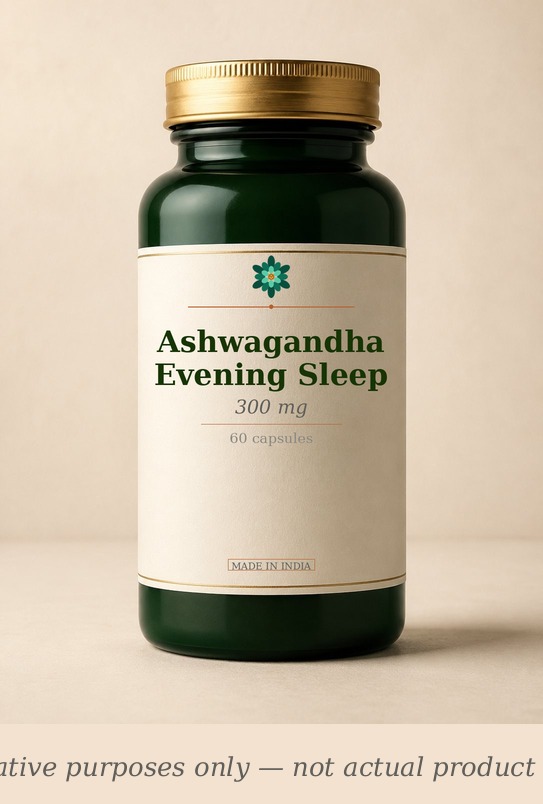
SacredBod's longer take on Ashwagandha Evening Sleep — context the structured blocks above don't capture.
What It Is
Ashwagandha Evening Sleep uses KSM-66 — the most clinically validated ashwagandha extract — taken specifically in the evening to leverage its cortisol-lowering and GABAergic properties for sleep. While ashwagandha is commonly used as a daytime stress adaptogen, evening dosing is distinct: it targets the cortisol nadir that should occur at midnight but is often elevated in stressed individuals, thereby blocking melatonin and fragmenting sleep architecture. Multiple RCTs, including a landmark 200-participant study from Navi Mumbai, India, confirm that 300 mg twice daily (including the evening dose) significantly reduces sleep onset latency, increases total sleep time and improves sleep efficiency.
How It Works
- HPA-axis cortisol reduction — Withanolides in ashwagandha modulate the hypothalamic-pituitary-adrenal axis, reducing CRF and ACTH secretion. This lowers circulating cortisol — the primary hormone that opposes melatonin and disrupts sleep.
- GABA-A receptor enhancement — Ashwagandha increases GABA receptor density and GABAergic signalling in the hypothalamus and hippocampus, promoting the inhibitory tone necessary for sleep onset.
- Serotonergic modulation — By enhancing 5-HT2 and 5-HT3 receptor activity, ashwagandha supports the serotonin-to-melatonin conversion pathway in the pineal gland.
- SCN and pineal antioxidant protection — Withanolides A and D scavenge free radicals in the suprachiasmatic nucleus and pineal gland, protecting the circadian clock machinery from oxidative damage.
Who Benefits Most
- Stress-related insomnia sufferers with racing thoughts and elevated evening cortisol.
- Subclinical hypothyroid patients — the Sharma 2018 RCT showed TSH normalisation alongside sleep benefits.
- Individuals with poor sleep efficiency (<85 % time-in-bed asleep).
- Those seeking an Ayurvedic alternative to pharmaceutical sleep aids with Tier 1 evidence.
Dosage Guide
| Goal | Dose | Timing |
|---|
| Sleep optimisation | 300 mg KSM-66 | With dinner (evening) |
| Stress + sleep | 300 mg twice daily | Morning and evening |
| Intensive support | 600 mg evening | With dinner |
The evening dose is critical for sleep — it aligns peak withanolide absorption with the body’s natural cortisol decline phase. Take with a meal containing fat (ghee, nuts, avocado) to improve lipophilic withanolide absorption. Do not take on an empty stomach if you experience GI sensitivity.
Safety and Interactions
Ashwagandha is remarkably safe at 300–600 mg/day. The 200-participant Indian RCT reported only mild nausea and drowsiness. Three case reports document thyrotoxicosis at very high doses (>1,950 mg/day) or in those with underlying thyroid autonomy. Monitor TSH if on levothyroxine. Denmark and France have cautioned against use in pregnancy. Additive sedation with benzodiazepines is possible.
India-Specific Context
- Sanskrit/Hindi name: Ashwagandha (अश्वगंधा), also known as Varahakarni, Vajigandha and Hayagandha.
- Ayurvedic classical texts: Extensively documented in Charaka Samhita, Sushruta Samhita and Ashtanga Hridaya as a Rasayana (rejuvenative), Balya (strength-promoting), Vajikarana (aphrodisiac) and Nidrajanana (sleep-inducing) herb. Charaka classifies it under Brahmaneeya Rasayana — promoting intellect and vitality.
- Indian brands: KSM-66 is manufactured by Ixoreal Biomed (Hyderabad, India) and sold under dozens of brand names: Trexgenics, Aarogya360, Kapiva, Tata 1mg Tejasya, BBETTER, Unived and TrueBasics. Prices range ₹400–1,200 for 60 capsules.
- Regulatory status: Not a Schedule H drug; widely sold as a dietary supplement and Ayurvedic proprietary medicine. The AYUSH Ministry recognises ashwagandha as a safe traditional medicine.
- Clinical context: The PMC13108063 sleep RCT was conducted at D.Y. Patil Medical College, Navi Mumbai, India — making this one of the few sleep supplements with direct evidence from the Indian population. KSM-66 was supplied by the Hyderabad manufacturer.
Traditional Use in Indian Medicine
Ashwagandha is the crown jewel of Ayurvedic Rasayana therapy. Charaka Samhita describes it as having the “smell of a horse and the strength of a horse.” It is used for Vata disorders, weakness, emaciation, impotence and nervous exhaustion. The classical indication for sleep disorders would fall under Anidra (insomnia) and Vataja Nidra — conditions where ashwagandha’s warming, grounding and nourishing properties are traditionally applied. The modern RCT evidence validates this empirical use, showing that ashwagandha’s cortisol-lowering and GABAergic effects translate into measurable improvements in sleep onset, duration and efficiency.