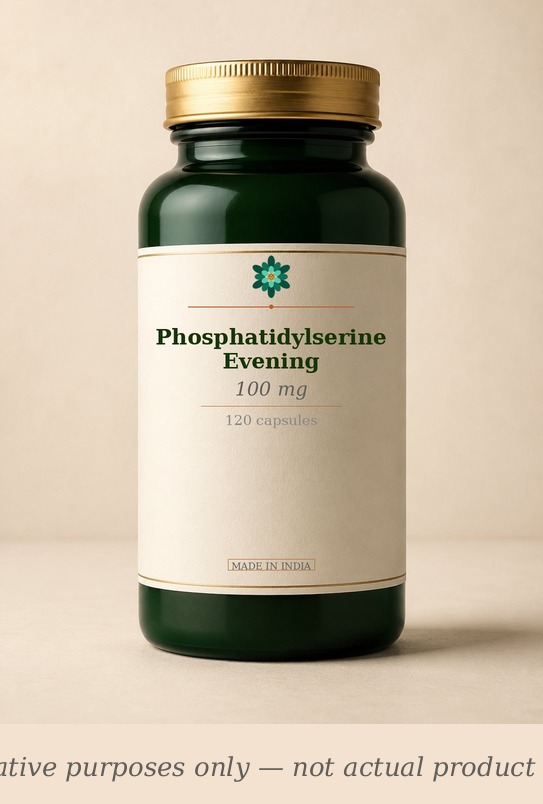
SacredBod's longer take on Phosphatidylserine Evening — context the structured blocks above don't capture.
What It Is
Phosphatidylserine Evening provides the phospholipid that makes up 10–20 % of your brain’s cell membrane phospholipids — but taken at a specific time (evening) for a specific purpose (cortisol blunting). While PS is widely known as a cognitive supplement for memory and focus, its evening application is distinct: by modulating hypothalamic CRF receptor sensitivity, PS reduces the HPA-axis drive that elevates cortisol at night — the hormonal enemy of restorative sleep. In India, PS is available through imported brands and a growing number of domestic supplement companies.
How It Works
- HPA-axis modulation — PS alters corticotropin-releasing factor (CRF) receptor interactions in the hypothalamus. Chronic PS treatment reduces the sensitivity of the HPA axis to stress signals, meaning less ACTH is released and consequently less cortisol is produced by the adrenal glands.
- Cortisol circadian normalisation — Cortisol should be highest in the morning and lowest at midnight. Chronic stress inverts or flattens this curve. Evening PS helps restore the normal cortisol nadir, allowing melatonin to rise unopposed and sleep architecture to proceed normally.
- Testosterone:cortisol ratio improvement — By lowering cortisol without suppressing testosterone, PS creates a more anabolic hormonal environment — beneficial for athletes, bodybuilders and anyone recovering from overtraining or burnout.
Who Benefits Most
- The “wired and tired” — exhausted by day but mentally alert at bedtime due to elevated evening cortisol.
- Stressed professionals with racing thoughts that prevent sleep onset.
- Athletes in intensive training experiencing elevated cortisol and disrupted recovery sleep.
- Individuals with salivary cortisol profiles showing a blunted morning peak or elevated midnight nadir.
Dosage Guide
| Goal | Dose | Timing |
|---|
| Evening cortisol blunting | 100–300 mg | With dinner (6–8 PM) |
| Intensive stress/athletic support | 600–800 mg | Divided: 300 mg morning, 300–500 mg evening |
| Sleep-specific support | 100–200 mg | With evening meal |
PS is a phospholipid and requires dietary fat for absorption. Take with a meal containing ghee, nuts, avocado or fatty fish. Soy-free options (Sharp-PS® Green, derived from sunflower lecithin) are available for those with soy sensitivity.
Safety and Interactions
PS is extremely safe. It is a natural cell membrane component with GRAS status. The only caution: very high doses (>800 mg) may have mild anticoagulant effects. PS can theoretically reduce blood pressure — monitor if you are hypotensive or on antihypertensives. Space 4 hours from levothyroxine.
India-Specific Context
- Hindi/Sanskrit name: No classical equivalent; PS is a modern phospholipid nutraceutical.
- Local availability: Available on Amazon.in from Jarrow Formulas, NOW Foods (imported), Trexgenics, Athinika Nutrition and generic brands at ₹800–2,500 for 60–120 capsules. Look for “Sharp-PS®” or “Sharp-PS® Green” branding for quality assurance.
- Regulatory status: Not a Schedule H drug; sold as a dietary supplement. The FSSAI recognises phosphatidylserine as a food supplement ingredient.
- Ayurvedic parallel: The HPA-axis modulating action of PS aligns with the Ayurvedic concept of Medhya Rasayana (nervous system rejuvenation) and Ojas (vital energy) restoration. Classical herbs like Ashwagandha and Brahmi are used for similar purposes; PS offers a complementary biochemical mechanism.
- Clinical context: Indian integrative endocrinologists and sports medicine physicians are increasingly aware of PS for cortisol management. Some Mumbai and Delhi clinics now include salivary cortisol testing and PS supplementation in adrenal fatigue protocols.
Traditional Use in Indian Medicine
Phosphatidylserine does not appear in classical Ayurvedic texts — phospholipids were not identified as distinct biochemical entities until the 20th century. However, the principle of using lipid-rich foods (ghee, nuts, sesame oil) for brain and nervous system health is central to Ayurvedic Medhya Rasayana therapy. Ghee (Ghrita) is specifically classified as Medhya (intellect-promoting) and Buddhivardhana (intelligence-enhancing). Modern PS supplementation can be viewed as a concentrated, standardised form of the phospholipid nourishment that traditional Indian diets provided through whole foods. Integrative practitioners may combine evening PS with Ashwagandha or Brahmi for comprehensive HPA-axis and sleep support.