
What it is
Betula pendula, the silver birch, is a graceful deciduous tree native to Europe and temperate Asia. Its leaves have been used since antiquity as a diuretic, detoxifier and anti-inflammatory for the urinary tract.
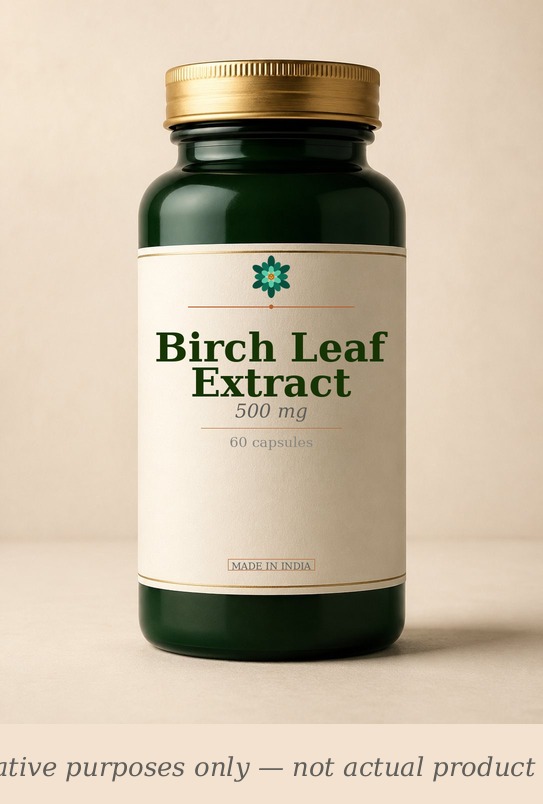
500 mg · vegan · gluten-free · 60 caps
Affiliate link · we earn from qualifying purchases. No paid placements.
Betula pendula, the silver birch, is a graceful deciduous tree native to Europe and temperate Asia. Its leaves have been used since antiquity as a diuretic, detoxifier and anti-inflammatory for the urinary tract.
Birch leaf flavonoids (hyperoside, quercetin) and saponins increase urine volume to flush the urinary tract, while its anti-inflammatory compounds soothe irritated bladder mucosa. It also supports metabolic detoxification via the kidneys.
Adults with mild fluid retention, recurrent minor UTIs, or those seeking a spring detoxification tonic. Not for severe kidney disease.
Pregnant or breastfeeding women; people with severe kidney disease; those with birch-pollen allergy. Side effects: Very rare; occasional mild GI upset or allergic reaction in birch-pollen sensitive individuals.
A plain-English read of the literature behind this supplement. Not a clinical recommendation.
Key citations: PMC7126499 (phytochemical and ethnopharmacological review), PMC12300340 (rat metabolomics study — no significant conventional diuretic effect under tested conditions), Engesser et al. 1998 (small clinical study on UTI, n=15)
SacredBod's longer take on Birch Leaf Extract — context the structured blocks above don't capture.
Silver Birch (Betula pendula Roth, syn. B. verrucosa) is an iconic tree of Northern Europe and Russia, where its sap, bark and leaves have been used medicinally for millennia. The leaves (Betulae folium) are approved by German Commission E, the European Medicines Agency and ESCOP as a traditional herbal medicine “to increase the amount of urine to achieve flushing of the urinary tract as an adjuvant in minor urinary complaints.” In India, birch grows in the Himalayan regions (Ladakh, Kashmir, Himachal Pradesh, Uttarakhand) where the bark (Bhojpatra) is famous as ancient writing material and for wound healing in Ayurveda; the leaf is not traditionally used in Ayurvedic medicine for diuresis.
Birch leaves contain flavonoid glycosides (hyperoside, quercetin, myricitrin), saponins, tannins and ascorbic acid. The traditional diuretic effect is attributed to increased renal blood flow and mild irritation of the renal tubules, promoting urine output. A small 1998 study in 15 patients with lower urinary tract infections found that birch leaf tea (4 cups/day for 20 days) reduced microbial counts by 39% versus 18% in the placebo group. Another large observational study in 1,066 patients with UTIs, cystitis and irritable bladder reported 75–80% symptom disappearance after 2–4 weeks of birch leaf extract. However, a recent rat metabolomics study found no significant increase in 24-hour urine volume or electrolyte excretion under the tested conditions, suggesting the mechanism may be more complex than simple osmotic diuresis.
Adults with mild fluid retention, tendency toward minor UTIs, or those seeking a traditional European spring detox tonic. Not for severe renal impairment or acute pyelonephritis.
Extremely well tolerated with no significant side effects reported in traditional use or observational studies. Because it increases urine output, it may reduce lithium clearance — avoid combining with lithium therapy. Rare birch-pollen allergy cross-reactions possible.
Birch leaf supplements are a new import category on Amazon.in, led by Bharat Herbal and Shree Ram Herbal with 550 mg extract tablets (₹350–₹700). YOGIMATE sells leaf powder for tea. Standalone standardised capsules are scarce. The tree itself is sacred in the Himalayan regions — Bhojpatra bark was used for Sanskrit manuscripts. It is not a scheduled drug. Because it is foreign to Ayurveda, there is no dosha classification, though its bitter-astringent taste and cooling nature suggest utility for pitta heat and kapha fluid retention.
Peptides are physician-only. Tell us a bit and we'll route you to the right specialist.