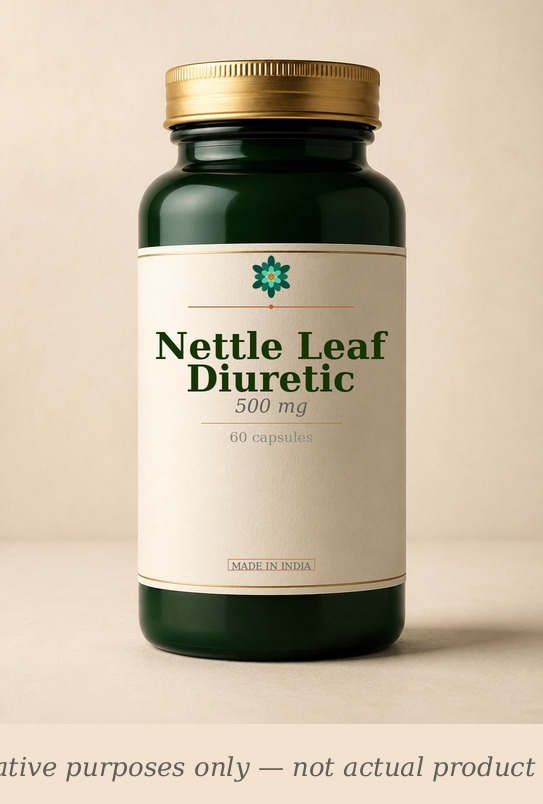
SacredBod's longer take on Nettle Leaf Diuretic — context the structured blocks above don't capture.
What It Is
Stinging Nettle (Urtica dioica) is a nutrient powerhouse — the leaves contain vitamins A, C, K, iron, calcium and protein. While nettle root is famous for BPH support, the leaf has distinct pharmacology: it is a gentle, potassium-sparing diuretic with anti-inflammatory and blood sugar-modulating properties. In India, it grows wild in the Himalayan foothills (Kashmir, Himachal Pradesh, Uttarakhand) and is known as Bichhu Buti or Shishun. It is not a primary herb in classical Ayurvedic texts but appears in folk medicine for arthritis, blood purification and as a spring tonic.
How It Works
Nettle leaf increases diuresis and natriuresis by enhancing renal blood flow and glomerular filtration. A rat study showed that intravenous perfusion of aqueous nettle extract increased urine output by 84% and sodium excretion by 143% at higher doses, with a proportional blood pressure reduction — comparable to furosemide but with reversible effects. Crucially, nettle leaf does not cause potassium wasting, making it unique among herbal diuretics. In human RCTs, 500 mg nettle leaf extract three times daily for 3 months significantly reduced fasting glucose, postprandial glucose and HbA1c in type 2 diabetics versus placebo. The leaf also inhibits inflammatory cytokines (IL-6, TNF-α) and stabilises mast cells, explaining its traditional use for allergies.
Who Benefits Most
Adults with mild fluid retention who want to avoid potassium depletion; type 2 diabetics seeking adjunctive glucose control; and those with seasonal allergies or inflammatory joint pain. Not for acute kidney injury or severe renal impairment.
Dosage Guide
- Leaf extract capsules: 500 mg once or twice daily with food
- Leaf tea: 2–4 g dried leaf steeped in hot water, 2–3 times daily
- Cycle: Continuous use is safe and traditional
Safety and Interactions
Very safe at moderate doses. Fresh plant stings skin; dried or extracted forms do not. May lower blood sugar and blood pressure — monitor if on antidiabetic or antihypertensive medication. Theoretical interaction with warfarin due to vitamin K content.
India-Specific Context
Nettle leaf is harvested wild in the Indian Himalayas and sold by brands like DR.BRAM’S, Organic India (occasionally seasonal) and imported Nature’s Way on Amazon.in. Prices range from ₹400–₹900 for 60 capsules. It is not a scheduled drug. In Himalayan folk medicine, nettle soup (shishun saag) is a traditional spring blood purifier. Its tikta (bitter) and kashaya (astringent) rasa, combined with its warming metabolic effect, make it suitable for kapha excess and fluid retention, though pitta types should use it cautiously in summer.