
What it is
Juniperus communis is an evergreen conifer whose blue-purple berries have been used in European folk medicine as a diuretic, digestive bitter and urinary antiseptic for over 2,000 years.
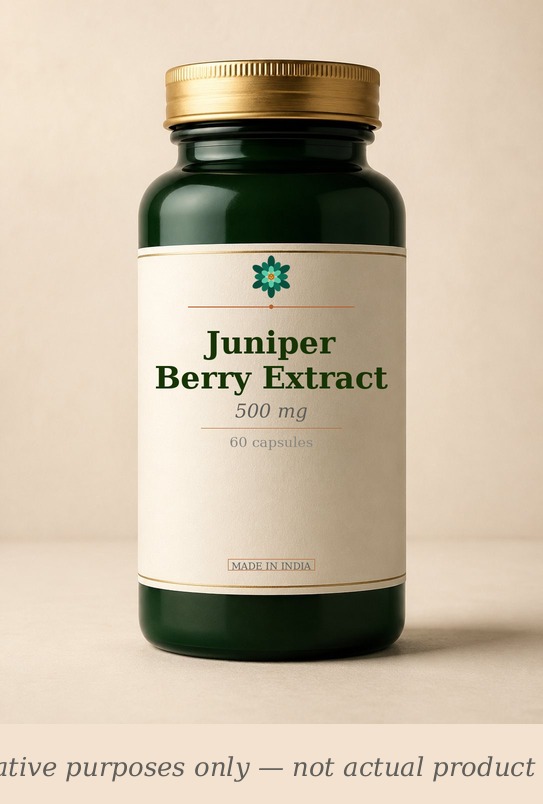
500 mg · vegan · gluten-free · 60 caps
Affiliate link · we earn from qualifying purchases. No paid placements.
Juniperus communis is an evergreen conifer whose blue-purple berries have been used in European folk medicine as a diuretic, digestive bitter and urinary antiseptic for over 2,000 years.
The essential oil component terpinen-4-ol and hydrophilic constituents increase glomerular filtration rate, promoting urine output without significant electrolyte loss. Juniper also demonstrates mild antimicrobial activity in the urinary tract.
Adults with mild fluid retention, bloating, or recurrent bladder irritation seeking a short-course herbal diuretic. Not for those with existing kidney disease.
Pregnant or breastfeeding women; people with kidney disease, acute nephritis, or urinary tract inflammation; children under 12. Side effects: Mild kidney irritation at high doses or prolonged use; GI upset; skin allergy in sensitive individuals.
A plain-English read of the literature behind this supplement. Not a clinical recommendation.
Key citations: Stanic et al. 1998 (rat diuretic study, 10% aqueous infusion), PMC6726717 (review of nutraceutical potential including renal effects)
SacredBod's longer take on Juniper Berry Extract — context the structured blocks above don't capture.
Juniper (Juniperus communis) is a hardy evergreen conifer native to Europe, North America and temperate Asia. Its blue-black “berries” (actually modified cones) have flavoured gin, game meats and medicines for millennia. In traditional European medicine, juniper berries were a cornerstone diuretic and urinary antiseptic, listed in the British Herbal Pharmacopoeia for cystitis, urethritis and renal gravel. In India, juniper is not indigenous to the Ayurvedic pharmacopoeia; it is sold as an imported herb by Ayurvedic-formulated brands like Shree Herbal and Bharat Herbal.
The primary active constituent is the volatile oil, particularly terpinen-4-ol (also spelled terpinol-4-ol), alongside alpha-pinene and limonene. Animal studies show that a 10% aqueous infusion of juniper berries stimulates diuresis from day 2, increasing urine volume by ~43% without significant sodium or potassium loss — suggesting an aquaretic rather than saluretic mechanism. The hydrophilic fractions increase glomerular filtration rate. In vitro, juniper berry extracts have shown potential to dissolve calcium oxalate and magnesium ammonium phosphate stones. However, terpinen-4-ol can irritate renal tubules at high doses, which is why modern herbal medicine restricts juniper to short courses.
Healthy adults with mild water retention, bloating, or a tendency toward bladder irritation who want a short-course herbal diuretic. It is contraindicated in anyone with chronic kidney disease, acute nephritis, or existing urinary tract inflammation.
Short-term use is generally safe for healthy kidneys. Prolonged use may cause renal irritation. Avoid in pregnancy (traditionally considered an abortifacient). Use cautiously with all diuretics and nephrotoxic medications.
Juniper berries are not grown commercially in India and are imported. On Amazon.in, they appear primarily as extract tablets from Shree Herbal, Bharat Herbal and Aadi Herbal (₹300–₹600 for 60–120 tablets) or as dried berries from SAI HERBS. Nature’s Way capsules are also available as imports. Standalone standardised extract capsules are scarce; most products are generic “extract tablets” without stated standardisation. It is not a scheduled drug. Because it is not an Ayurvedic herb, there is no dosha-specific recommendation, though its warming, pungent quality suggests it may aggravate pitta in excess.
Peptides are physician-only. Tell us a bit and we'll route you to the right specialist.