
What it is
Petroselinum crispum is a bright green Mediterranean herb whose leaves, seeds and root have been used since ancient Greek and Roman times as a diuretic, digestive aid and urinary antiseptic.
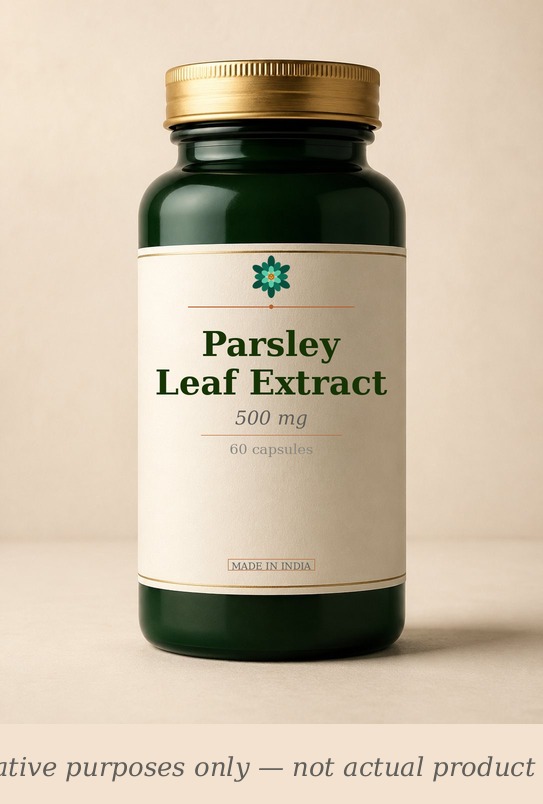
500 mg · vegan · gluten-free · 60 caps
Affiliate link · we earn from qualifying purchases. No paid placements.
Petroselinum crispum is a bright green Mediterranean herb whose leaves, seeds and root have been used since ancient Greek and Roman times as a diuretic, digestive aid and urinary antiseptic.
Parsley leaf inhibits renal Na+/K+-ATPase, reducing sodium reabsorption and increasing urine output. It is rich in apigenin, a flavonoid with anti-inflammatory and antioxidant properties that protect renal tissues from oxidative stress.
Adults with mild fluid retention, recurrent UTIs, or those seeking a gentle kitchen-to-capsule diuretic. Not for acute kidney stone treatment.
Pregnant or breastfeeding women; people with kidney disease; those on blood thinners or with high oxalate stone risk. Side effects: Mild GI upset; increased photosensitivity at very high doses; uterine stimulant effect in medicinal doses.
A plain-English read of the literature behind this supplement. Not a clinical recommendation.
Key citations: PMID 22024658 (parsley leaf tea on urinary composition — no significant change in healthy subjects), Frontiers in Medicine 2024 review (renal health benefits and Na+/K+-ATPase diuretic mechanism in animal models)
SacredBod's longer take on Parsley Leaf Extract — context the structured blocks above don't capture.
Parsley (Petroselinum crispum) is far more than a garnish. This Mediterranean Apiaceae herb has been a documented diuretic since the time of Hippocrates and Dioscorides. In India, it is known as Ajmoda (a related but distinct Ayurvedic herb, Apium graveolens), and parsley itself is grown in the Nilgiris and Himalayan foothills for culinary export. Medicinally, the leaf is preferred over the root or seed for gentle diuretic action. Indian supplement brands like Bharat Herbal, Shree Herbal and Zyrex now offer parsley leaf tablets priced ₹250–₹600.
Parsley leaf extract inhibits Na+/K+-ATPase in the renal cortex and medulla, reducing sodium reabsorption and increasing urine volume — a mechanism similar to conventional diuretics but milder. It is rich in apigenin, a flavonoid with demonstrated anti-inflammatory, antioxidant and anti-cancer properties. Animal studies show parsley reduces serum uric acid, improves renal histopathology in hyperuricemic rats, and protects against ischemia-reperfusion kidney injury via antioxidant pathways. However, a small human trial in healthy subjects found that parsley leaf tea did not significantly alter urinary stone risk factors, suggesting benefits may be more pronounced in pathological states or at higher extract doses.
Healthy adults with mild water retention, tendency toward UTIs, or those wanting a gentle daily diuretic. The high vitamin K content makes it unsuitable for anyone on warfarin. Those with a history of calcium oxalate stones should use cautiously, as parsley contains moderate oxalates.
Generally safe at food-plus doses. Very high doses of parsley essential oil (not leaf) can be toxic to the liver and kidneys. The significant vitamin K content interacts with warfarin. Pregnant women should avoid medicinal doses due to historical reports of uterine stimulation.
Parsley is not a classical Ayurvedic pradhana dravya, though its cousin Ajmoda (Apium graveolens) is used in Ayurveda for digestive and urinary complaints. Fresh parsley is available in Indian metros, but medicinal supplements are emerging. On Amazon.in, Bharat Herbal and Shree Herbal dominate with 550 mg extract tablets (₹300–₹500). It is not a scheduled drug. Given its cooling, bitter quality, it may be balancing for pitta types with heat-related urinary burning, but vata types should pair it with warming herbs.
Peptides are physician-only. Tell us a bit and we'll route you to the right specialist.