
What it is
Black currant (Ribes nigrum) anthocyanosides are water-soluble flavonoid pigments that concentrate in ocular tissues and improve microcirculation, dark adaptation and visual fatigue.
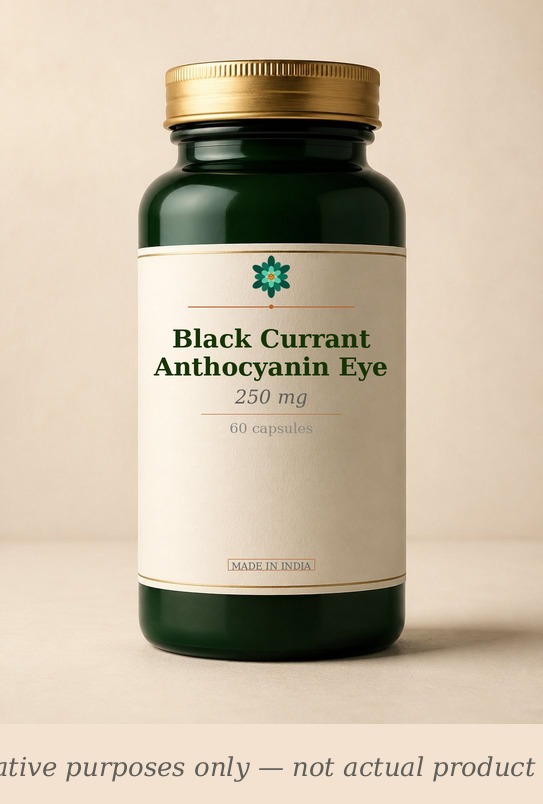
250 mg · vegan · gluten-free · 60 caps
Affiliate link · we earn from qualifying purchases. No paid placements.
Black currant (Ribes nigrum) anthocyanosides are water-soluble flavonoid pigments that concentrate in ocular tissues and improve microcirculation, dark adaptation and visual fatigue.
Anthocyanosides accelerate rhodopsin regeneration in rod photoreceptors, improve choroidal blood flow and stabilise ciliary muscle tone after prolonged near-work.
People who experience night-blindness, screen-related asthenopia or slow dark adaptation after bright-light exposure benefit most.
Avoid if you have a known hypersensitivity to Ribes nigrum or are on anticoagulant therapy without medical supervision. Side effects: Generally well tolerated; rare mild gastrointestinal discomfort or dark stool discoloration.
A plain-English read of the literature behind this supplement. Not a clinical recommendation.
Key citations: PMID 11134978 (black currant anthocyanoside intake improves dark adaptation and VDT-induced refractive alteration), PMID 10767671 (bilberry night visual acuity RCT), PMID PMC12877697 (bilberry extract improves VDT-induced eye fatigue in 281 workers)
SacredBod's longer take on Black Currant Anthocyanin Eye — context the structured blocks above don't capture.
Black Currant Anthocyanin Eye delivers a concentrated dose of Ribes nigrum anthocyanosides — the dark-purple pigments that give black currants their colour and much of their biological activity. In India, black currant is not a native fruit, but the extract is imported and formulated by several supplement brands. The anthocyanoside fraction (typically 25 % of extract weight) has been shown in human trials to lower the dark-adaptation threshold and reduce transient refractive changes caused by prolonged video-display-terminal (VDT) work.
Anthocyanosides operate through three main ocular mechanisms:
| Goal | Dose | Timing |
|---|---|---|
| General eye fatigue | 250 mg extract (50 mg anthocyanosides) | Morning with food |
| Dark adaptation support | 500 mg extract (100 mg anthocyanosides) | Morning with food |
Do not exceed 600 mg extract daily unless directed by a healthcare provider.
Black currant anthocyanins are generally recognised as safe. Mild GI upset occurs in <5 % of users. Because anthocyanins can inhibit platelet aggregation, concurrent use with anticoagulants should be medically supervised.
While black currant itself is not mentioned in Charaka or Sushruta Samhita, the Vaccinium / berry family concept aligns with the Rasayana (rejuvenative) approach to Chakshushya (vision-promoting) herbs. Modern Indian practitioners sometimes recommend imported black currant seed oil or extract alongside classical formulas for dry-eye and diabetic retinopathy support.
Peptides are physician-only. Tell us a bit and we'll route you to the right specialist.