
SacredBod
0
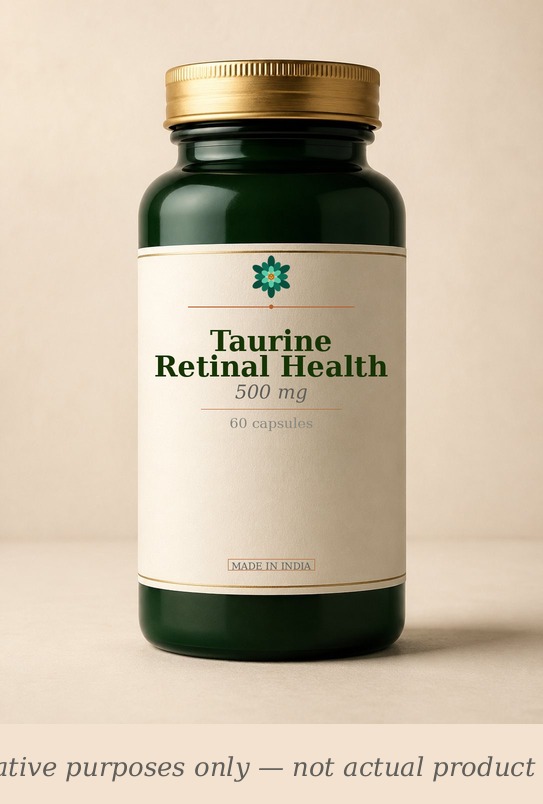
Taurine Retinal Health — SacredBod supplement bottle (illustrative)
Supplement · Eye & Vision Specialists

Taurine Retinal Health

500 mg · vegan · gluten-free · 60 caps

Peripheral vision lossNight blindnessRetinal fatigue after screen workDry eye with metabolic component EyesRetinaOptic nerve
BUY on Amazon →

Affiliate link · we earn from qualifying purchases. No paid placements.

What it is

Taurine is a sulfur-containing beta-amino acid that is the most abundant free amino acid in the retina. It acts as an osmolyte, antioxidant and neurotransmitter modulator essential for photoreceptor structural integrity and retinal ganglion cell survival.

How it works

Taurine stabilises photoreceptor outer segment membranes via direct incorporation, regulates intracellular calcium and chloride flux, scavenges hypochlorous acid and protects retinal ganglion cells from glutamate excitotoxicity and oxidative stress.

Who should take it

Individuals with diabetic retinopathy, retinitis pigmentosa, glaucoma risk or those taking vigabatrin (which depletes retinal taurine) benefit most. Also useful for heavy screen users with retinal metabolic stress.

Avoid / careful

Avoid in bipolar disorder or if you have a known taurine metabolism disorder. Use caution with lithium. Side effects: Very well tolerated; rare mild GI upset or headache at doses >3 g/day.

When to take it

Morning
Noon
Evening
Night

How to take it

With food
Empty stomach
Before food

FAQs

Frequently asked

How long before I see results?
Subjective improvements in visual comfort may appear within 4–8 weeks. Structural protection of photoreceptors is a long-term benefit measurable only by OCT or ERG over months to years.
Is it safe to take daily?
Yes. Taurine is conditionally essential and has been safely consumed at 1–3 g/day in clinical studies for months. The body efficiently excretes excess via kidneys.
Can I take it with diabetes medication?
Yes. Taurine may actually improve glycaemic control and reduce HbA1c in type 2 diabetics. Monitor blood sugar as dose adjustments may be needed.

In plain English

A plain-English read of the literature behind this supplement. Not a clinical recommendation.

Key citations: PMID 24721186 (Froger 2014 — taurine comeback in prevention of retinal degenerations), PMID PMC3472058 (taurine deficiency damages retinal neurones), PMID PMC10581579 (taurine as promising nutraceutic in retinal degeneration 2023 review)

Editorial notes

SacredBod's longer take on Taurine Retinal Health — context the structured blocks above don't capture.

What It Is

Taurine Retinal Health delivers the sulfur-containing amino acid that makes up roughly 50 % of the total free amino acid pool in the retina. First discovered as essential for feline vision (taurine-deficient cats develop photoreceptor degeneration), taurine is now recognised as critical for human retinal health too. In India, taurine is available as an affordable imported supplement, though it is not yet widely marketed by domestic Ayurvedic or pharmaceutical brands for eye-specific indications.

How It Works

  1. Osmotic stabilisation — Taurine acts as an organic osmolyte in photoreceptor inner segments, preventing cell shrinkage or swelling during metabolic stress.
  2. Antioxidant defence — Taurine reacts with hypochlorous acid (HOCl) to form taurine chloramine, neutralising a potent oxidant generated by neutrophils and microglia in inflamed retinas.
  3. Calcium homeostasis — By modulating voltage-gated calcium channels and intracellular calcium stores, taurine protects retinal ganglion cells from glutamate excitotoxicity — a key mechanism in glaucoma and diabetic retinopathy.
  4. Membrane stabilisation — Taurine is incorporated into photoreceptor outer segment membranes, where it stabilises lipid bilayer structure and supports the renewal process.

Who Benefits Most

  • Type 1 and Type 2 diabetics with early diabetic retinopathy or risk thereof (diabetics frequently have low plasma taurine).
  • Vigabatrin users experiencing visual field constriction from drug-induced taurine depletion.
  • Retinitis pigmentosa patients seeking to slow photoreceptor loss.
  • Glaucoma suspects wanting neuroprotective support for retinal ganglion cells.

Dosage Guide

GoalDoseTiming
General retinal support500 mg twice dailyMorning and evening on empty stomach
Diabetic retinopathy adjunct1000 mg twice dailyAs above
Vigabatrin-induced depletion1500–3000 mg/dayDivided doses, ophthalmologist-guided

Taurine is best absorbed on an empty stomach. It is water-soluble and has no known toxicity at these doses.

Safety and Interactions

Taurine is extremely safe. The European Food Safety Authority (EFSA) has approved taurine in energy drinks at doses up to 3 g/day. Caution is advised only with lithium (possible interaction) and in bipolar disorder (taurine may have mood-stabilising effects that alter medication needs).

India-Specific Context

  • Hindi/Sanskrit name: No classical Ayurvedic equivalent; taurine is a modern nutraceutical.
  • Local availability: Widely available on Amazon.in through imported brands (NutriJa, Jarrow, NOW Foods) at ₹400–1,500 for 60–250 capsules. No major Indian domestic brand (Himalaya, Dabur, Organic India) currently sells standalone taurine.
  • Regulatory status: Not a Schedule H drug; sold as a dietary supplement. Taurine is also an ingredient in several energy drinks sold in India.
  • Clinical context: Indian diabetologists are increasingly aware of taurine depletion in diabetic patients; some tertiary eye hospitals now measure plasma taurine as part of comprehensive DR workups.

Traditional Use in Indian Medicine

Taurine does not appear in classical Ayurvedic texts. However, the concept of Rasayana therapy for the eyes (Chakshushya Rasayana) aligns with taurine’s role in long-term photoreceptor maintenance. Modern integrative practitioners in India sometimes combine taurine with classical preparations like Saptamrita Lauha or Triphala Ghrita for comprehensive retinal support in diabetic patients.

Added to your stack.