
What it is
Buchu is a small aromatic shrub native to South Africa, traditionally used by the Khoisan people for urinary tract infections, kidney inflammation and as a diuretic. The leaves contain volatile oils (diosphenol, menthone) and flavonoids.
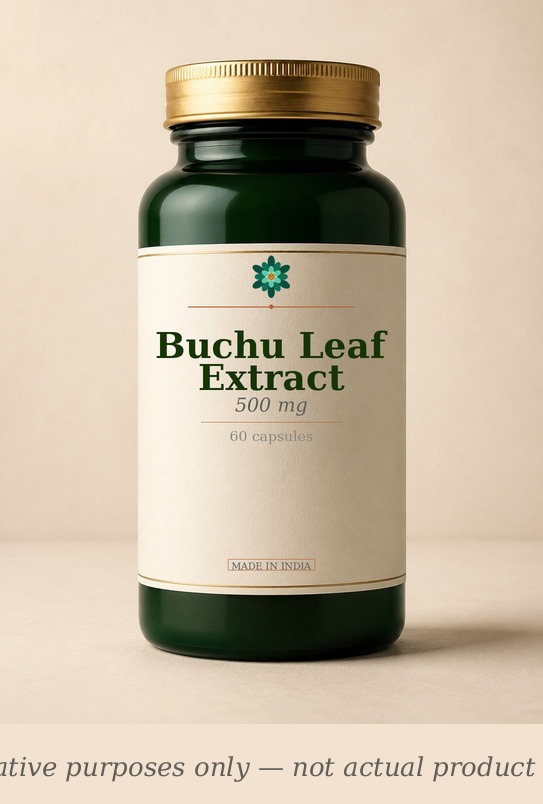
500 mg · vegan · gluten-free · 60 caps
Affiliate link · we earn from qualifying purchases. No paid placements.
Buchu is a small aromatic shrub native to South Africa, traditionally used by the Khoisan people for urinary tract infections, kidney inflammation and as a diuretic. The leaves contain volatile oils (diosphenol, menthone) and flavonoids.
Buchu acts as an aqueretic — increasing renal blood flow and filtration rather than directly blocking ion reabsorption. Its flavonoids (rutin, quercetin, hesperidin) exert mild anti-inflammatory and antimicrobial activity against common UTI pathogens.
Adults with recurrent uncomplicated UTIs, chronic cystitis, or urethritis seeking a natural adjunct to antibiotic therapy. Best used as a preventive rather than acute treatment.
Pregnant or breastfeeding women; people with liver disease; children under 12; those with acute pyelonephritis. Side effects: Mild GI upset, nausea, or increased urinary frequency. Essential oil is hepatotoxic at high doses; leaf extracts are safer.
A plain-English read of the literature behind this supplement. Not a clinical recommendation.
Key citations: PMID 18725278 (review of botany, chemistry and pharmacology), PMID 35197854 (updated review on metabolic effects and antimicrobial activity), PMID 11341377 (essential oil pharmacological action and antimicrobial activity)
SacredBod's longer take on Buchu Leaf Extract — context the structured blocks above don't capture.
Buchu (Agathosma betulina, formerly Barosma betulina) is a fragrant evergreen shrub from the Western Cape of South Africa. The Khoisan people have used its rounded leaves for centuries as a remedy for urinary tract infections, kidney inflammation, and as a general tonic. Dutch settlers later introduced it to Europe, where it entered the British Pharmacopoeia and US National Formulary as a urinary antiseptic and diuretic before falling out of favour with the advent of antibiotics. In India, buchu is not native and has no Ayurvedic classical equivalent; it is imported as a specialty herb by suppliers like SAI HERBS and Shree Herbal.
Buchu leaves contain volatile oils (notably diosphenol/buchu camphor and menthone) and flavonoids including rutin, quercetin, hesperidin and diosmin. Pharmacological reviews indicate moderate antimicrobial activity against Staphylococcus aureus, Klebsiella pneumoniae and Candida albicans in MIC assays for methanol-dichloromethane extracts, though aqueous and ethanolic extracts show minimal activity. The essential oil demonstrates anti-inflammatory action via 5-lipoxygenase inhibition (IC50 ~50 µg/ml) and COX-1 inhibition (98% at 250 µg/ml). In animal models, aqueous buchu extract normalised blood glucose, reduced weight gain on high-fat diets, and lowered blood pressure — though human confirmation is absent.
Adults with recurrent uncomplicated lower UTIs or chronic bladder irritation seeking a preventive botanical adjunct. It is not appropriate for acute pyelonephritis, complicated UTIs, or as a replacement for prescribed antibiotics.
Leaf extracts are generally safe at moderate doses. The essential oil contains pulegone, which is hepatotoxic at high doses — avoid essential oil products. Pregnant and breastfeeding women should avoid buchu due to lack of safety data. Use cautiously with diuretics.
Buchu is not an Ayurvedic herb and does not appear in the Charaka Samhita or Sushruta Samhita. It is imported into India as a raw herb or extract by herbal suppliers. Standalone capsule products are scarce on Amazon.in; most offerings are dried leaf (SAI HERBS) or generic extract tablets (Shree Herbal). Nutracraft offers it in kidney-support blends with juniper and cranberry. Prices range from ₹400–₹1,200 depending on form. It is not a Schedule H drug. Because it is foreign to Indian traditional medicine, consumers should verify product authenticity and request certificates of analysis.
Peptides are physician-only. Tell us a bit and we'll route you to the right specialist.