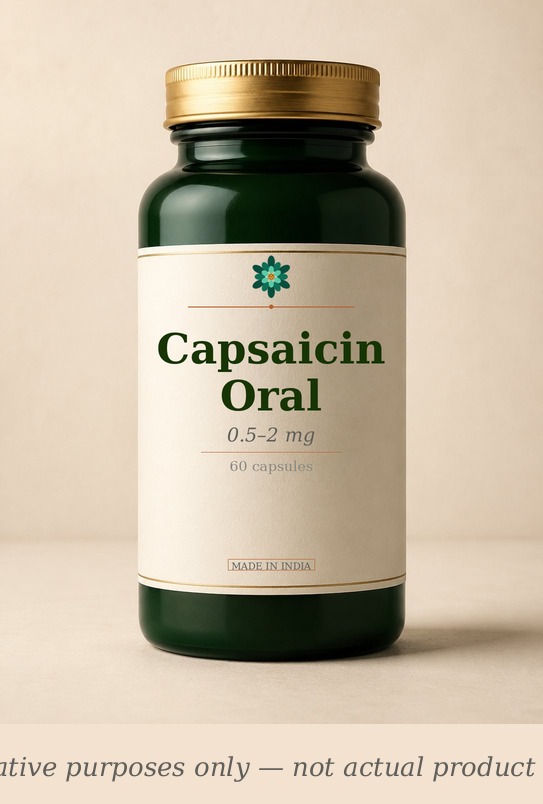
SacredBod's longer take on Capsaicin Oral — context the structured blocks above don't capture.
What Is Oral Capsaicin?
Capsaicin is the compound that makes chillies hot. But “hot” is not a taste — it is a pain signal. Capsaicin binds to TRPV1 receptors on pain-sensing nerves, tricking the brain into thinking tissues are burning. With repeated exposure at low doses, these receptors become desensitised — they stop responding. This is the principle behind both the prescription 8% capsaicin patch (Qutenza) for neuropathic pain and low-dose oral capsaicin for systemic pain modulation.
The oral route is less studied than topical delivery but offers systemic benefits: it affects pain circuits throughout the body, not just the application site. It also provides metabolic benefits — capsaicin increases thermogenesis, fat oxidation and satiety.
In India, where chillies are a dietary staple, oral capsaicin is not a foreign concept. But therapeutic dosing requires purified, measured amounts rather than the variable capsaicin content of culinary chillies.
How Does It Work?
Capsaicin’s pain-relief mechanism is paradoxical:
- TRPV1 activation: Initial binding causes burning, flushing and pain — the “capsaicin burn.”
- Receptor desensitisation: With repeated exposure, TRPV1 receptors become refractory and stop firing.
- Substance P depletion: The nerve fibres run out of substance P, the neuropeptide that carries pain signals to the spinal cord.
- Central modulation: Reduced peripheral input leads to reduced central sensitisation — the “wind-up” that makes chronic pain self-perpetuating.
The NCBI Bookshelf review (2020) concluded that topical capsaicin (8% patch) is non-inferior to oral neuropathic pain drugs (pregabalin, gabapentin, duloxetine) for peripheral neuropathic pain. Oral capsaicin at low doses aims to achieve similar systemic desensitisation.
Who Benefits Most?
- Neuropathic pain patients: Diabetic neuropathy, post-herpetic neuralgia, chemotherapy-induced neuropathy.
- Cluster headache sufferers: Intranasal capsaicin has shown efficacy in reducing attack frequency.
- Chronic pain patients: Those who have not responded to NSAIDs, pregabalin or amitriptyline.
- Metabolic biohackers: Capsaicin increases resting metabolic rate by 5–10% and enhances fat oxidation.
- Weight management: Increases satiety and reduces calorie intake at subsequent meals.
Dosage Guide
- Low-dose pain protocol: 0.5–1 mg daily.
- Metabolic / therapeutic: 1–2 mg daily.
- Timing: With substantial meals to buffer gastric irritation.
- Form: Capsules of purified capsaicin or cayenne pepper capsules (calculate capsaicin from Scoville Heat Units).
- Cycling: 5 days on, 2 days off to prevent tolerance.
- Ramp-up: Start at 0.25 mg and increase by 0.25 mg every 3 days to minimise initial burning.
Safety & Interactions
Capsaicin is safe at low doses but not for everyone:
- GI disorders: Active ulcers, GERD, IBS, IBD — absolute contraindications.
- Blood pressure: Transient elevation after dosing; monitor if hypertensive.
- Surgery: Discontinue 2 weeks before surgery due to mild anticoagulant effect.
- Pregnancy: Avoid — may stimulate uterine contractions.
India-Specific Context
Sanskrit/Hindi name: Not applicable — capsaicin is a modern biochemical isolate from chilli peppers (Capsicum annuum), which were introduced to India by the Portuguese in the 16th century. Chillies are not native to India and do not appear in classical Ayurvedic texts.
Availability: No standalone oral capsaicin supplement is available on Amazon.in. Users have three options:
- Cayenne pepper capsules: Healthvit Cayenne 500 mg, Now Foods Cayenne 500 mg — calculate capsaicin from SHU rating (40,000 SHU ≈ 0.1% capsaicin = 0.5 mg per 500 mg capsule).
- Import pure capsaicin: Available from iHerb or international vendors (1–2 mg capsules).
- Whole chilli consumption: Not recommended for therapeutic dosing due to variable capsaicin content.
Capsaicin is not a Schedule H drug in India.
Ayurvedic parallel: While chillies are not classical Ayurveda, the concept of “Katu Rasa” (pungent taste) in Charaka Samhita aligns with capsaicin’s properties. Pungent herbs like Maricha (black pepper) and Pippali (long pepper) are classical “deepana” (digestive fire enhancers) with mild pain-relieving properties. Capsaicin can be viewed as an extreme form of Katu Rasa. Some modern Ayurvedic practitioners use cayenne in small amounts for circulatory stimulation and pain.
Traditional use: Chillies were introduced to India by the Portuguese in the 16th century and rapidly became integral to Indian cuisine. They have no classical Ayurvedic use but are used in folk medicine for colds, congestion and circulation.