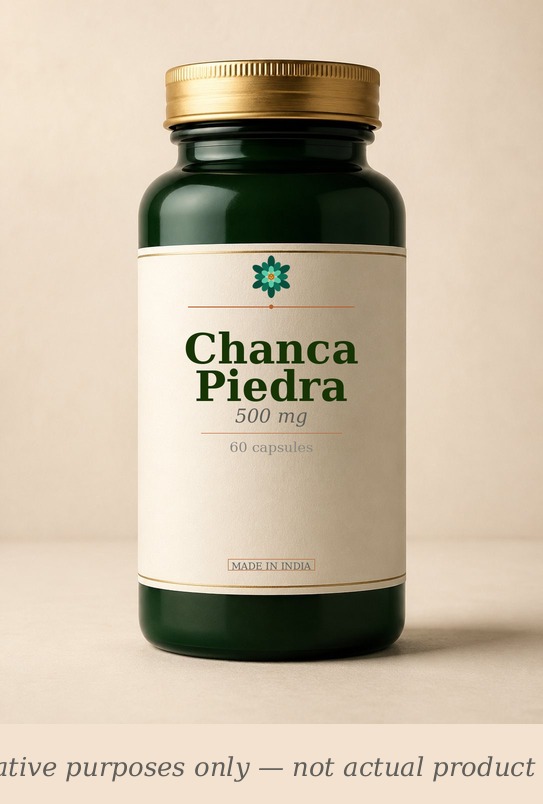
SacredBod's longer take on Chanca Piedra — context the structured blocks above don't capture.
What It Is
Chanca Piedra — Phyllanthus niruri — is a small annual herb native to tropical regions, widely known as the “stone breaker.” In India it is called Bhumi Amla (Sanskrit/Hindi) or Keelanelli (Tamil). The plant appears in traditional Ayurvedic practice for liver detoxification (yakrit shodhana) and urinary stone disorders (ashmari), though it is not explicitly named in the classical Charaka Samhita as a primary pradhana dravya; its use grew through later folk and tribal medicine across Kerala and Tamil Nadu.
How It Works
The active lignans — particularly phyllanthin and hypophyllanthin — interfere with calcium oxalate crystal nucleation and aggregation in urine. A 2020 meta-analysis found that P. niruri treatment significantly decreased mean stone size and number in controlled human studies. Additionally, a 12-week prospective trial in 56 stone-forming patients showed that P. niruri infusion increased urinary potassium and magnesium excretion while significantly reducing urinary oxalate (from 59.0 to 28.8 mg/24h, p=0.0002) and uric acid in hyperuricosuric subjects. The herb also promotes ureteral relaxation, potentially easing stone passage.
Who Benefits Most
Adults with recurrent calcium oxalate or uric acid nephrolithiasis, sedentary individuals with low urinary citrate, and those seeking adjunctive liver support. It is not appropriate for acute renal colic, obstructing stones, or severe chronic kidney disease (eGFR <30).
Dosage Guide
- Standard extract: 500 mg once or twice daily with meals
- Traditional infusion: 4.5 g dried herb in 250 mL boiling water, twice daily (as used in Brazilian clinical trials)
- Cycle: Continuous daily use is acceptable; reassess every 3 months with imaging if stone history exists
Safety and Interactions
Generally well tolerated. Mild abdominal pain, dysuria, or nausea may occur. Because P. niruri may inhibit platelet aggregation, use caution with warfarin and other anticoagulants. It may also lower blood glucose and blood pressure slightly — monitor if on hypoglycaemic or antihypertensive medication.
India-Specific Context
Bhumi Amla is cultivated in Gujarat, Madhya Pradesh and parts of South India. Indian brands such as Neotea (Keelanelli capsules), Bharat Herbal, Planet Ayurveda, and Morpheme Remedies offer capsule and tablet forms priced between ₹300–₹800 for a 60-count bottle. It is not a Schedule H drug in India and is available over-the-counter as a dietary supplement. In Ayurveda, it is classified as tikta (bitter) and kashaya (astringent) in rasa, with a cooling potency (sheeta virya), making it suitable for pitta aggravation associated with burning urination.