What it is
Chasteberry is the fruit of Vitex agnus-castus, a Mediterranean shrub whose extracts have been studied in PMS and PMDD for decades. Active diterpenes act on pituitary dopamine receptors.
Vitex, monk’s pepper
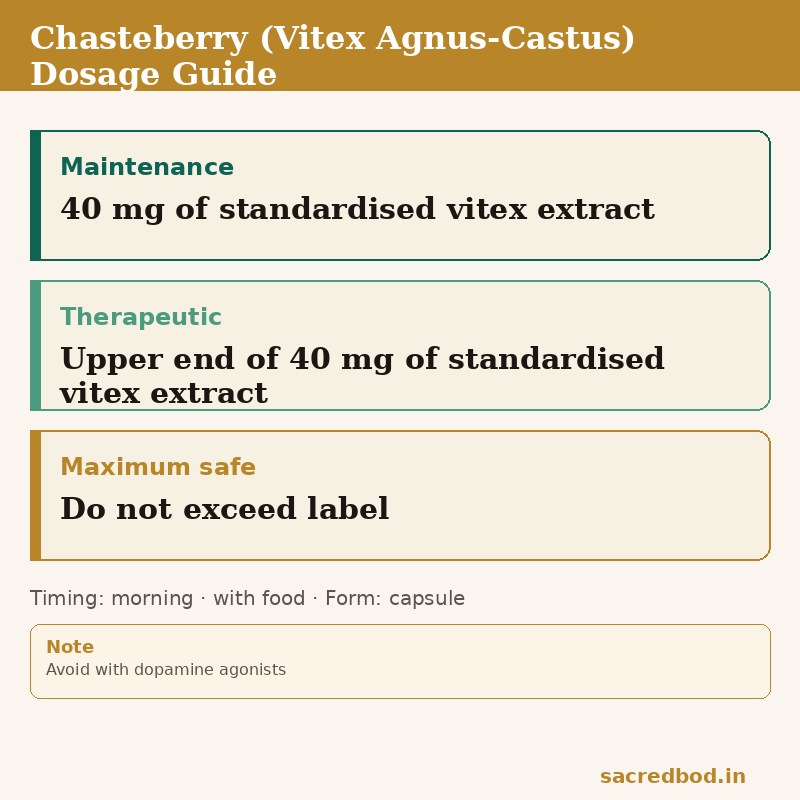
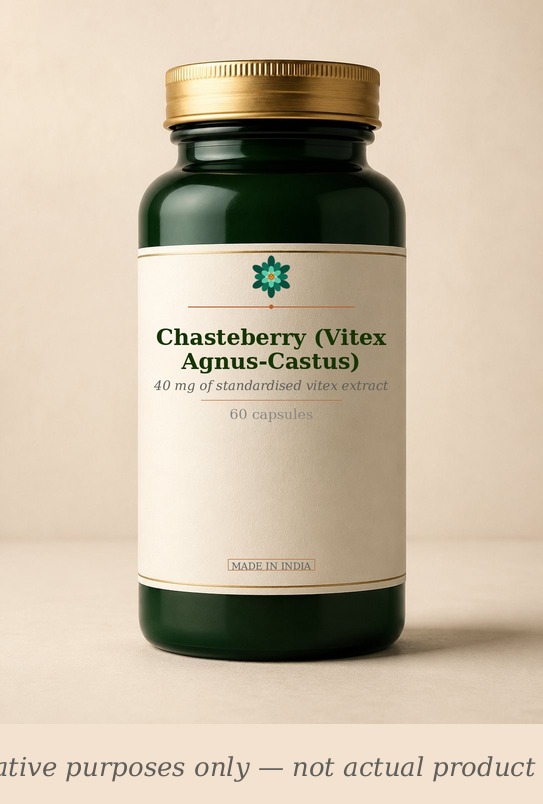
40 mg of standardised vitex extract · vegan · gluten-free · 60 caps
Affiliate link · we earn from qualifying purchases. No paid placements.
Chasteberry is the fruit of Vitex agnus-castus, a Mediterranean shrub whose extracts have been studied in PMS and PMDD for decades. Active diterpenes act on pituitary dopamine receptors.
Vitex extracts bind pituitary D2 dopamine receptors, lowering modestly elevated prolactin. This shifts the FSH/LH/progesterone ratio in the second half of the cycle, reducing PMS symptoms.
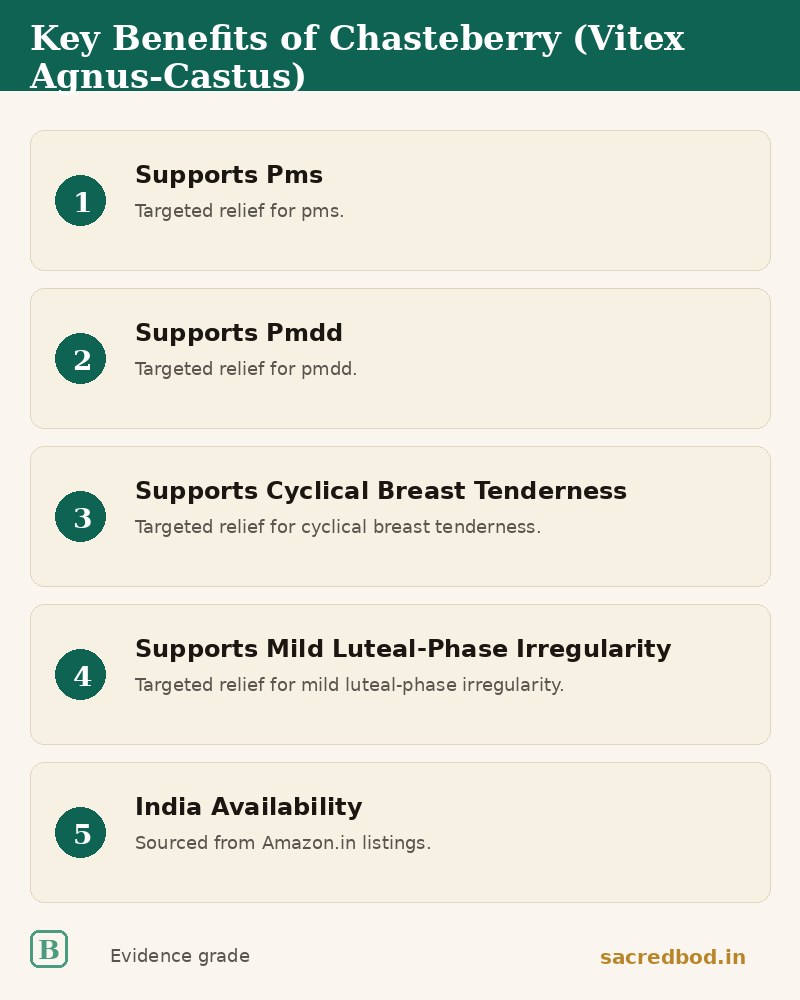
Women with classic PMS or PMDD, cyclical breast tenderness, or short luteal-phase symptoms. Use for at least 3 cycles to evaluate.
Avoid with dopamine agonists. Coordinate with hormonal contraceptives (theoretical reduced efficacy). Stop before IVF stimulation.
A plain-English read of the literature behind this supplement. Not a clinical recommendation.
German RCTs (Schellenberg 2001 and successors) show consistent PMS symptom reduction at 40 mg/day.
SacredBod's longer take on Chasteberry (Vitex Agnus-Castus) — context the structured blocks above don't capture.
Chasteberry (Vitex Agnus-Castus) is a adaptogen & women’s health supplement. Chasteberry is the fruit of Vitex agnus-castus, a Mediterranean shrub whose extracts have been studied in PMS and PMDD for decades. Active diterpenes act on pituitary dopamine receptors.
Vitex extracts bind pituitary D2 dopamine receptors, lowering modestly elevated prolactin. This shifts the FSH/LH/progesterone ratio in the second half of the cycle, reducing PMS symptoms.
Women with classic PMS or PMDD, cyclical breast tenderness, or short luteal-phase symptoms. Use for at least 3 cycles to evaluate.
Availability on Amazon India is currently limited or import-only for this form. International brands (iHerb, NOW Foods, Doctor’s Best) ship to India with variable customs handling. Local Ayurvedic equivalents may offer overlapping benefits.
Avoid with dopamine agonists. Coordinate with hormonal contraceptives (theoretical reduced efficacy). Stop before IVF stimulation.
Peptides are physician-only. Tell us a bit and we'll route you to the right specialist.
Request received.
We'll route this to a clinician familiar with peptide protocols. Expect a reply within about 48 hours.
How's your experience? We read every note.