
What it is
Choline is an essential nutrient and methyl donor required for phosphatidylcholine synthesis, VLDL assembly and hepatic fat export. Choline deficiency is a known cause of NAFLD and steatohepatitis, particularly in postmenopausal women.
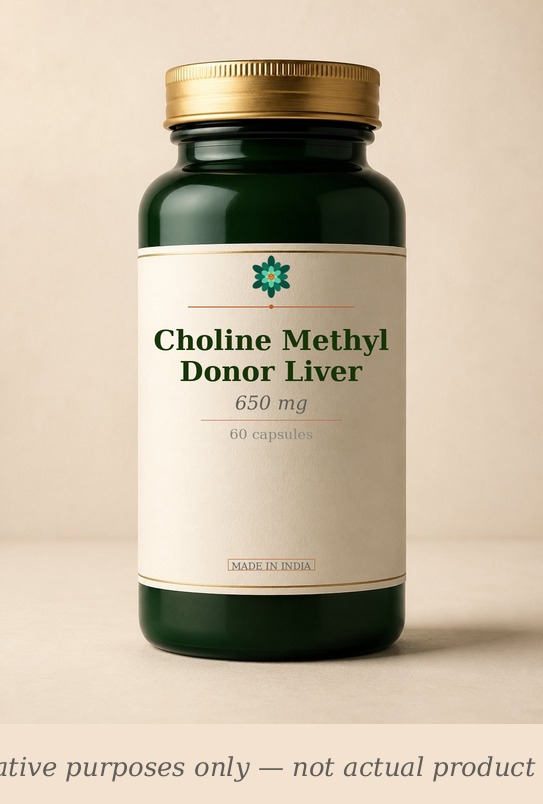
650 mg · gluten-free · 60 caps
Affiliate link · we earn from qualifying purchases. No paid placements.
Choline is an essential nutrient and methyl donor required for phosphatidylcholine synthesis, VLDL assembly and hepatic fat export. Choline deficiency is a known cause of NAFLD and steatohepatitis, particularly in postmenopausal women.
Choline is phosphorylated to phosphatidylcholine, the primary phospholipid in VLDL particles that transport triglycerides out of the liver. Without adequate choline, fat accumulates in hepatocytes causing steatosis. Choline also serves as a methyl donor for DNA methylation and homocysteine metabolism.
Adults with NAFLD, elevated liver enzymes, or those at risk of fatty liver due to low dietary choline intake (vegans, postmenopausal women, heavy alcohol consumers). Not for those with trimethylaminuria.
People with trimethylaminuria (fish odour syndrome); those with bipolar disorder on lithium; individuals with low blood pressure. Side effects: Mild fishy body odour at high doses (from trimethylamine metabolism); GI upset; hypotension in sensitive individuals.
A plain-English read of the literature behind this supplement. Not a clinical recommendation.
Key citations: PMID 22338037 (choline intake and fibrosis severity in 664 NAFLD patients — postmenopausal women with deficiency had worse fibrosis), PMID 40838115 (12-week RCT of 2400 mg phosphatidylcholine in NAFLD — improved steatosis, fibrosis, oxidative stress and lipids)
SacredBod's longer take on Choline Methyl Donor Liver — context the structured blocks above don't capture.
Choline is an essential nutrient classified as a vitamin-like compound (often grouped with B-vitamins) that the body requires for phosphatidylcholine synthesis, acetylcholine production, methyl group donation, and — critically — VLDL assembly and hepatic fat export. The liver packages triglycerides into VLDL particles for transport to peripheral tissues; without adequate phosphatidylcholine (derived from choline), fat accumulates in hepatocytes causing steatosis. Choline deficiency is a recognised cause of NAFLD and can progress to steatohepatitis, fibrosis and cirrhosis. In India, choline supplements are available as choline bitartrate, CDP-choline (citicoline) and phosphatidylcholine from brands like Now Foods, NutraLiebe, Pure Nutrition and Trexgenics.
Choline is phosphorylated in the liver to phosphatidylcholine, the primary phospholipid in cell membranes and VLDL particles. Adequate choline ensures efficient export of triglycerides from the liver, preventing steatosis. A landmark 2012 cross-sectional analysis of 664 biopsy-proven NAFLD patients in the NASH CRN found that postmenopausal women with choline intake <50% of the adequate intake had significantly worse fibrosis (P = 0.002) after adjusting for all major NAFLD risk factors. A 2025 randomised controlled trial randomised 79 NAFLD patients to receive either 2400 mg/day phosphatidylcholine or conventional management for 12 weeks. The choline group showed significant improvements in controlled attenuation parameter (304 vs 332 dB/m, p < 0.001), fibrosis score (5.3 vs 6.8 kPa, p < 0.001), ALT, AST, triglycerides, oxidative stress markers and leptin levels.
Adults with biopsy-confirmed or suspected NAFLD, postmenopausal women (who have elevated choline requirements due to oestrogen decline), vegans (choline is scarce in plant-based diets), and heavy alcohol consumers. Not appropriate for individuals with trimethylaminuria, a genetic disorder causing fishy body odour from impaired choline metabolism.
Generally safe. High doses may cause a fishy body odour due to trimethylamine formation. Mild hypotension and GI upset possible. Theoretically reduces lithium clearance — monitor levels if on lithium therapy.
Choline is not an Ayurvedic herb but an essential nutrient increasingly recognised in Indian metabolic health. On Amazon.in, choline bitartrate capsules are available from Now Foods (₹2,000–₹2,500), NutraLiebe (₹600–₹800), Pure Nutrition and Trexgenics (₹400–₹700). CDP-choline is pricier (₹800–₹1,200). Dietary choline sources include eggs, liver, fish and soy lecithin — all relevant to Indian non-vegetarian diets but often inadequate in strict vegetarian households. It is not a scheduled drug. For Indian vegetarians with NAFLD, choline supplementation alongside Kutki and dietary modification is a rational evidence-based strategy.
Peptides are physician-only. Tell us a bit and we'll route you to the right specialist.