SacredBod
0
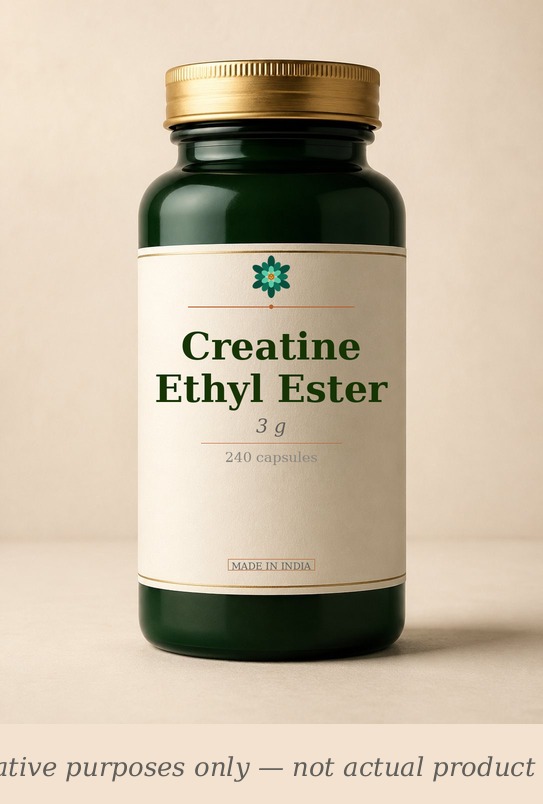
Creatine Ethyl Ester — SacredBod supplement bottle (illustrative)
Supplement · Amino Acid Derivative

Creatine Ethyl Ester

3 g · gluten-free · 240 caps

Low muscle creatineStrength plateauPoor workout recoveryBloating from monohydrateGI sensitivity to creatine MusclesBrainKidneysLiver
BUY on Amazon →

Affiliate link · we earn from qualifying purchases. No paid placements.

What it is

Creatine Ethyl Ester (CEE) is a creatine monohydrate molecule with an added ethyl ester group, designed to increase lipophilicity and cell membrane permeability. The theory was that esterification would bypass the creatine transporter (CreaT) and improve absorption, reducing the bloating and water retention some users experience with monohydrate. It was marketed heavily in the 2000s as a superior alternative to creatine monohydrate. However, direct comparison studies have largely failed to support these claims.

How it works

CEE was hypothesised to cross cell membranes via passive diffusion due to its lipophilic ester group, then be hydrolysed by esterases intracellularly to release free creatine. In theory, this would increase muscle creatine uptake without the high extracellular water retention of monohydrate. However, a 2009 study directly comparing CEE, creatine monohydrate and placebo found that CEE actually increased serum creatinine (a breakdown product) more than monohydrate, suggesting greater degradation in the GI tract or bloodstream rather than improved muscle uptake. Muscle creatine and performance gains were similar or inferior to monohydrate.

Who should take it

Individuals who have tried creatine monohydrate and experienced significant bloating, GI distress or water retention and want to experiment with an alternative form. Those curious about different creatine formulations. However, most users — including 'non-responders' — are better served by ensuring adequate dosing (3–5 g/day), consistent timing, and pairing with carbohydrates rather than switching to CEE.

Avoid / careful

Pregnant and breastfeeding women. Individuals with kidney disease or impaired renal function (all creatine forms require caution). Those with a history of substance abuse (theoretical concern about ester hydrolysis to ethanol, though clinically negligible). Not for children under 18. Side effects: Generally well-tolerated but may cause more GI upset than monohydrate due to ester hydrolysis. The ethyl ester breakdown produces ethanol and creatine; some users report a mild 'alcohol-like' aftertaste or nausea. No evidence of superior safety vs monohydrate. Concerns about formaldehyde production from ester degradation have been raised but not substantiated in human studies.

When to take it

Morning
Noon
Evening
Night

How to take it

With food
Empty stomach
Before food

FAQs

Frequently asked

How long before I see results?
Muscle creatine saturation occurs over 2–4 weeks at 3–5 g/day. Performance benefits in strength and power typically manifest by 4–6 weeks of consistent training with supplementation.
Is it better than creatine monohydrate?
No — the evidence does not support superior efficacy. Direct comparison studies show CEE is either equivalent or inferior to monohydrate for muscle creatine uptake. The ISSN explicitly states no creatine form has been shown to be superior to monohydrate. CEE is more expensive and has a bitter taste. The primary reason to consider CEE is personal tolerance (bloating/GI issues with monohydrate), not performance superiority.
Why is it hard to find in India?
CEE fell out of favour in the global sports nutrition market after studies failed to confirm its superiority claims. Indian supplement brands focus on monohydrate (cheaper, better evidence) and newer forms like HCl or micronised monohydrate. CEE is available only through international resellers and import platforms like Desertcart.

In plain English

A plain-English read of the literature behind this supplement. Not a clinical recommendation.

Key citations: PMID 2649889 (CEE vs monohydrate vs placebo — CEE increased serum creatinine more than monohydrate, suggesting degradation), PMID 8912867 (ISSN position stand: no form superior to monohydrate), PMID 19228456 (CEE plasma uptake study)

Editorial notes

SacredBod's longer take on Creatine Ethyl Ester — context the structured blocks above don't capture.

What It Is

Creatine Ethyl Ester (CEE) is a creatine monohydrate molecule with an added ethyl ester group, designed to increase lipophilicity and cell membrane permeability. The theory was that esterification would bypass the creatine transporter (CreaT) and improve absorption, reducing the bloating and water retention some users experience with monohydrate. It was marketed heavily in the 2000s as a superior alternative to creatine monohydrate. However, direct comparison studies have largely failed to support these claims.

How It Works

CEE was hypothesised to cross cell membranes via passive diffusion due to its lipophilic ester group, then be hydrolysed by esterases intracellularly to release free creatine. In theory, this would increase muscle creatine uptake without the high extracellular water retention of monohydrate. However, a 2009 study directly comparing CEE, creatine monohydrate and placebo found that CEE actually increased serum creatinine (a breakdown product) more than monohydrate, suggesting greater degradation in the GI tract or bloodstream rather than improved muscle uptake. Muscle creatine and performance gains were similar or inferior to monohydrate.

Who Should Consider It

Individuals who have tried creatine monohydrate and experienced significant bloating, GI distress or water retention and want to experiment with an alternative form. Those curious about different creatine formulations. However, most users — including ‘non-responders’ — are better served by ensuring adequate dosing (3–5 g/day), consistent timing, and pairing with carbohydrates rather than switching to CEE.

Dosage Guide

Typical dose: 3 g per day

Form: capsules (240 count)

Best time: morning

With food: with-food

Expected onset: 2–4 weeks for muscle saturation; performance benefits by 4–6 weeks

Cycling: No cycling required. Can be taken continuously. Some users cycle 8 weeks on / 4 weeks off out of habit, though not evidence-based.

Safety & Side Effects

Known side effects: Generally well-tolerated but may cause more GI upset than monohydrate due to ester hydrolysis. The ethyl ester breakdown produces ethanol and creatine; some users report a mild ‘alcohol-like’ aftertaste or nausea. No evidence of superior safety vs monohydrate. Concerns about formaldehyde production from ester degradation have been raised but not substantiated in human studies.

Who should avoid: Pregnant and breastfeeding women. Individuals with kidney disease or impaired renal function (all creatine forms require caution). Those with a history of substance abuse (theoretical concern about ester hydrolysis to ethanol, though clinically negligible). Not for children under 18.

Avoid combining with: Creatine monohydrate (redundant — choose one form), Nephrotoxic medications, Diuretics (may increase dehydration risk), Caffeine (may reduce creatine uptake when co-ingested)

India-Specific Context

Creatine Ethyl Ester is available on Amazon India with varying brand quality. When selecting a product, verify standardization claims against the evidence base cited above. Indian brand preferences include Carbamide Forte, HealthyHey, Nutrabay Pure, Pure Nutrition, Now Foods, Nutricost, Himalaya, Patanjali, Dabur, Trexgenics, Evorina, Nervana, and Life Extension. Prices vary significantly; compare cost-per-active-dose rather than capsule count alone.

Schedule status in India: Not a Schedule H drug; available as dietary supplement/herbal product.

Research Summary

Key citations: PMID 2649889 (CEE vs monohydrate vs placebo — CEE increased serum creatinine more than monohydrate, suggesting degradation), PMID 8912867 (ISSN position stand: no form superior to monohydrate), PMID 19228456 (CEE plasma uptake study)

Evidence grade: D — Very limited direct comparison data; ISSN position statement is the most authoritative guidance

Added to your stack.