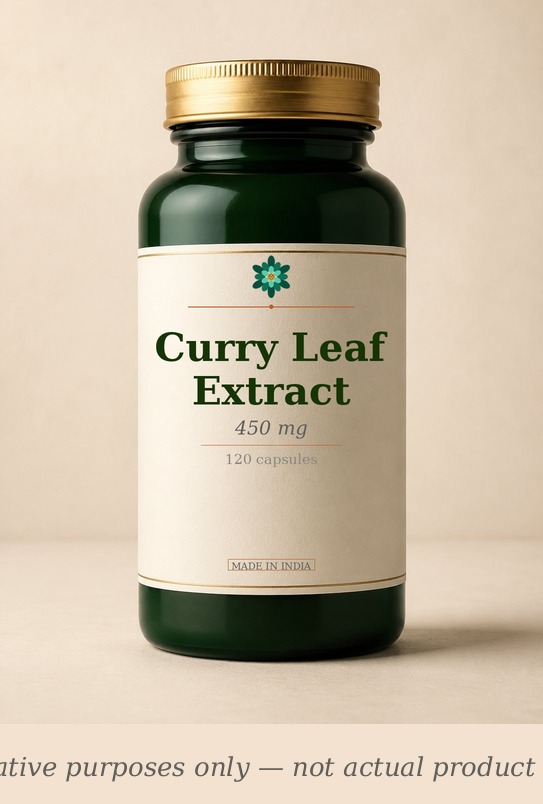
SacredBod's longer take on Curry Leaf Extract — context the structured blocks above don't capture.
Curry leaf — Kadi Patta — is the most underappreciated superfood in the Indian kitchen. While it is tossed into every dal, sambhar, and tadka, few Indians realize its potent metabolic and hair-health benefits validated by modern research.
What the Research Shows
A 2006 study in the American Journal of Chinese Medicine found that curry leaf extract (80 mg/kg) reduced blood cholesterol from 278 to 182 mg/dL and blood glucose from 387 to 214 mg/dL in diabetic ob/ob mice over 10 days — dramatic improvements suggesting clinical relevance.
A 2023 human trial in Pakistan gave encapsulated curry leaf extract (5–10 mg/kg) to 45 women with type 2 diabetes for 45 days. Both fasting blood sugar and HbA1c dropped significantly. The leaves are rich in carbazole alkaloids like mahanimbine that enhance insulin signaling and inhibit fat accumulation.
For hair health, curry leaf’s high iron, beta-carotene, and antioxidant content supports melanin production and follicle strength — explaining its traditional use for preventing premature greying.
Ayurvedic Context
Curry leaf is not explicitly mentioned in the classical Charaka Samhita but is a cornerstone of South Indian Siddha and folk medicine. It is considered keshya (hair tonic), deepana (digestive stimulant), and kapha-vata balancing. In Tamil Nadu, women traditionally consume curry leaf chutney postpartum for iron replenishment and lactation support.
India-Specific Notes
- Ubiquity: Every South Indian household grows Murraya koenigii in their backyard. Fresh leaves are superior to dried for culinary use, but capsules provide consistent dosing.
- Supplement availability: Standalone curry leaf capsules are available from H&C Herbal, Merlion Naturals, and Genius Herbs on Amazon India.
- Price: ₹250–₹500 for 120 capsules (450–500 mg)
- Hair use: Fresh leaf paste applied to scalp is traditional; capsules provide internal nutritional support.
Dosage & Safety
- Standard dose: 450–500 mg twice daily with meals
- Diabetic dose: Up to 1000 mg/day under supervision
- Best time: Morning with breakfast
- Caution: Monitor blood sugar if on diabetes medication. Very safe otherwise.