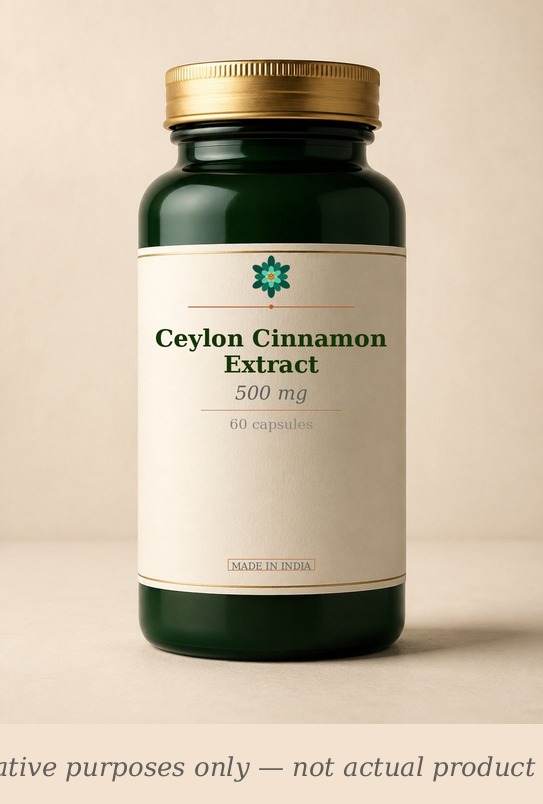
SacredBod's longer take on Ceylon Cinnamon Extract — context the structured blocks above don't capture.
Ceylon cinnamon — known in India as Dalchini — is one of the most researched spices for metabolic health. Unlike the cheaper Cassia cinnamon found in most kitchens, true Ceylon cinnamon (Cinnamomum verum) contains only trace amounts of coumarin, a compound that can stress the liver at high doses.
What the Research Shows
A landmark 2025 randomized controlled trial on 210 Sri Lankan adults with type 2 diabetes found that 500 mg of Ceylon cinnamon extract daily for 4 months significantly reduced fasting plasma glucose and HbA1c compared to placebo. Total and LDL cholesterol also dropped significantly in the 500 mg group. Another 2025 RCT in 150 adults showed an 8.59 mg/dL reduction in fasting blood sugar, with particularly strong effects in diabetic participants.
The mechanism centers on cinnamaldehyde, which mimics insulin action, enhances glucose transporter GLUT4 translocation, and inhibits intestinal α-glucosidase — slowing carbohydrate absorption.
Ayurvedic Context
Dalchini has been a staple in Ayurvedic medicine for over 3,000 years, referenced in the Charaka Samhita and Sushruta Samhita for digestive, respiratory, and circulatory disorders. It is classified as a dipana (digestive stimulant) and hridya (heart tonic). In Indian households, it is consumed daily in chai, biryani, and desserts — but supplemental doses provide therapeutic concentrations not achievable through diet alone.
India-Specific Notes
- Prevalence: India has ~77 million diabetics; cinnamon offers an affordable adjunct therapy.
- Brands: Himalaya, Organic India, and Dabur offer cinnamon in polyherbal formulations. Standalone Ceylon cinnamon capsules are imported or sold by specialty brands.
- Quality: Verify the label says Cinnamomum verum or Ceylon cinnamon. Most Indian kitchen cinnamon is Cassia (Cinnamomum cassia).
- Price range: ₹300–₹800 for 60 capsules depending on organic certification and standardization.
Dosage & Safety
- Standard dose: 500 mg once or twice daily with meals
- Diabetic dose: Up to 1000 mg/day under medical supervision
- Best time: With breakfast or largest meal
- Caution: May potentiate diabetes medications. Monitor blood sugar closely.