
What it is
Chromium picolinate is a supplemental form of trivalent chromium, a trace mineral historically tied to insulin signaling. It is not the same as proving that well-fed adults are chromium deficient or that chromium reliably treats diabetes.
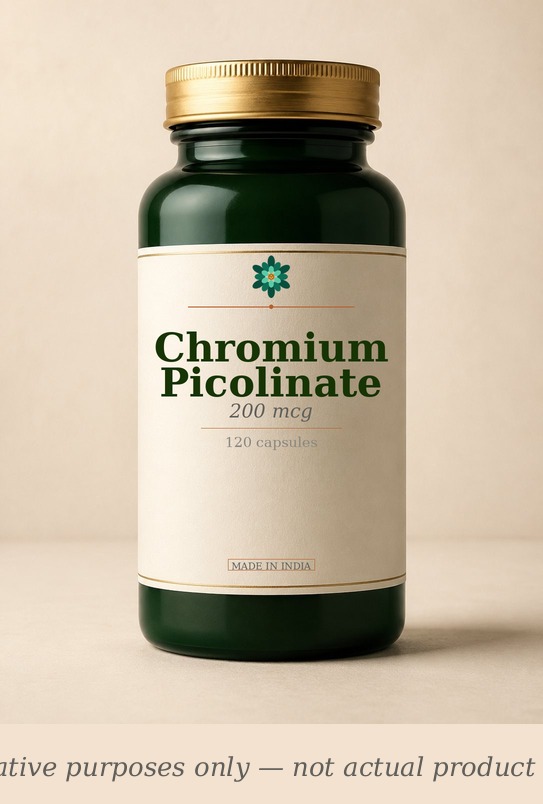
Chromium(III) picolinate · CrPic
200 mcg · vegan · gluten-free · 120 caps
Affiliate link · we earn from qualifying purchases. No paid placements.
Chromium picolinate is a supplemental form of trivalent chromium, a trace mineral historically tied to insulin signaling. It is not the same as proving that well-fed adults are chromium deficient or that chromium reliably treats diabetes.
Chromium may influence insulin-receptor signaling and glucose handling, but the old 'glucose tolerance factor' story was never isolated as a clean discrete compound. Clinical effects appear most plausible in people with poor glycemic control or low baseline chromium status, and much less reliable in replete populations.
Adults with type 2 diabetes or insulin resistance who are already under medical care and want a low-cost adjunct · people with high carbohydrate cravings and poor glycemic markers · not for replacing metformin, diet, resistance training, or medical glucose management.
Avoid in pregnancy unless prescribed, kidney disease, liver disease, chromium allergy, or when using glucose-lowering medications without monitoring. Chromium may lower glucose modestly in responders, so medication stacking should be supervised.
Pick a depth — minimum to maximal coverage
No full stack configured.
Click individual supplement pills above to buy each on Amazon India.
✓ Dose with meals rather than at bedtime.
✓ Dose with meals rather than at bedtime.
✓ Meal dosing fits the glucose-handling rationale and improves tolerability.
Chromium may influence insulin-receptor signaling and glucose handling, but the old 'glucose tolerance factor' story was never isolated as a clean discrete compound.
Each bar = one cited trial. Effect varies by methodology, dose, and population.
Pre-diabetic cohort (n≈80)
Target HbA1c <6.5% for pre-diabetes management.
see study
→ In 180 people with type 2 diabetes, chromium picolinate improved HbA1c, glucose, insulin, and cholesterol variables, with stronger effects at 1,000 mcg/day.
see study
→ NIH Office of Dietary Supplements review concluded the evidence for chromium supplements in glycemic control is limited, with inconsistent trial quality and uncertain clinical usefulness.
see study
→ Meta-analysis reported reductions in fasting glucose, insulin, HbA1c, and HOMA-IR after chromium supplementation, but heterogeneity was high.
C · C+ is the honest grade: there is a real positive signal in some diabetic cohorts and meta-analyses, but replication is uneven and baseline chromium deficiency is hard to establish in routine practice. Chromium picolinate is an adjunct for monitored metabolic care, not a substitute for diet, medication, or resistance training. The GTF story is not a settled mechanism.
A plain-English read of the literature behind this supplement. Not a clinical recommendation.
Key citations: PMID 9356027, PMID 27261273, PMID 32730903

How to use Chromium Picolinate specifically for Cravings — the right dose, timing, blood markers to track, and how to know if it is working.
A clinical evidence review of Chromium Picolinate — RCT data, effect sizes, evidence grade, and what the numbers mean for your specific situation.
Everything you need to know about Chromium Picolinate — mechanism, dose, safety, buying guide for India, and what the research actually says.
SacredBod's longer take on Chromium Picolinate — context the structured blocks above don't capture.
Chromium picolinate survives because the idea is seductive: a cheap trace mineral that makes insulin work better. There is enough evidence to keep the conversation alive, but not enough to justify the clean marketing story. This is not a glucose-control cheat code.
The Anderson 1997 Diabetes trial is the anchor. It reported meaningful improvements in HbA1c, glucose, insulin, and cholesterol variables in a Chinese type 2 diabetes cohort, with the strongest results at 1,000 mcg/day chromium picolinate. That result is real and worth citing. It is also not the whole story. The cohort may have had lower baseline chromium status than many well-nourished populations, and later replication has been inconsistent.
The old “glucose tolerance factor” framing is especially shaky. Supplement labels still borrow that language as if chromium’s mechanism were cleanly settled. It is not. Chromium may influence insulin signaling, and chromium-binding peptides have been studied, but the original GTF concept was never isolated into the tidy compound implied by marketing.
More recent reviews pull the claim back toward earth. Costello and colleagues concluded that evidence for glycemic control is limited. A 2020 meta-analysis found improvements in fasting glucose, insulin, HbA1c, and HOMA-IR, but with high heterogeneity. That pattern means there may be responders, especially in worse glycemic states, but it does not mean broad use in replete adults is evidence-based.
Safety is generally acceptable at common doses, but the risk context changes when someone is using diabetes medication. If chromium moves glucose even modestly, it can interact with the broader glucose-lowering plan. Kidney and liver disease also deserve caution because trace minerals are not metabolically invisible.
Practical guidance: chromium picolinate is a monitored adjunct. Use 200 mcg/day as a conservative start, with meals, and judge it by fasting glucose, postprandial patterns, and HbA1c over 8-12 weeks. If nothing moves, stop. If glucose does move, coordinate with the clinician managing medications. The goal is better metabolic data, not belief in a mineral myth.
Peptides are physician-only. Tell us a bit and we'll route you to the right specialist.