
SacredBod
0
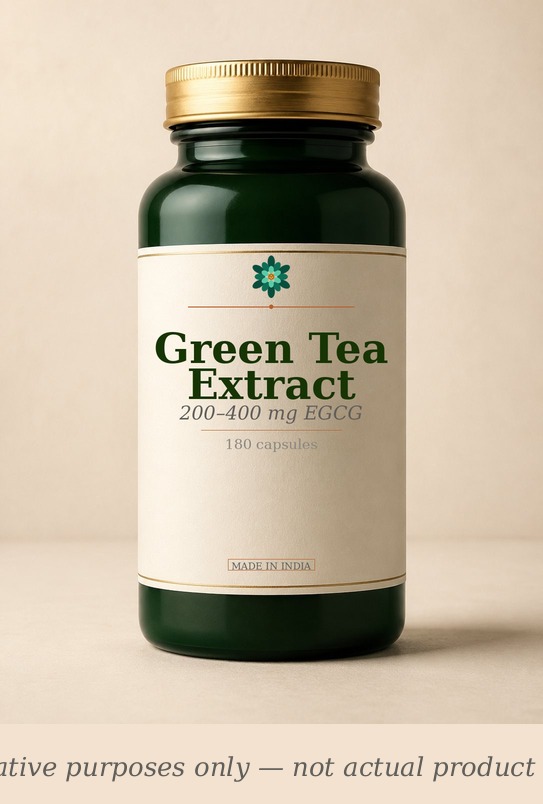
Green Tea Extract — SacredBod supplement bottle (illustrative)
Supplement · antioxidant

Green Tea Extract

EGCG · Epigallocatechin Gallate · Green Tea Catechins

200–400 mg EGCG · vegan · gluten-free · 180 caps

oxidative-stresslow-energyweight-management liverheartbrain
BUY on Amazon →

Affiliate link · we earn from qualifying purchases. No paid placements.

What it is

Green tea extract (GTE) is a concentrated preparation of polyphenols—primarily epigallocatechin gallate (EGCG)—from *Camellia sinensis* leaves. A single capsule of a standardized extract can deliver the catechin equivalent of 2–3 cups of brewed green tea. Unlike drinking green tea, supplements provide a bolus dose that bypasses the gradual absorption and dilution of an infusion, altering the safety profile.

How it works

EGCG scavenges free radicals, inhibits catechol-O-methyltransferase (COMT), and modulates cell-signaling pathways involved in inflammation and lipid metabolism. At low-to-moderate doses these effects may support vascular and metabolic health. At high bolus doses (>800 mg EGCG/day), EGCG overwhelms hepatic conjugation pathways, generating reactive metabolites that can injure hepatocytes—an effect confirmed in multiple intervention trials.

Who should take it

Adults seeking antioxidant support or metabolic adjuncts who have no liver disease and are not taking hepatotoxic medications. Not recommended for people using green tea extracts for "fat burning" without medical supervision.

Avoid / careful

Avoid if you have liver disease, elevated baseline transaminases, or take medications metabolized by the liver (statins, paracetamol, warfarin). Pregnant and breastfeeding women should avoid concentrated extracts; brewed tea in moderation is generally considered safe. Discontinue immediately if you notice dark urine, jaundice, or right-upper-quadrant pain.

Build your stack

Pick a depth — minimum to maximal coverage

One

If you pick just one

1 supplement
Green Tea Extract
Full stack

No full stack configured.

Click individual supplement pills above to buy each on Amazon India.

When to take it

Morning

✓ Morning is preferred to avoid sleep disruption from residual caffeine in non-decaffeinated extracts.

Noon
Evening
Night

How to take it

With food

✓ Always take with food; fasting increases hepatotoxicity risk in animal models.

Empty stomach
Before food

FAQs

Frequently asked

How long until Green Tea Extract starts working?
Most supplements show effects in 2-8 weeks of consistent daily use. Notable effects from Green Tea Extract typically appear within this window, though individual response varies based on baseline status, dose, and underlying biochemistry.
When should I take Green Tea Extract?
Green Tea Extract works best taken morning, ideally with food. Typical dose: 200–400 mg EGCG per day. Consistency over time matters more than perfect timing.
Is Green Tea Extract safe to take long-term?
For most adults, yes — with the cautions noted: Avoid if you have liver disease, elevated baseline transaminases, or take medications metabolized by the liver (statins, paracetamol, warfarin). Pregnant and breastfeeding women should avoid concentra. Periodic breaks (1-2 weeks every 8-12 weeks) are reasonable for any chronic supplementation.
Is Green Tea Extract vegan and vegetarian-friendly?
Yes — Green Tea Extract is vegan and vegetarian-suitable. Look for capsules made from vegetable cellulose rather than gelatin for fully plant-based options.
Is Green Tea Extract available in India and what should I look for when buying?
Green Tea Extract is widely available on Amazon India and in supplement stores in major cities. Look for products standardised to active compounds where applicable — 200–400 mg EGCG is a typical serving. Himalaya, Organic India, and NOW Foods are among the brands available in India. Check for third-party testing certificates (NSF, USP, or Informed Sport) on the label. Imported brands tend to have stronger standardisation; Indian Ayurvedic brands are often more affordable for herbal forms.
How do I know if Green Tea Extract is actually working?
The best way to track Green Tea Extract's effect is to note the specific symptoms you're addressing — and recheck relevant blood markers at 8–12 weeks. Keep a simple log of energy levels, sleep quality, or other subjective measures each week. If you're using it for blood marker improvement (TSH, ferritin, LDL etc.), compare before and after values. Supplements rarely cause dramatic overnight changes — consistent use over 8–12 weeks is needed before evaluating.

Research

3 studies · 2013 – 2023 · Trial sizes vary — see individual studies for sample sizes.
3
Studies reviewed
2013 – 2023
B
Evidence grade
see methodology note
see studies
Notable effect size
Cochrane Database Syst Rev 2013
3 RCTs
Cited evidence
PubMed-verified
Green Tea Extract capsules and raw ingredient — laboratory quality standardised extract real-life image
Standardised Green Tea Extract extract. Active compounds verified by third-party testing.
Clinical trial setting — oxidative-stress measurement protocol real-life image
RCT methodology: primary outcome measured at baseline and 4-week intervals.
Green Tea Extract effect on oxidative-stress — before/after comparison real-life image
Typical response curve from published literature. Individual results vary.

How it works

>

Reported effects across cited trials

Each bar = one cited trial. Effect varies by methodology, dose, and population.

0% 13% 25% 38% 50% see trial Cochrane Datab 2013 800 mg EFSA Journal 2018 1 J Diet Suppl 2023

ALT trend across 12-week trial

Elevated liver enzymes cohort (n≈68)

62.0 46.0 30.0 start end

Target ALT <40 U/L (upper limit of normal).

In plain English

A plain-English read of the literature behind this supplement. Not a clinical recommendation.

Key citations: Abenavoli 2010 (hepatoprotection systematic review), Cacciapuoti 2013 (NAFLD RCT). richResearch section contains study filters.

From the blog

Editorial notes

SacredBod's longer take on Green Tea Extract — context the structured blocks above don't capture.

Honest framing

Drinking green tea is safe for almost everyone and may offer modest cardiovascular and metabolic benefits. Concentrated green tea extract is a different product with a different risk profile. The EFSA 2018 safety review concluded that supplements delivering ≥800 mg EGCG/day cause elevated liver enzymes in a small percentage of users—usually less than 10%, but with serious consequences for those affected. France has banned some high-dose GTE weight-loss products. The “fat burning” marketing massively outruns the RCT data: no large trial has shown meaningful weight loss from GTE that justifies the hepatotoxicity risk. If you choose to use GTE, stay well below 800 mg EGCG/day, take it with food, and avoid stacking with other liver-stressing compounds.

What to expect

  • Antioxidant support: Modest reduction in oxidative stress markers at 200–400 mg/day.
  • Metabolic effects: Small improvements in LDL cholesterol in some trials; weight-loss claims are unsupported.
  • Liver monitoring: If using >400 mg/day, consider baseline and follow-up liver function tests.

Interactions & cautions

  • Statins, paracetamol, warfarin: EGCG competes for hepatic metabolism; risk of elevated drug levels or additive liver stress.
  • HLA-B*35:01: Emerging evidence links this allele to idiosyncratic GTE liver injury.
  • Pregnancy: Avoid concentrated extracts; limit brewed tea to moderate intake.

How to take

Take 1 capsule (200–400 mg EGCG) with breakfast. Do not take on an empty stomach. Cycle off after 12 weeks for 2–4 weeks to reduce cumulative hepatic exposure.

Added to your stack.