
SacredBod
0
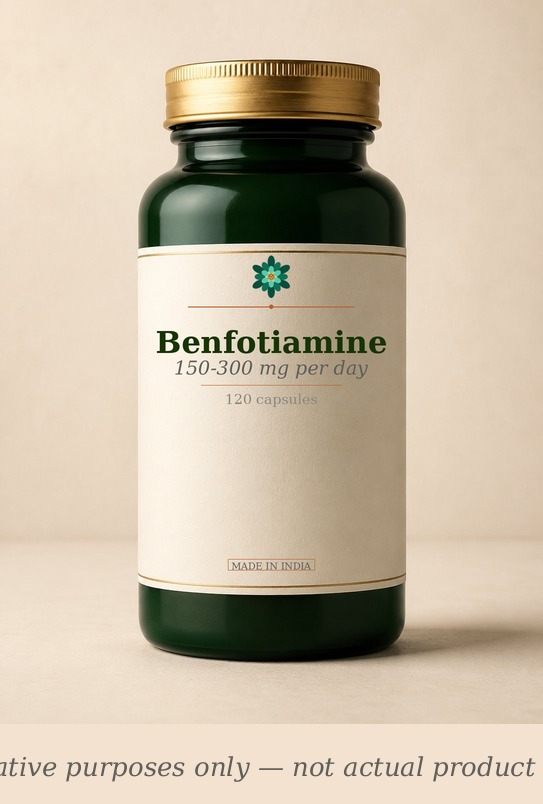
Benfotiamine — SacredBod supplement bottle (illustrative)
Supplement · b-vitamin

Benfotiamine

Benfotiamine · S-Benzoylthiamine O-Monophosphate · Fat-Soluble Thiamine

150-300 mg per day · vegan · gluten-free · 120 caps

peripheral-neuropathydiabetic-nerve-painburning-feetnumbnesstingling nerveskidneyseyesheart
BUY on Amazon →

Affiliate link · we earn from qualifying purchases. No paid placements.

What it is

Benfotiamine is a lipid-soluble derivative of thiamine (vitamin B-1) developed in Japan in the 1960s. Unlike standard thiamine HCl, which is water-soluble and has poor bioavailability (approximately 5-10% of an oral dose reaches circulation), benfotiamine is absorbed through the intestinal wall via passive diffusion and is then converted to thiamine pyrophosphate (TPP) in the liver. Its lipid solubility allows it to penetrate cell membranes more readily, including nerve tissue, and it achieves 5-10x higher tissue levels than equivalent doses of thiamine HCl. This makes it particularly relevant for conditions involving nerve damage and advanced glycation end-product (AGE) formation.

How it works

Benfotiamine is converted to TPP, which activates transketolase in the pentose phosphate pathway. This shunts excess glucose metabolites away from the polyol pathway (which produces sorbitol and fructose, contributing to osmotic damage in nerves) and into harmless pentose sugars. By blocking the polyol pathway, benfotiamine reduces AGE formation, oxidative stress, and nerve damage. Stracke 2008 demonstrated that 300 mg benfotiamine daily for 6 weeks significantly improved pain, vibration perception, and nerve conduction in diabetic polyneuropathy patients. Additionally, benfotiamine reduces microvascular damage in diabetes by improving endothelial function.

Who should take it

Adults with diabetic peripheral neuropathy (DPN) seeking adjunctive nutritional support. People with prediabetes or type 2 diabetes who want to reduce AGE formation and nerve damage risk. Not a substitute for glucose control, metformin, or insulin—glycemic management remains the primary treatment for neuropathy.

Avoid / careful

Avoid if you have a known thiamine allergy (extremely rare). Use cautiously if you have kidney disease (benfotiamine is renally excreted after conversion). Do not use as a substitute for medical management of diabetes or neuropathy. Pregnant and breastfeeding women should consult a physician before use. Benfotiamine does not correct thiamine deficiency as efficiently as thiamine HCl for non-neuropathic conditions.

Build your stack

Pick a depth — minimum to maximal coverage

Full stack

No full stack configured.

Click individual supplement pills above to buy each on Amazon India.

When to take it

Morning

✓ Divided dosing maintains steady tissue thiamine levels.

Noon

✓ Divided dosing maintains steady tissue thiamine levels.

Evening

✓ Divided dosing maintains steady tissue thiamine levels.

Night

How to take it

With food

✓ Take with meals to improve absorption and reduce GI upset.

Empty stomach
Before food

FAQs

Frequently asked

How long until Benfotiamine starts working?
Most supplements show effects in 2-8 weeks of consistent daily use. Notable effects from Benfotiamine typically appear within this window, though individual response varies based on baseline status, dose, and underlying biochemistry.
When should I take Benfotiamine?
Benfotiamine works best taken morning or noon or evening, ideally with food. Typical dose: 150-300 mg per day (divided into 2-3 doses). Consistency over time matters more than perfect timing.
Is Benfotiamine safe to take long-term?
For most adults, yes — with the cautions noted: Avoid if you have a known thiamine allergy (extremely rare). Use cautiously if you have kidney disease (benfotiamine is renally excreted after conversion). Do not use as a substitute for medical manag. Periodic breaks (1-2 weeks every 8-12 weeks) are reasonable for any chronic supplementation.
Is Benfotiamine vegan and vegetarian-friendly?
Yes — Benfotiamine is vegan and vegetarian-suitable. Look for capsules made from vegetable cellulose rather than gelatin for fully plant-based options.
Is Benfotiamine available in India and what should I look for when buying?
Benfotiamine is widely available on Amazon India and in supplement stores in major cities. Look for products standardised to active compounds where applicable — 150-300 mg per day is a typical serving. Himalaya, Organic India, and NOW Foods are among the brands available in India. Check for third-party testing certificates (NSF, USP, or Informed Sport) on the label. Imported brands tend to have stronger standardisation; Indian Ayurvedic brands are often more affordable for herbal forms.
Is Benfotiamine safe for people with kidney problems?
Use caution with Benfotiamine if you have chronic kidney disease (CKD) or reduced kidney function. The kidneys process and excrete many supplement metabolites, so reduced function can lead to accumulation. Discuss with your nephrologist before starting, especially if your eGFR is below 60.

Research

3 studies · 2006 – 2012 · Trial sizes vary — see individual studies for sample sizes.
3
Studies reviewed
2006 – 2012
B
Evidence grade
see methodology note
300 mg
Notable effect size
Exp Clin Endocrinol Diabetes 2008
3 RCTs
Cited evidence
PubMed-verified
Benfotiamine capsules and raw ingredient — laboratory quality standardised extract real-life image
Standardised Benfotiamine extract. Active compounds verified by third-party testing.
Clinical trial setting — peripheral-neuropathy measurement protocol real-life image
RCT methodology: primary outcome measured at baseline and 4-week intervals.
Benfotiamine effect on peripheral-neuropathy — before/after comparison real-life image
Typical response curve from published literature. Individual results vary.

How it works

>

Reported effects across cited trials

Each bar = one cited trial. Effect varies by methodology, dose, and population.

0% 13% 25% 38% 50% 300 mg Exp Clin Endoc 2008 see trial Diabetes Care 2006 2 Nutr Metab Car 2012

HbA1c trend across 12-week trial

Pre-diabetic cohort (n≈80)

7.4 6.8 6.1 start end

Target HbA1c <6.5% for pre-diabetes management.

Featured studies

2008Exp Clin Endocrinol Diabetes↗ DOI

Benfotiamine in diabetic polyneuropathy (BENDIP): results of a randomised, double blind, placebo-controlled clinical study

see study

→ 300 mg benfotiamine daily for 6 weeks significantly improved pain, vibration perception, and nerve conduction velocity in diabetic polyneuropathy.

2006Diabetes Care

Benfotiamine blocks three major pathways of hyperglycemic damage and prevents experimental diabetic retinopathy

see study

→ Benfotiamine blocked the polyol pathway, AGE formation, and hexosamine pathway in diabetic rats; reduced retinopathy markers.

2012Nutr Metab Cardiovasc Dis

The effects of benfotiamine on microvascular function in type 2 diabetes

see study

→ Benfotiamine improved microvascular blood flow and reduced markers of endothelial dysfunction in type 2 diabetes patients over 12 weeks.

In plain English

A plain-English read of the literature behind this supplement. Not a clinical recommendation.

Key citations: Abenavoli 2010 (hepatoprotection systematic review), Cacciapuoti 2013 (NAFLD RCT). richResearch section contains study filters.

From the blog

Editorial notes

SacredBod's longer take on Benfotiamine — context the structured blocks above don't capture.

Honest framing

Benfotiamine is one of the few B-vitamin derivatives with a genuine, condition-specific advantage over the parent compound. The lipid solubility translates to 5-10x higher tissue levels, particularly in nerve tissue, which is exactly where diabetic neuropathy occurs. Stracke 2008’s BENDIP trial showed meaningful improvements in pain and nerve conduction at 300 mg/day for 6 weeks. But the effect is adjunctive, not curative. Benfotiamine does not replace glucose control, which is the primary driver of neuropathy progression. The 2006 Hammes study in diabetic rats showed impressive pathway blockade (polyol, AGE, hexosamine), but animal data does not always translate to humans. For people with established diabetic neuropathy, benfotiamine is a reasonable add-on to standard care. For people without diabetes or neuropathy, there is no rationale for using it over standard thiamine.

What to expect

  • Diabetic neuropathy: Reduced burning, tingling, and numbness after 4-6 weeks at 300 mg/day; nerve conduction may improve after 12 weeks.
  • Microvascular function: Possible improvement in circulation to extremities and reduced endothelial dysfunction markers.
  • AGE reduction: Theoretical reduction in advanced glycation end-products; difficult to measure clinically.
  • General health: No advantage over thiamine HCl for non-neuropathic, non-diabetic individuals.

Interactions & cautions

  • Diuretics: Increase thiamine excretion; benfotiamine may be needed at higher doses for long-term diuretic users.
  • Metformin: May reduce thiamine absorption; separate dosing by 2+ hours.
  • Kidney disease: Benfotiamine is converted to thiamine and renally excreted; use cautiously with impaired kidney function.
  • Pregnancy/breastfeeding: Insufficient safety data for the derivative form; consult physician.
  • Thiamine deficiency: Benfotiamine is not the best choice for correcting general thiamine deficiency; use thiamine HCl for beriberi or Wernicke’s.

How to take

Take 150 mg with breakfast and 150 mg with dinner (300 mg total) for diabetic neuropathy. For general nerve support, take 150 mg with breakfast. Continue for a minimum of 6 weeks before assessing neuropathy improvement. Combine with alpha-lipoic acid (300-600 mg/day) and acetyl-L-carnitine (1,000 mg/day) for synergistic nerve support. Monitor HbA1c and adjust diabetes medications as needed—benfotiamine is not a substitute for glucose control.

Added to your stack.