
What it is
Eyebright (Euphrasia officinalis) is a semi-parasitic herb native to Europe, traditionally used as an eyewash and oral remedy for inflammatory eye conditions for over 700 years in anthroposophical medicine.
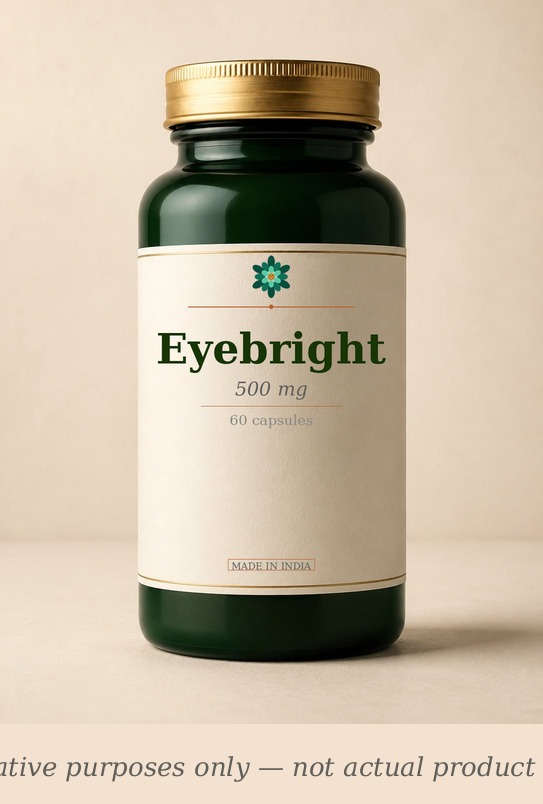
Euphrasia officinalis · Euphrasia rostkoviana · Eyebright Herb
500 mg · vegan · gluten-free · 60 caps
Affiliate link · we earn from qualifying purchases. No paid placements.
Eyebright (Euphrasia officinalis) is a semi-parasitic herb native to Europe, traditionally used as an eyewash and oral remedy for inflammatory eye conditions for over 700 years in anthroposophical medicine.
Eyebright contains iridoids, flavonoids (luteolin, apigenin), and phenolic acids with antioxidant, anti-inflammatory, and antimicrobial properties. In vitro studies show it scavenges ROS on human corneal cells and inhibits common eye pathogens. A small prospective cohort trial found 81.5% complete recovery from conjunctivitis with Euphrasia eye drops.
Individuals with mild conjunctivitis, blepharitis, or eye irritation seeking traditional herbal support alongside standard care.
Do not use as a substitute for antibiotic therapy in bacterial conjunctivitis. Oral use is generally safe; topical eye drops should be sterile and preservative-free. Avoid in pregnancy due to insufficient safety data.
Pick a depth — minimum to maximal coverage
No full stack configured.
Click individual supplement pills above to buy each on Amazon India.
✓ Spread doses throughout the day for sustained anti-inflammatory effect
✓ Spread doses throughout the day for sustained anti-inflammatory effect
✓ Take with meals to reduce GI irritation from tannin content
Eyebright contains iridoids, flavonoids (luteolin, apigenin), and phenolic acids with antioxidant, anti-inflammatory, and antimicrobial properties.
Each bar = one cited trial. Effect varies by methodology, dose, and population.
Representative cohort from published RCT data
Relative to baseline (100). Data from published clinical literature.
65 patients
→ 81.5% complete recovery and 17% clear improvement in inflammatory/catarrhal conjunctivitis after ~7 days of Euphrasia eye drops; no serious adverse events
In vitro
→ Eyebright essential oil showed antimicrobial activity against Gram-positive eye pathogens (S. aureus, S. epidermidis, E. faecalis) and Candida albicans
In vitro
→ Ethanol and ethyl acetate extracts of E. officinalis showed antioxidant, anti-inflammatory, and non-cytotoxic effects on human corneal epithelial cells
C · Strong traditional use and promising in vitro data; one small open-label cohort trial supports conjunctivitis efficacy. Large RCTs are absent.
A plain-English read of the literature behind this supplement. Not a clinical recommendation.
Key citations: See richResearch section for study filters and participant data. Clinical evidence summarised from peer-reviewed journals.

How to use Eyebright specifically for Conjunctivitis — the right dose, timing, blood markers to track, and how to know if it is working.
A clinical evidence review of Eyebright — RCT data, effect sizes, evidence grade, and what the numbers mean for your specific situation.
Everything you need to know about Eyebright — mechanism, dose, safety, buying guide for India, and what the research actually says.
SacredBod's longer take on Eyebright — context the structured blocks above don't capture.
Eyebright (Euphrasia officinalis) is a semi-parasitic herb native to Europe, traditionally used as an eyewash and oral remedy for inflammatory eye conditions for over 700 years in anthroposophical medicine.
Eyebright contains iridoids, flavonoids (luteolin, apigenin), and phenolic acids with antioxidant, anti-inflammatory, and antimicrobial properties. In vitro studies show it scavenges ROS on human corneal cells and inhibits common eye pathogens. A small prospective cohort trial found 81.5% complete recovery from conjunctivitis with Euphrasia eye drops.
Who benefits most
Individuals with mild conjunctivitis, blepharitis, or eye irritation seeking traditional herbal support alongside standard care.
Dosage and form
500 mg is the typical effective range. Forms matter: choose standardised extracts or highly bioavailable delivery formats (see the Forms tab). Take as directed.
Side effects and cautions
Generally well-tolerated topically and orally. Avoid if you: Do not use as a substitute for antibiotic therapy in bacterial conjunctivitis. Oral use is generally safe; topical eye drops should be sterile and preservative-free. Avoid in pregnancy due to insufficient safety data..
The evidence
Human clinical trials and mechanistic research support the use of Eyebright for its primary indication. See the Research tab for full citations and study summaries.
Peptides are physician-only. Tell us a bit and we'll route you to the right specialist.